
Bioacoustics: Songs of the Wild
Blog written by YW Naturalist Mads B.
Before I knew I wanted to study environmental science I studied audio engineering technology. I learned how to record sounds, put them into software, and manipulate them into a pleasing-sounding sonic landscape.
When recording songs I had to keep in mind that each instrument has its own frequency, or pitch, and if there are multiple competing sounds at the same frequency then the loudest will drown the rest out. To ensure all voices and instruments are heard, the goal is often to create space by manipulating their pitch and volume. When this is done successfully you get dynamic songs that can be clearly heard and that can communicate emotions and messages.
These same principles apply to the sonic landscapes of the natural world, otherwise known as bioacoustics: the sounds that living things make. Bernie Krause’s Acoustic Niche Hypothesis states that in a healthy, mature ecosystem, species avoid competition by communicating at different frequency ranges or at different times of the day. This creates conditions where each species can clearly hear each other as they attempt to communicate with one another from sometimes miles away.
Here in Yellowstone we have a great deal of biodiversity, each species its own instrument, indicating a healthy ecosystem:
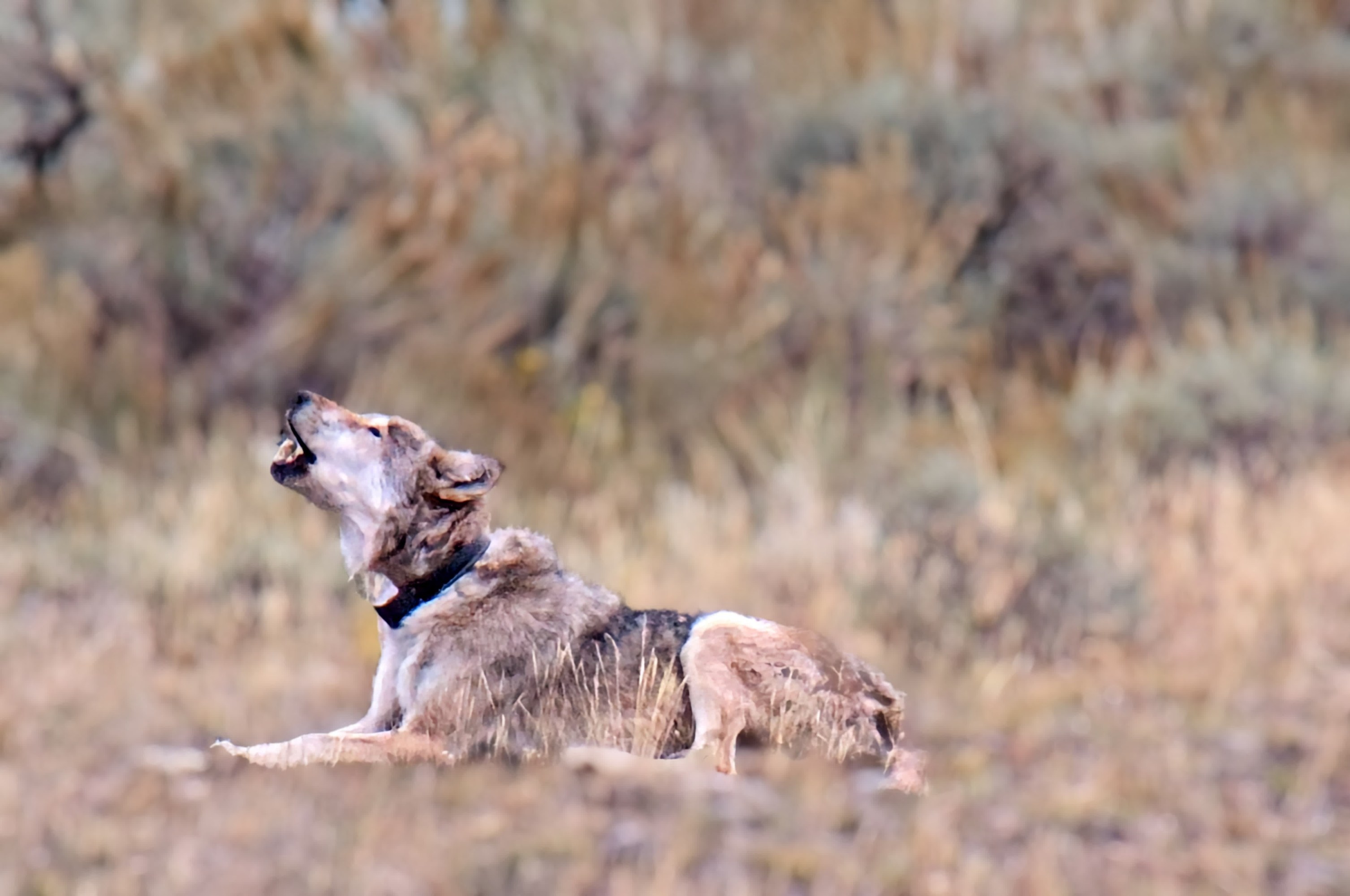
Wolves howl (sound courtesy of Jeff Reed) to locate one another, to warn other packs of their presence, or for social connection. These howls are often quite steady and are generally at a low frequency. Coyotes also howl to communicate with family members and sometimes alarm bark at a wolf’s presence. Coyote vocalizations (courtesy of NPS Sound Library) however are usually much higher pitched and are often described as “yips.”. Both of these species coexist in the same spaces making similar types of sounds, but because their sounds are spread out along the frequency spectrum they are able to hear one another clearly to prioritize communication amongst their own species in addition to recognizing others.

A wolf, separated from its pack mates, howls in an attempt to get a helpful response. Photo by YW Co-owner Tyrene R.
The ungulate (hoofed) species, often fairly quiet for most of the year, erupt into sound during their rutting seasons. Bull elk emit eerie high-pitched bugles during their rut (sound courtesy of NPS Sound Library) to attract mates and to warn competing males. Moose often make low grunting or whining sounds during their rut. Both mating seasons happen to be around September and October, so it’s beneficial that they make different-sounding calls so that they can decipher their own species.
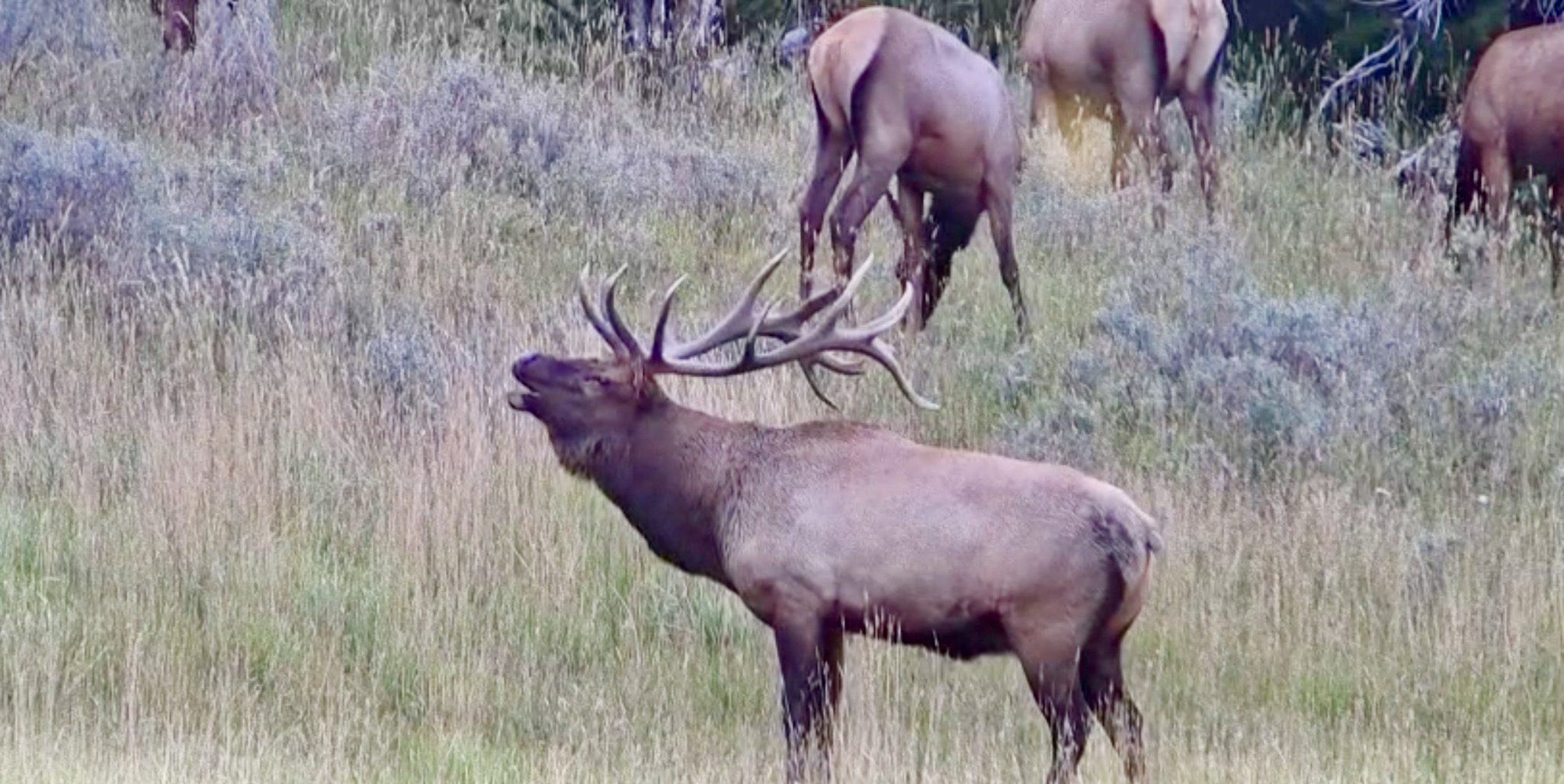
Bull elk bugling during the mating season (rut). Screen grab from video courtesy of YW Naturalist Matt D.
Then there are the Yellow-bellied marmots (sound courtesy of Facebook National Geographic Animals page) who have acquired quite appropriately, the nickname “whistle pigs”. When they aren’t hibernating for eight whole months out of the year they are often found sunbathing on rocks, but never far from their burrows in case of predators on the ground or in the sky. If there is danger, they let out an ear-piercing whistle – hence the nickname – to signal that there is a threat. Their predators can be anything from a golden eagle to a fox, which also make quite distinctive calls. If you’ve ever heard a fox call (sound courtesy of Wild Ambience YouTube) you probably remember it well, as it sounds like a a human screaming!
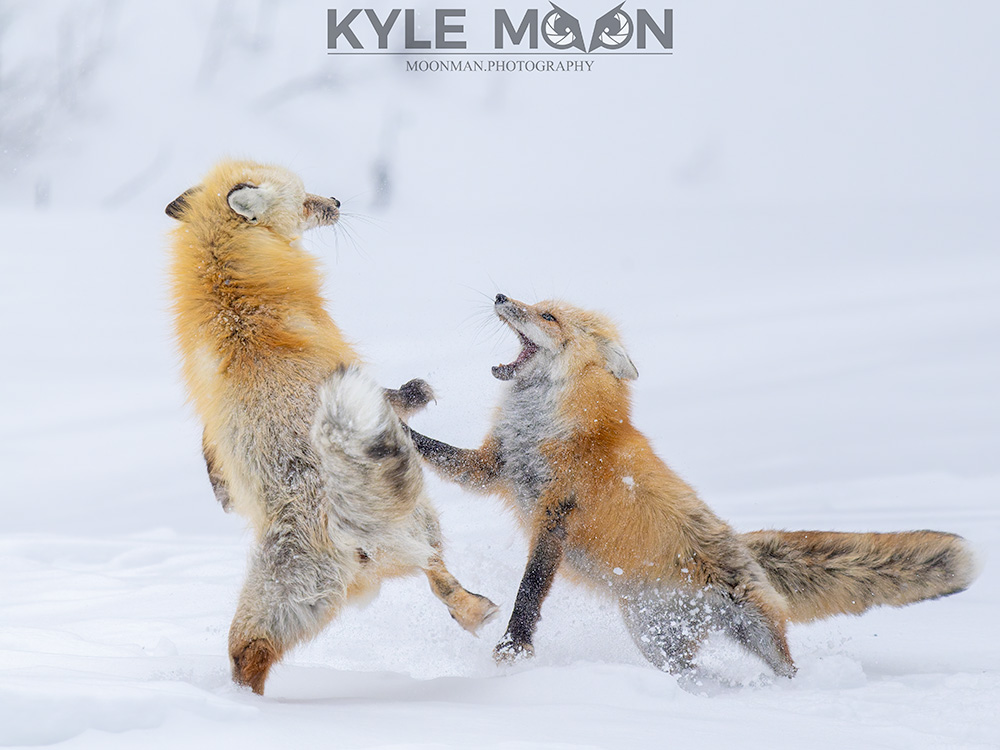
Two red foxes fighting. The piercing shriek of an agitated fox is often compared to a human screaming! Photo courtesy of Kyle Moon
And of course, we can’t leave out our modern “dinosaurs”! The eerie call of the sandhill crane (sound courtesy of Cornell Lab All About Birds)—classified by scientists as avian dinosaurs—has the power to chill listeners to the bone, stirring in them an ancient connection to a time long before hominids called this planet home. Directly descended from prehistoric birds (dinosaurs), the sound of the sandhill reminds us that life finds a way. One of the most incredible rewards of a Yellowstone outing is the real possibility of hearing cranes, wolves, and bugling elk within the span of a few minutes. Few things have the power to transport our minds into the natural world like these haunting songs of wild voices sharing a common landscape.
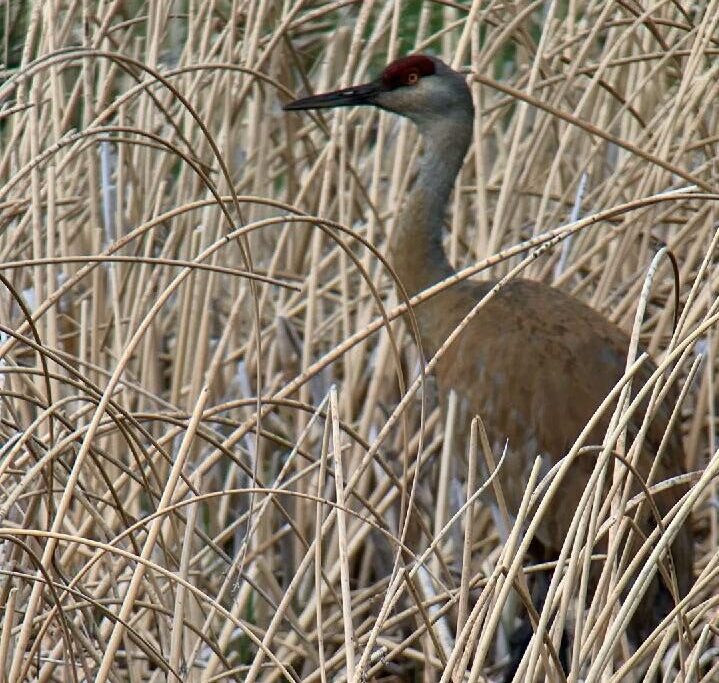
Sandhill Cranes are truly living “dinosaurs” – and nothing reminds of this more than their eerily beautiful wild song. Photo courtesy of YW Owner Emil McCain.
Together, all of these animals create a chorus of sound across all ranges of frequency, each piece fitting perfectly together to become one whole. If you’re quiet enough, you just might hear it. Non-natural sounds like vehicles, humans talking, or even the swish of a rain jacket can drown out these wonderful sounds for ourselves to hear as well as for the wildlife itself to be able to communicate with one another. So next time you’re in the park, turn your vehicle off, find a nice spot away from the road, and listen to the song of the wild.

To learn more about Mads, and the rest of the Yellowstone Wild team, visit our About Us page!