
Look Up!: Yellowstone Life Up High
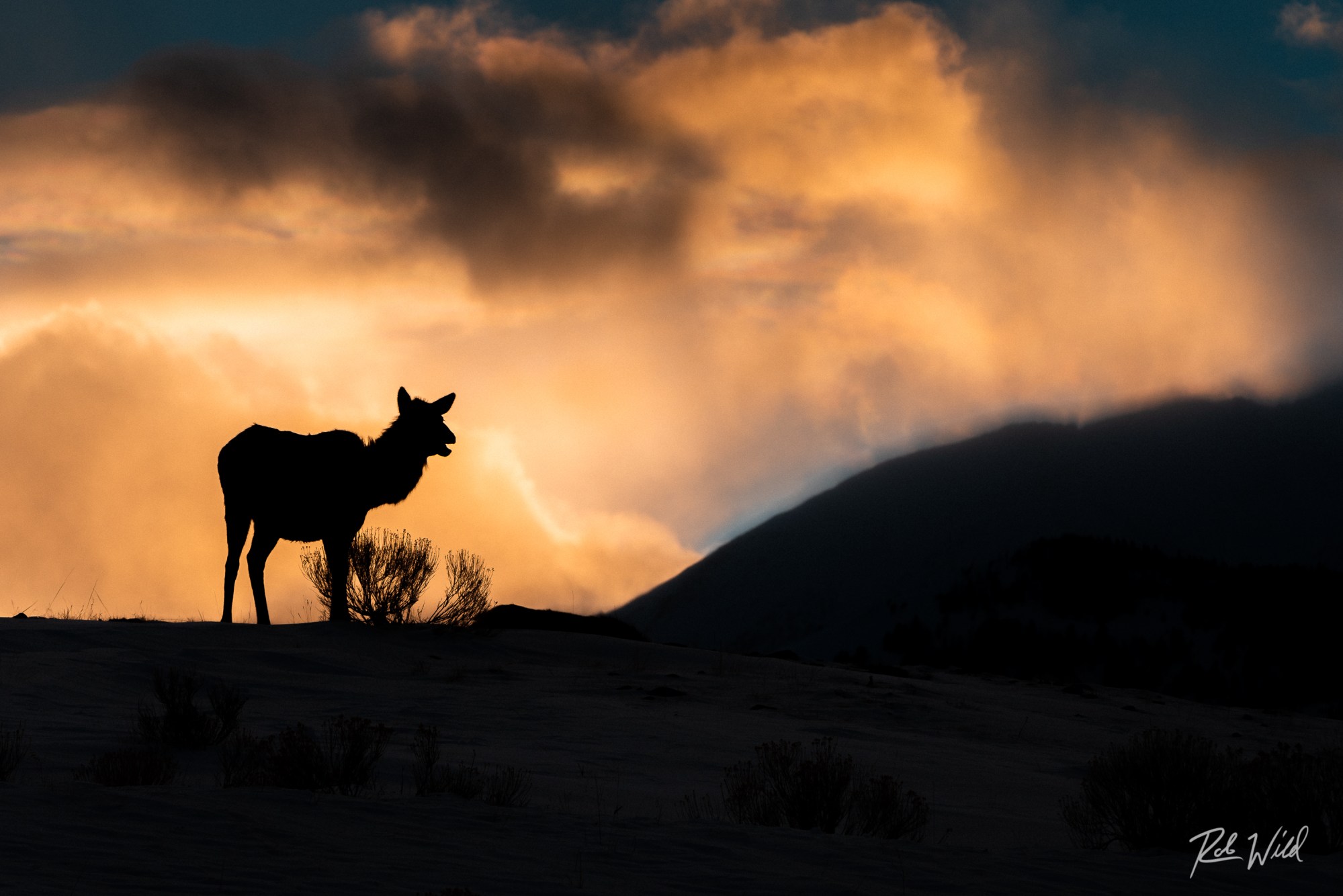
Blog by YW Lead Naturalist Aleksa B.
When visitors think of Yellowstone National Park, most visitors imagine dense forest, wide open valleys, and boiling, steaming geyser basins. We have mountains as well, but they often serve as a simple and beautiful backdrop to the “more exciting” landscapes right in front of us. However, if you climb high, or even just point your binoculars up on a mountainside, you may unveil an entirely new side of Yellowstone.
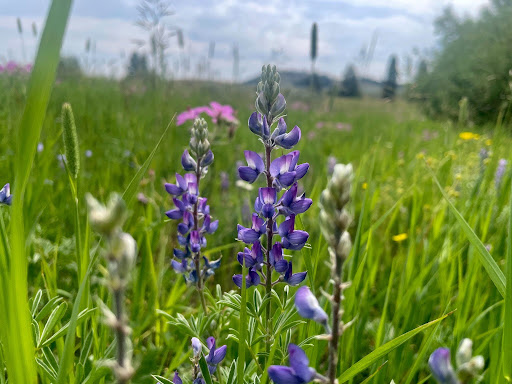
Sky pilot (Polemonium viscosum) is one of the many beautiful wildflowers that only grow in the alpine zone in and around the park. Photo by Aleksa B.
First, the landscape itself. Yellowstone’s alpine and subalpine zones seem harsh and full of nothing but steep gray-brown rock, but if you look closer, you may notice the smaller details. Pockets of brush and grass, plants that don’t grow anywhere else, caves that provide shade and shelter for wildlife, and water seeping directly out of the rocks provide the foundation for life in these rugged places.
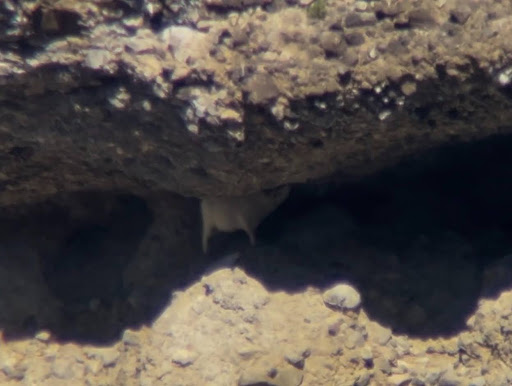
In the center of this photo, you can see a mountain goat licking at the ceiling in a shadowy cave. Besides being a cool place to hang out, this cave is also likely providing either a seep of water or a mineral lick for this goat. Photo taken through a spotting scope by Aleksa B.
To see some of the smaller wildlife that lives in Yellowstone’s mountain ranges, you will likely have to climb up to get on their level. These little critters won’t be caught in a spotting scope from lower altitudes! When you trek (or drive, in some areas) up into the cliffs, you may spot a few interesting species. Yellow-bellied marmots are present at both lower and higher elevations, and since they love nothing more than sunbathing on rocks, subalpine boulder fields are beloved by them. Moving from large boulders to swathes of smaller scree or talus, you may find the well-camouflaged pika. Pikas may be the GYE’s cutest mammal of all, and they can only survive on cooler, higher elevation slopes. Sylvan Pass (8,524 ft), which is located on the park’s East Entrance Road, is a great place to spot both marmots and pikas in the summer months.
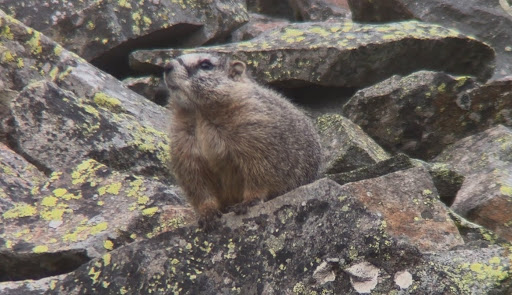
A yellow-bellied marmot perches on a rock on Sylvan Pass. These boulders provide a network of tunnels for many small mammals to live in year-round. Photo by Aleksa B.
There are also a few larger species of relatively common wildlife that call the mountains home: mountain goats and bighorn sheep. While you may spot bighorn sheep in lower altitudes in the winter, they spend most of the summer months in higher, more difficult-to-spot areas of Yellowstone. Some locations where we have had luck finding them are McMinn Bench near the North Entrance of the park, Sylvan Pass, and Specimen Ridge. Spotting mountain goats is akin to playing I Spy or Where’s Waldo; they prefer much steeper cliffs than even the bighorns, so you have to scour the sheer mountainsides in the northeast corner of the park to find them. If you see a tiny white spot on the side of a cliff, there’s a good chance it could be a petrified tree stump poking out of the rock. If that white rock moves around – aha! – it’s a goat!
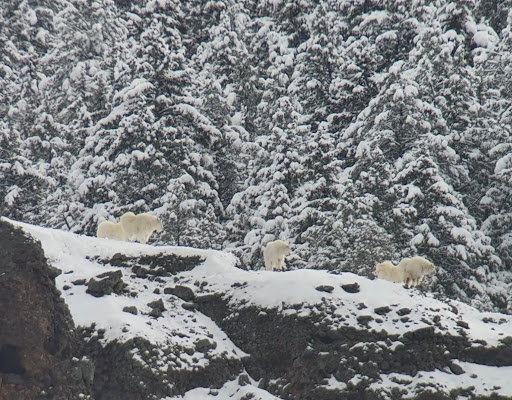
Five mountain goats perched on the top of a cliff during a Yellowstone winter, as seen through a spotting scope. They survive way up there by nibbling the ends of tree branches and stay warm thanks to their cozy winter coat. Photo by Aleksa B
Next time you find yourself looking for interesting things in an area with mountains, don’t forget to look in the mountains themselves! You may uncover a whole side of the local ecosystem that you had no idea even existed before. And remember, the subalpine and alpine zones tend to be very sensitive places, so tread – and enjoy – carefully.
Blog written by Lead Naturalist Aleksa B
To learn more about Yellowstone Wild Guide Aleksa, and the rest of the team, visit our “About Us” webpage.