
Is It Bison Or Is It Buffalo? Answering The Age-Old Debate
Blog by YW Naturalist Erik B.
Ask any naturalist guide in Yellowstone what a common question is and all of them will answer, without hesitation, “Is it bison or buffalo?” What exactly should we call the iconic wild bovines roaming the Yellowstone landscape?” The answer is: both! While the species is American bison (bison bison), “Buffalo” is the accepted common name. Now if you want to get specific, the scientific name for the animals is we see in Yellowstone is the plains bison (Bison bison bison), one of two subspecies found in North America.
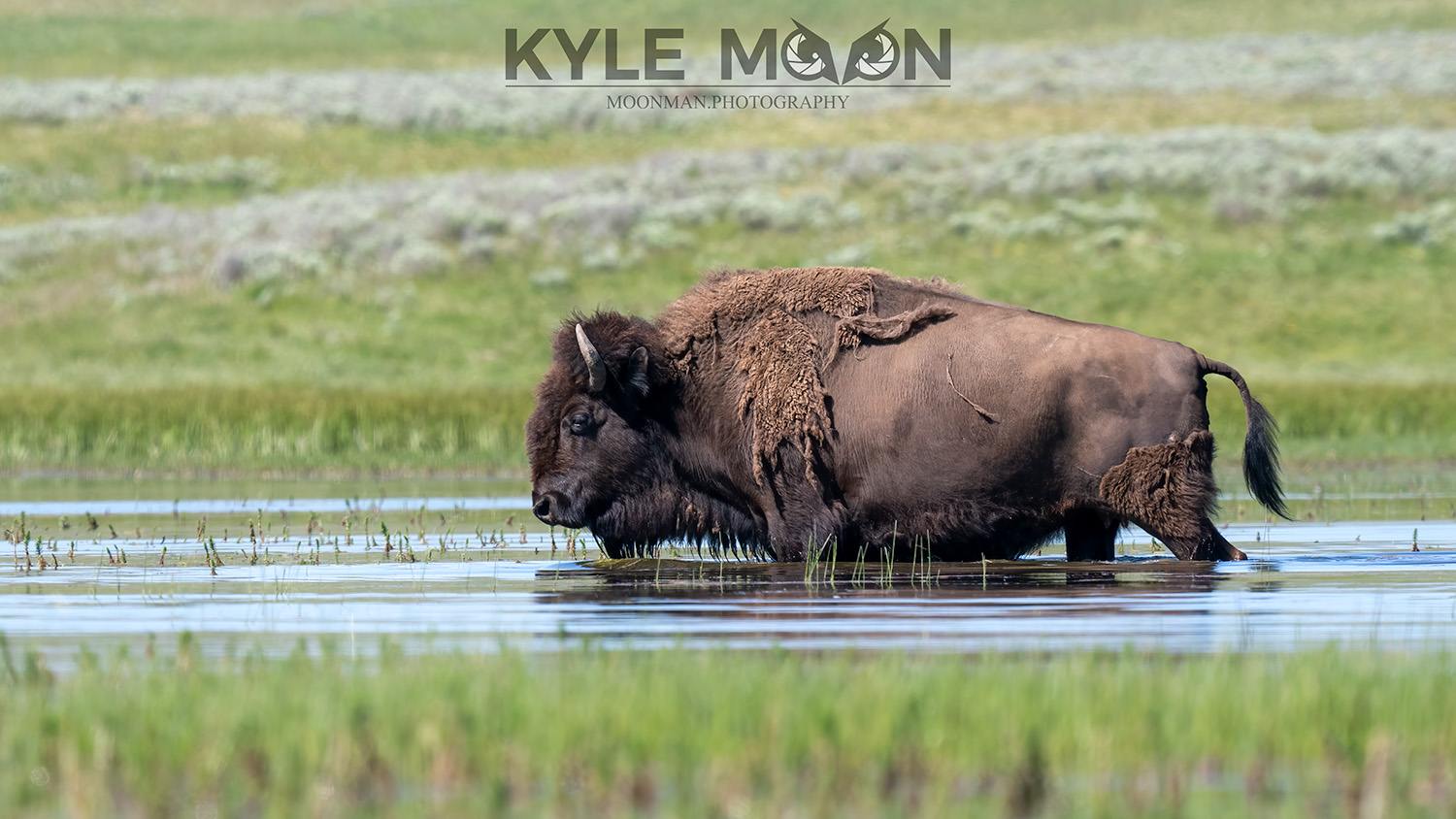
A cow bison in Yellowstone National Park. Photo courtesy of Kyle Moon.
To understand where that distinction comes from, let’s talk taxonomy (say what?). Taxonomy is the science of naming, describing, and classifying organisms into ordered groups based on shared characteristics. Globally, “true” buffalo species are native only to Africa (the African buffalo, Syncerus caffer) and Asia (the water buffalo, Bubalus bubalis). True bison, on the other hand, exist only in North America and Europe. After nearly eliminating the plains bison entirely, an extensive conservation effort beginning in 1903 spearheaded by then park caretakers (the U.S. Army) in Yellowstone National Park. It was a huge success and today the park is home to the largest wild bison herd in the United States! The other subspecies of American bison is the wood bison (Bison bison athabascae), found in Alaska, Northwest Canada, and the Yukon. While closely related, and definitively true bison, the wood bison differs from their smaller plains cousins in size, coat, and habitat.
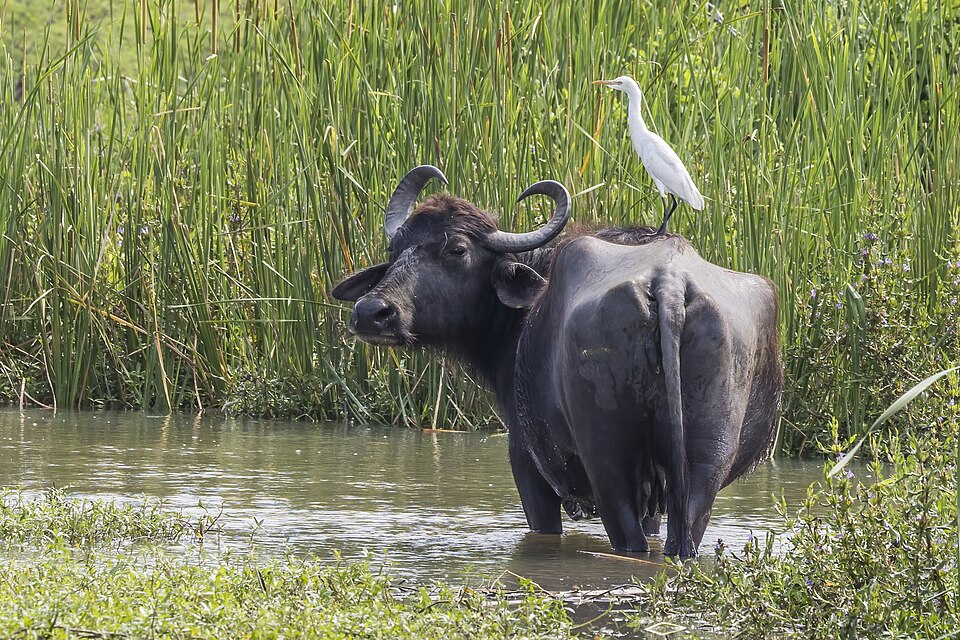
Asian water buffalo (Bubalus bubalus). Photo courtesy of Charles J. Sharp (Wikipedia Commons)
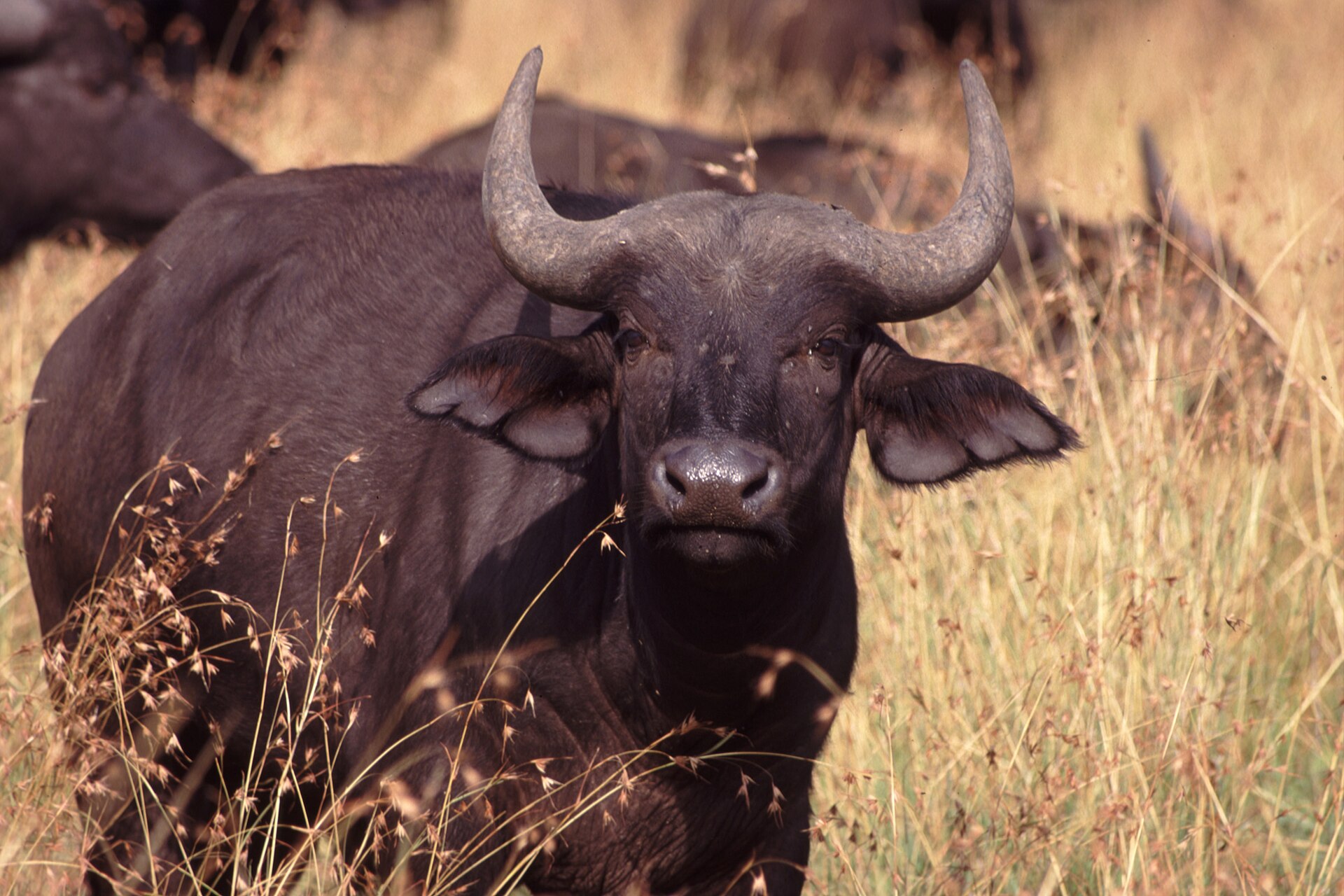
Cape buffalo (Syncerus caffer). Courtesy of Wikipedia Commons
But if bison and buffalo taxonomically separate species, why do we call them all “buffalo”? Stay with me for a quick history lesson: when early European explorers first arrived in North America, they were struck by how much these massive creatures resembled the oxen back home, calling them “boeufs” (French for “beef”). Over time, that name shifted and evolved into the “buffalo” we use today.
So how can you actually tell true bison and true buffaloes apart? It’s actually pretty simple! Bison have evolved over millions of years on the North American plains to survive extreme climates. They sport a dense, fluffy brown winter coat that can withstand temperatures below -40°F, perfect for those frosty Yellowstone morning photos. True buffalo are much darker, with thinner hair, and they never get that iconic winter fluff. Another giveaway is the lack of a significant shoulder hump that true bison are known for. And cape buffalo have what’s called a “boss;” a thickened bone plate connecting the horns across the forehead. It almost looks like a grumpy mob boss hairstyle, which fits, since they’re famously unpredictable and part of Africa’s “Big Five” dangerous game animals.
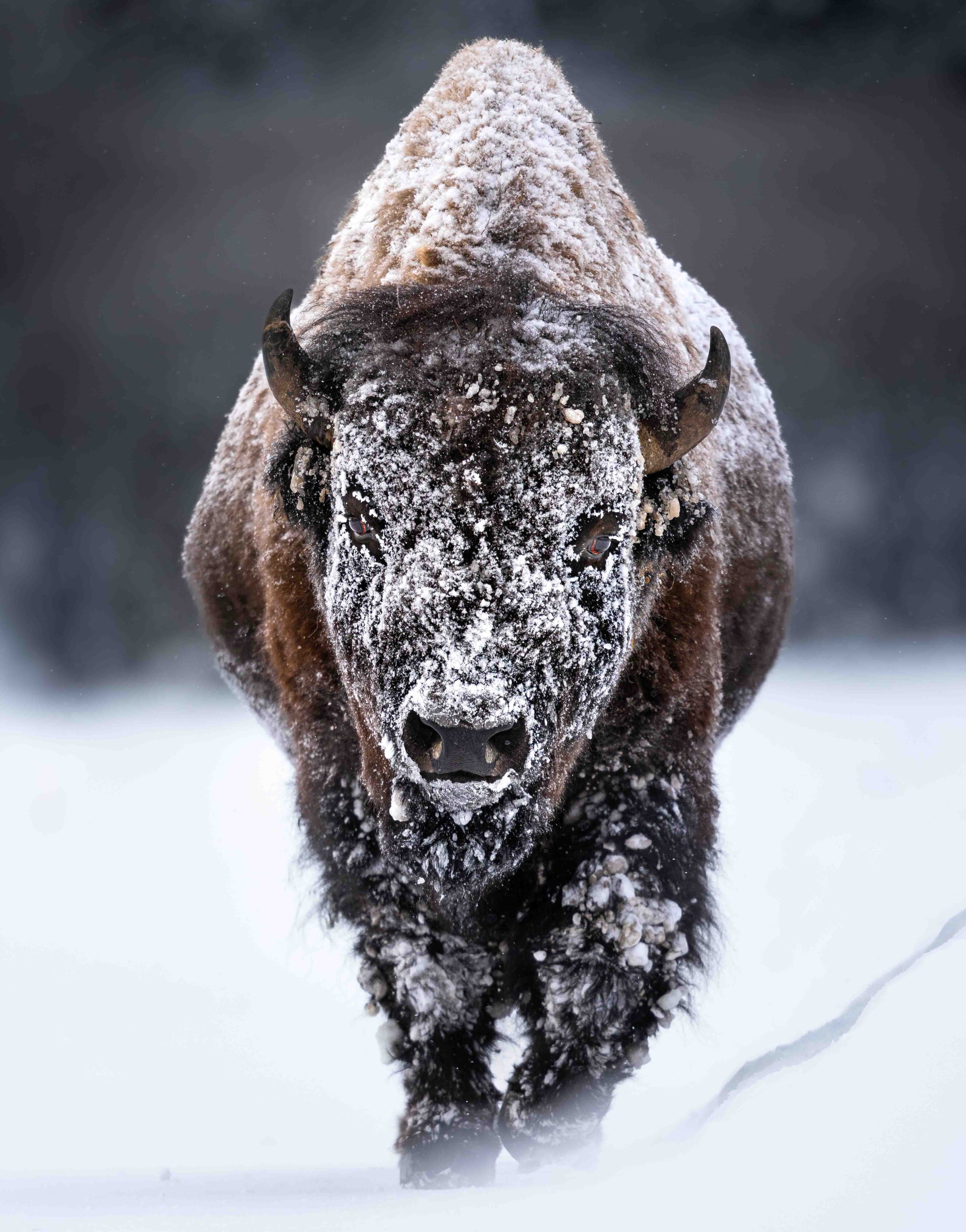
Bull bison (Bison bison bison) in winter. Photo courtesy of Evan Watts
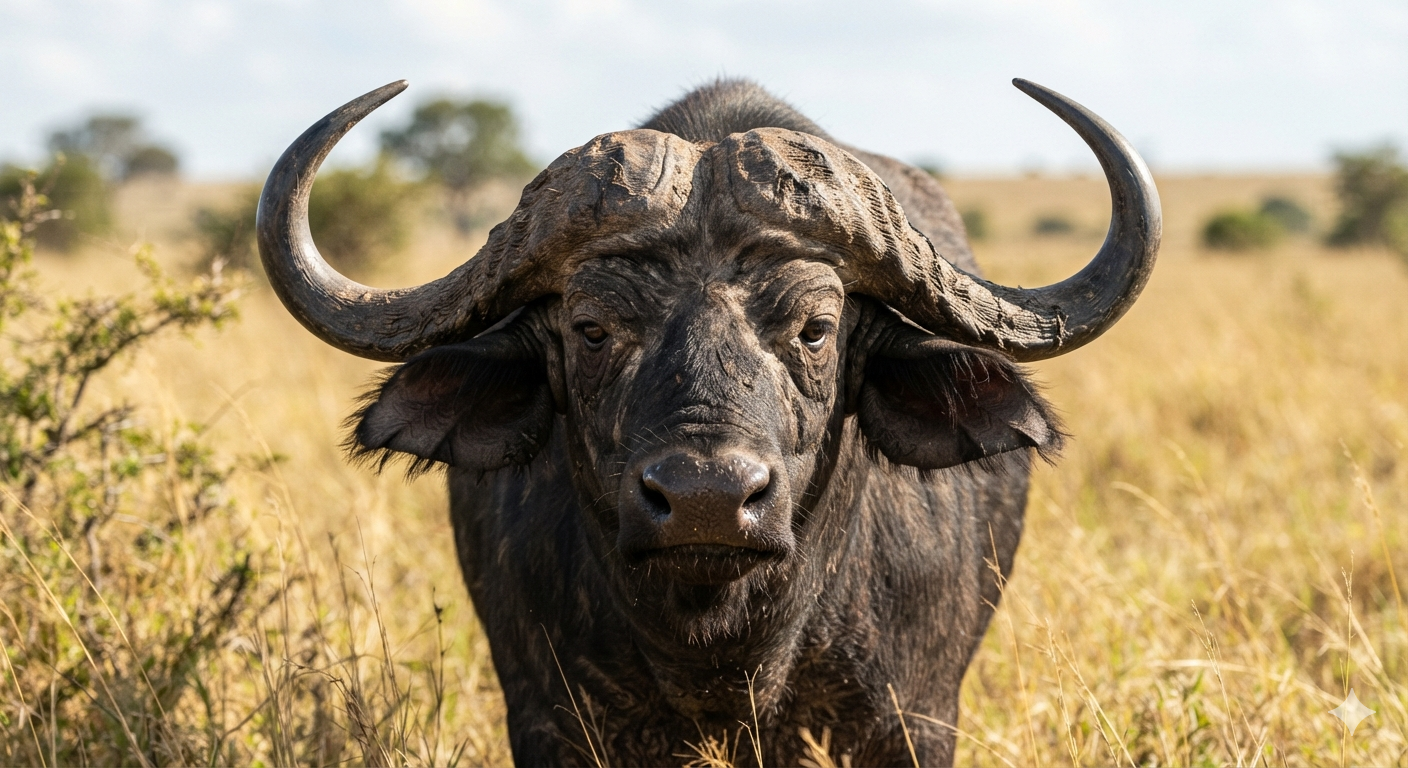
Cape buffalo (Syncerus caffer). Notice the thickened bone plate connecting the horns. This is called a “boss”. AI generated
And speaking of danger: our Yellowstone bison might look like calm, fuzzy giants, but they’re incredibly powerful wild animals weighing up to 2,000 pounds. They can run 35 mph and jump over six feet from a standstill! As professional guides, we always watch for behavioral cues. A raised tail, snorting, or hoof stomping means the bison is politely asking you to back off, and our guides make sure you do. Keeping a respectful distance lets them stay wild and keeps everyone safe. You can view this video as a cautionary tale of the unpredictability of bison (the person involved was not doing anything illegal), and reminder to always follow park regulations: they’re in place for your safety!
So whether you call them bison, buffalo, or big brown cows, one thing’s for sure: these shaggy symbols of Yellowstone deserve recognition as the original caretakers of the range. Grazing, wallowing, and just being bison, these giants engineer Yellowstone’s grasslands for the benefit of countless other species. And that’s a pretty good reason to keep them around.

To learn more about Erik and the entire YW Naturalist Staff, head to the “About Us” page on our website