
Yellowstone’s Hidden Stories: Traces of Animals Everywhere You Look
Blog by YW Naturalist Jesse Gifford
You have just arrived at Yellowstone National Park and cannot wait another minute to see some wildlife! Excitedly, you take a trail that leads you deep into the woods, where you envision an open meadow teeming with all manner of animal life. The plan seems perfect: get away from the roads and the noise of the crowds, and go somewhere with a source of water, lush grass, and trees for shade.
Finally, you reach the meadow, and… there’s nothing there! Disappointment surges over you, and you wonder where to look next. You turn to head back, but a thought stops you, and you start to look more closely at the landscape around you.
Is there really nothing?
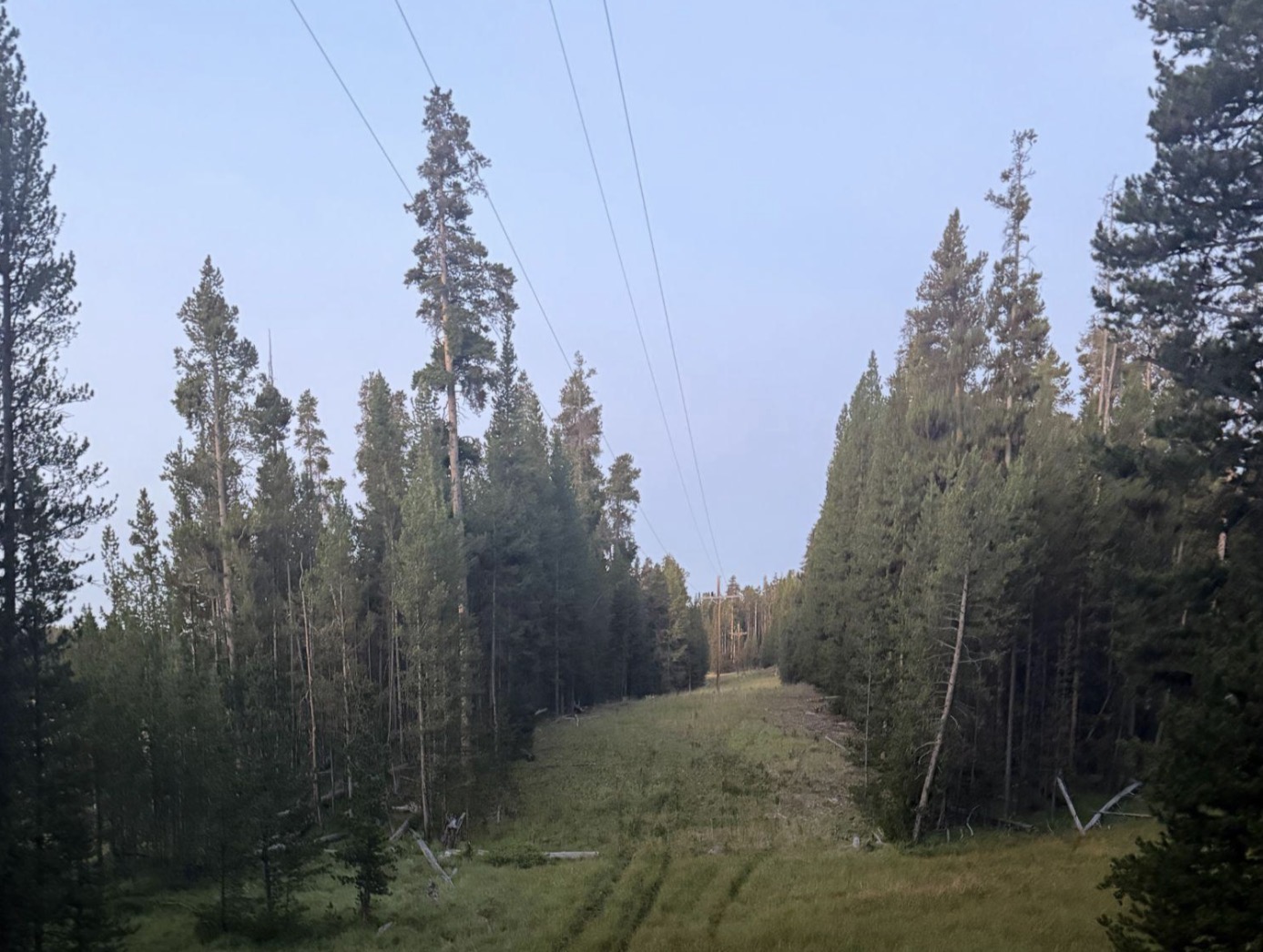
Notice the “tracks” in the grass. These were left behind from wolves running through the damp morning grass an hour earlier.
You pause, settle in, engage your curiosity, and begin to ask questions. Looking around, you wonder: what clues are present that tell the story of animal movements? What are those piles of dirt? Have animals been digging here? If so, how fresh is the dirt piled up at the opening? Is vegetation growing on top of it? No? This is recent! You know that Yellowstone is home to many animals that dig and leave holes. Ground squirrels and badgers have been here, and may still be nearby!
A badger actively digging leaves behind obvious evidence of it’s recent activity! Never poke around an area that is freshly excavated – badgers can be aggressive when threatened. Video by YW Naturalist Leysa K.
The trees can give you clues too. Are there teeth marks or broken branches? Are there markings where an animal has rubbed against the tree or scraped its antlers? Are there claw marks? Tree markings can tell you many things, from what animal was there and what it was doing, to the size of the animal based on the height of the markings on the trunk. You can even tell how long ago the markings were made by how the bark has healed!
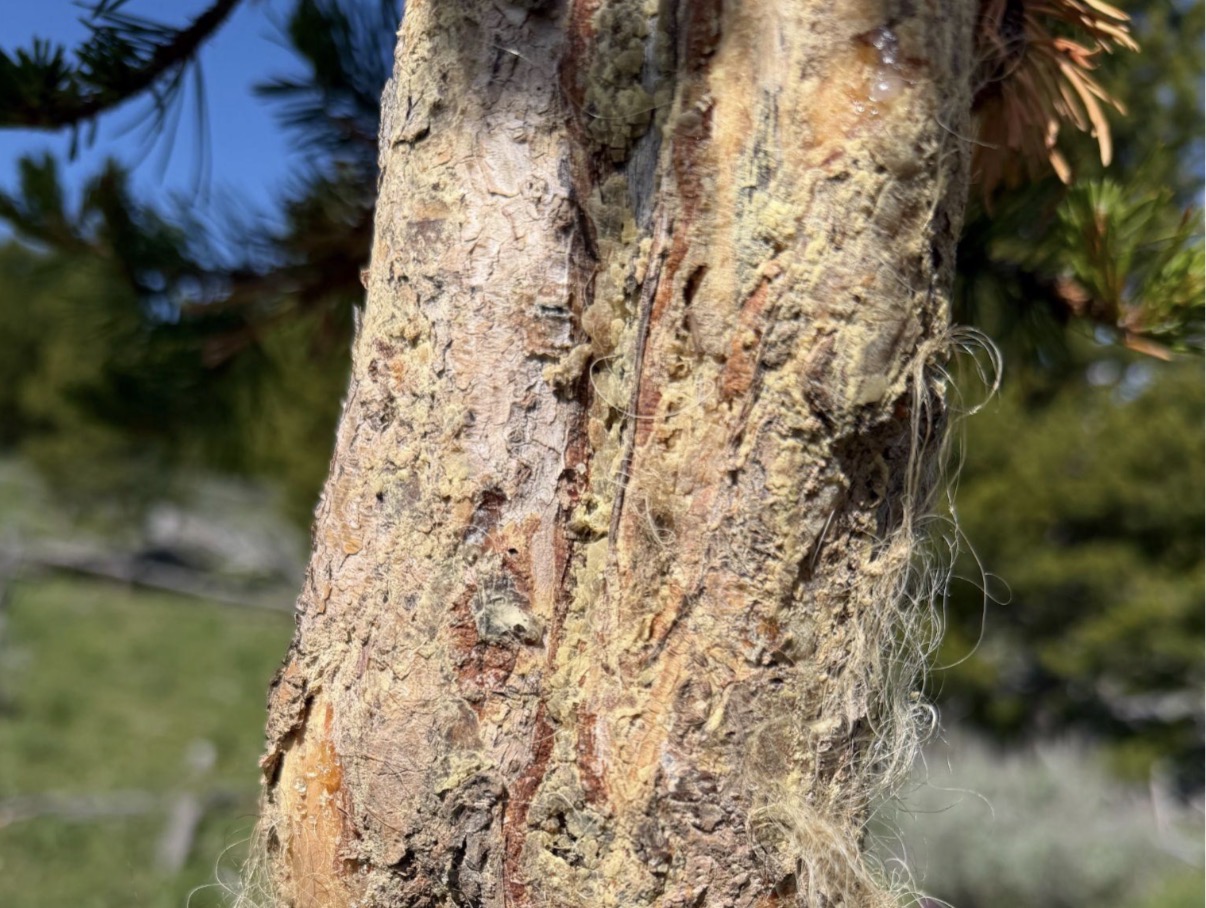
An animal rubbing against a tree leaves behind subtle clues of its movements like this hair caught on the sap and bark of this tree.
Suddenly, the meadow doesn’t seem empty at all. There are signs of life all around!
What else can we find?
If you take a closer look at the ground, you may find footprints, or tracks. These can tell you who was around and what direction they were headed. You start asking yourself: are the footprints spaced out in long strides? Are they heading in one direction? Where do they lead? Are they muddy and fresh, or hardened from a previous day when the ground was wetter? From your observations, you begin to piece together where an animal was going, whether it was alone or traveling with others, how recently it passed through, and whether it was walking, loping, running, or injured.
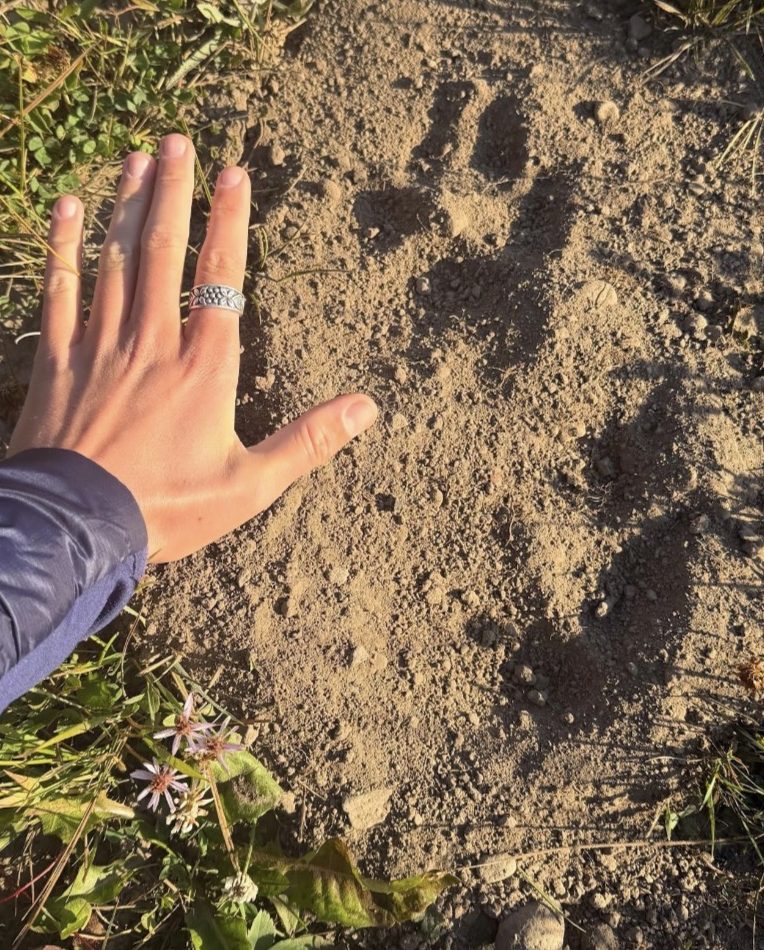
Do you know what animal left this clue for Jesse to discover?
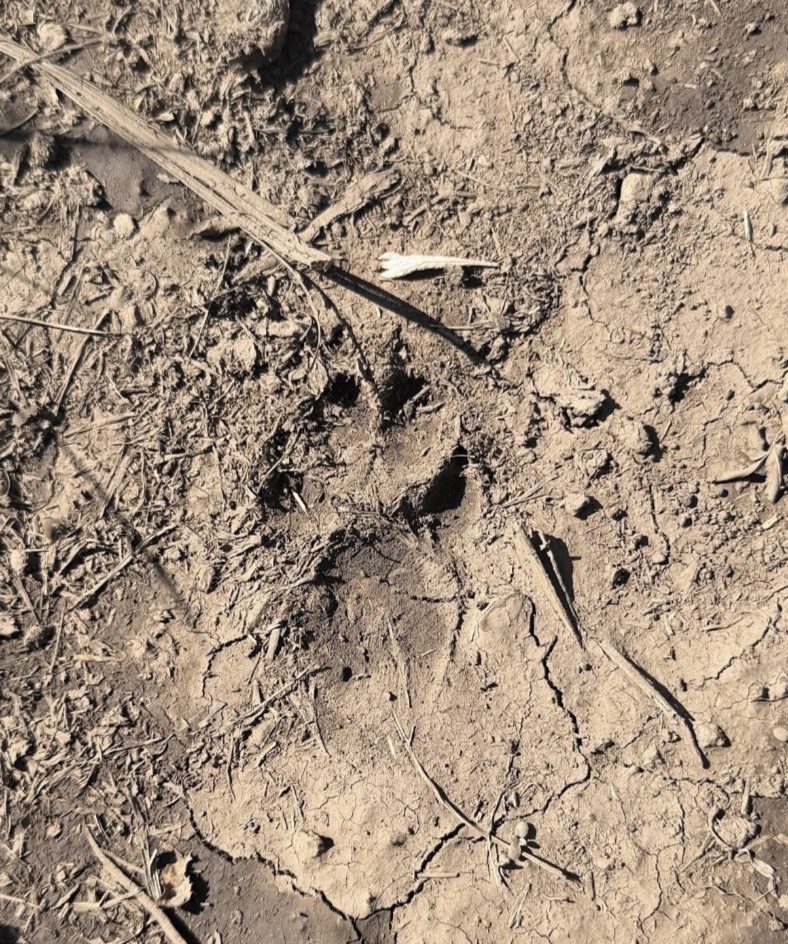
What critter left this? Notice how difficult it is to size this track without a perspective?
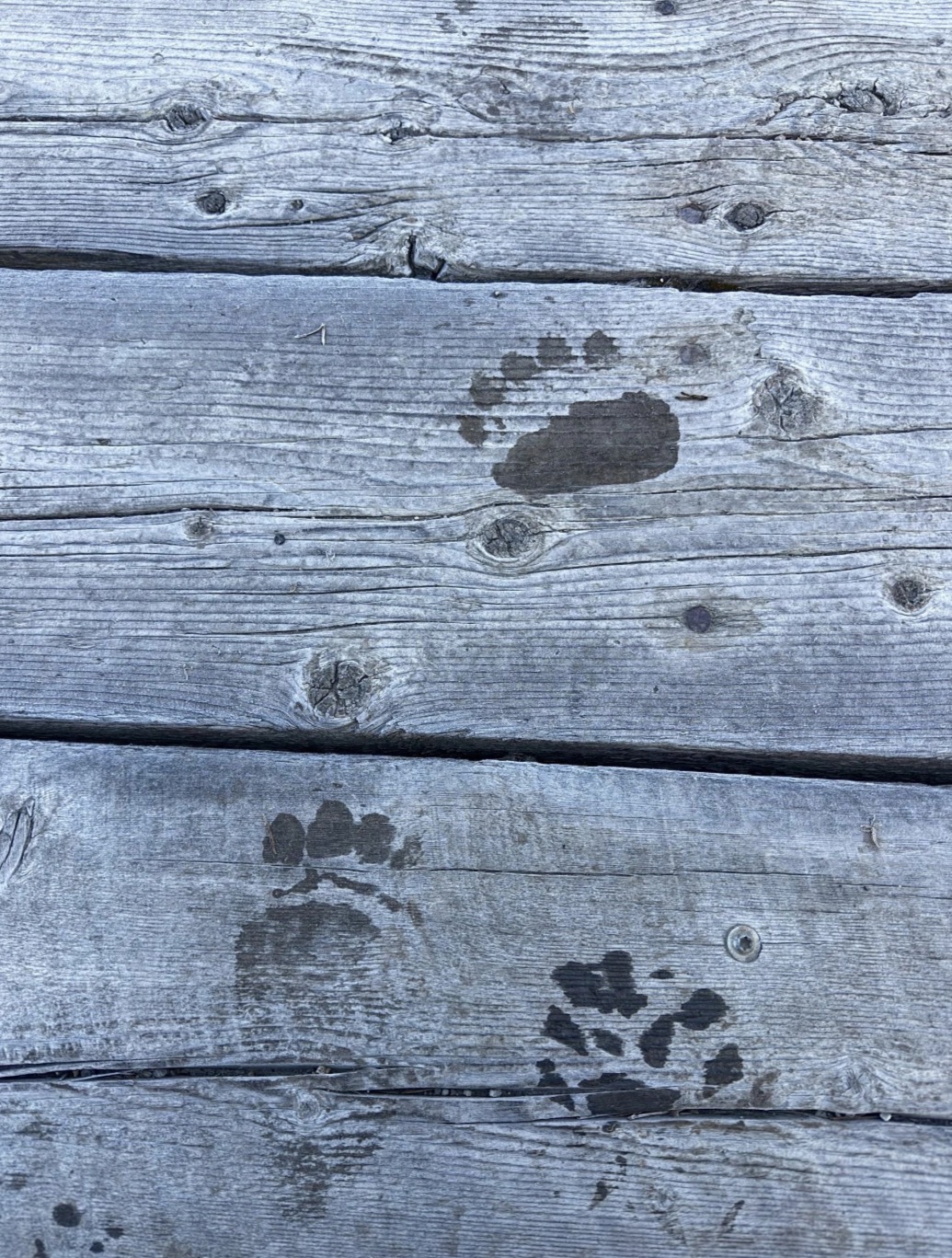
What does this make you think of? Might want to make some noise!
Let the landscape tell you a story.
The tiny details left on the ground and in the trees are often overlooked, but finding even the smallest trace of an elusive animal can be just as exciting as seeing the animal itself. Important details are easy to walk right past! The mud you stepped through may have held a fresh grizzly print, or that flattened patch of grass you passed could be where a moose was resting just hours before.
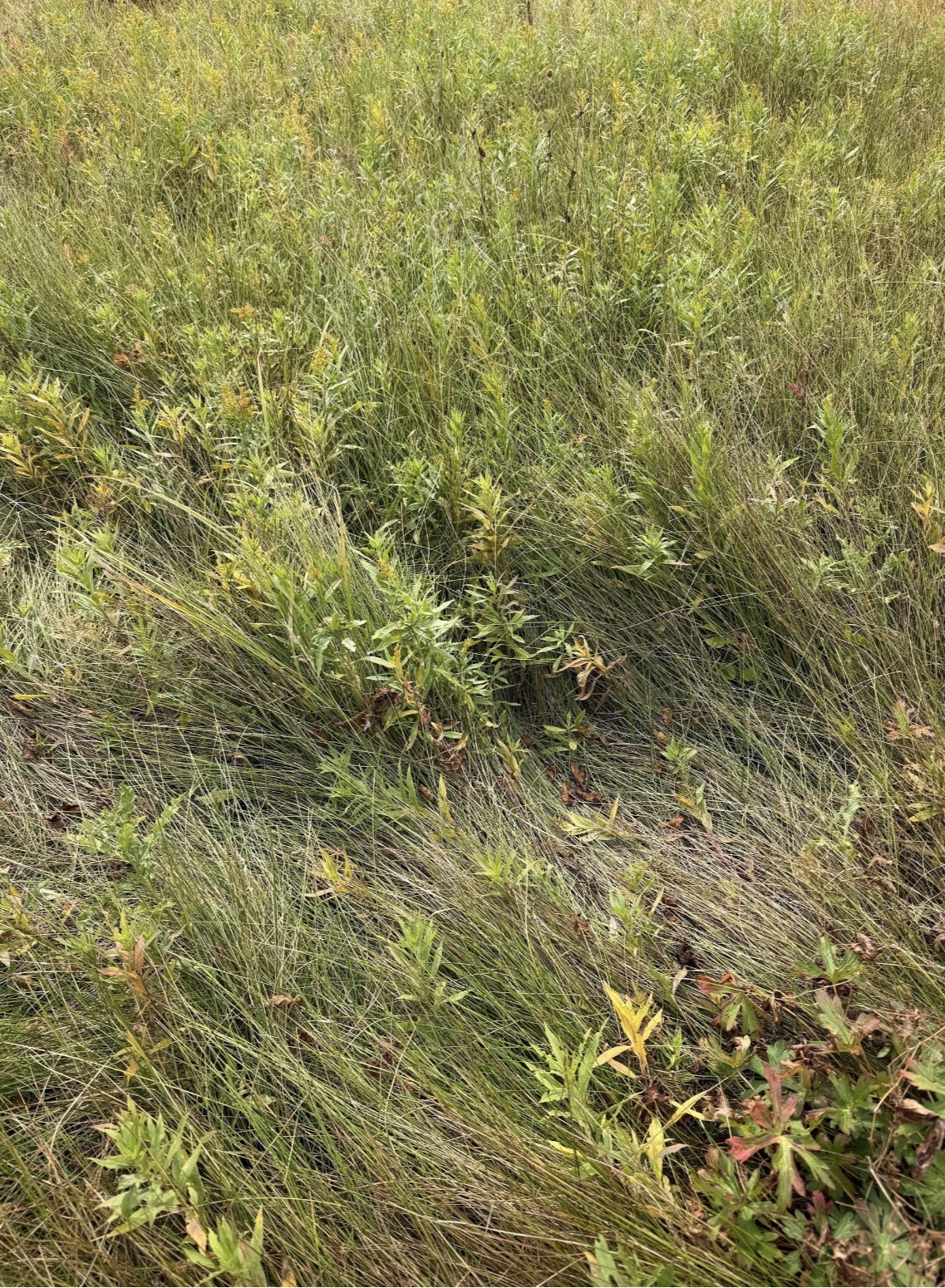
Something large has been laying here. Are there other clues to help you identify what? Scat? Tracks? Flora? Elevation? Habitat?
The point is, when you stop to look for the “hidden” clues, you’ll find signs of life all around you. And many of these clues tell a story of what happened just moments, hours, or days before you arrived. When read correctly, these subtle observations can guide you to your next sightng!
And this attention to detail, or “reading the story of the land”, doesn’t just apply in Yellowstone. You can practice this at home too. Look in your yard or local park for traces of animals, and you’ll find that there are clues and stories all around you.
Ready to learn to read the landscape like a tracker? Join a Yellowstone Wild Tours guide who can show you the signs most visitors walk right past. Book your tour today and see how much more there is to find.
To learn more about Jesse, and the entire Yellowstone Wild team, visit our About Us page.