
Quick Details
Grand Teton National Park in fall. A palette of amber yellows, deep oranges, and every shade of green. A landscape of peaks and valleys carved out through the power of water: both frozen and flowing. One unforgettable six day photographic journey capturing the ongoing saga of survival as the wildlife makes a final push to prepare for the upcoming winter season.
Fall 2027 Rates
Solo supplement waived
Per Person
Single Occupancy
$ 6150
Rates do not include a 2.5% processing fee
2027 Autumn Workshops:
- October 3, 2027 – October 8, 2027
- October 10, 2027 – October 16, 2027
Join local wildlife photographer Evan Watts for six days in the heart of Grand Teton National Park, chasing the iconic wildlife images that define this region as autumn puts on its final show before winter.
Fall is the most dramatic season in Jackson Hole. As the rut hits its peak, bull elk bugle into the predawn glow, while bull moose spar for mating rights in the shadow of the Teton range. The aspens and cottonwoods have turned vibrant shades of gold and orange, and bears roam across their fallen leaves in search of food. It’s a short season, and every day looks different from the one before. Each shoot is loaded with opportunities to capture something new, and this workshop puts you in the middle of it with a photographer who knows where to be and when.
Over four full days, you’ll photograph the animals that make this park famous: moose, elk, bison, pronghorn, and, with luck, black and grizzly bears. Between wildlife encounters, you’ll shoot the park’s classic landscapes, places like Oxbow Bend, Mormon Row and the Snake River Overlook, catching first light on the peaks and reflections on still water.
Evan’s approach puts the animal first. You’ll learn to read behavior, anticipate action, and keep a respectful distance. Good wildlife photography starts with patience and fieldcraft, and you’ll leave knowing how to get intimate, natural images without pressuring the subject.
In the field, Evan will help you sharpen your fundamentals, including exposure in challenging low light, settings for moving subjects, shutter speeds for action and motion blur, and lens choice for wildlife portraits versus animals-in-the-landscape compositions. He’ll also push you beyond the technical: how to use light, weather, background and behavior to tell a story, and how to make an image that feels like a moment.
You’ll come home with a diversified portfolio of compelling animal and landscape shots. You’ll also depart a better wildlife photographer, with a deeper understanding of the wild places and animals you’re photographing and the skills to capture them on your own.
Please note there is a 3-person minimum required to run this package. If the minimum is not met within 45 days of the start date, registered participants will receive a full refund of the package price excluding travel-related expenses.
Grand Teton Autumn Photography Workshop
-
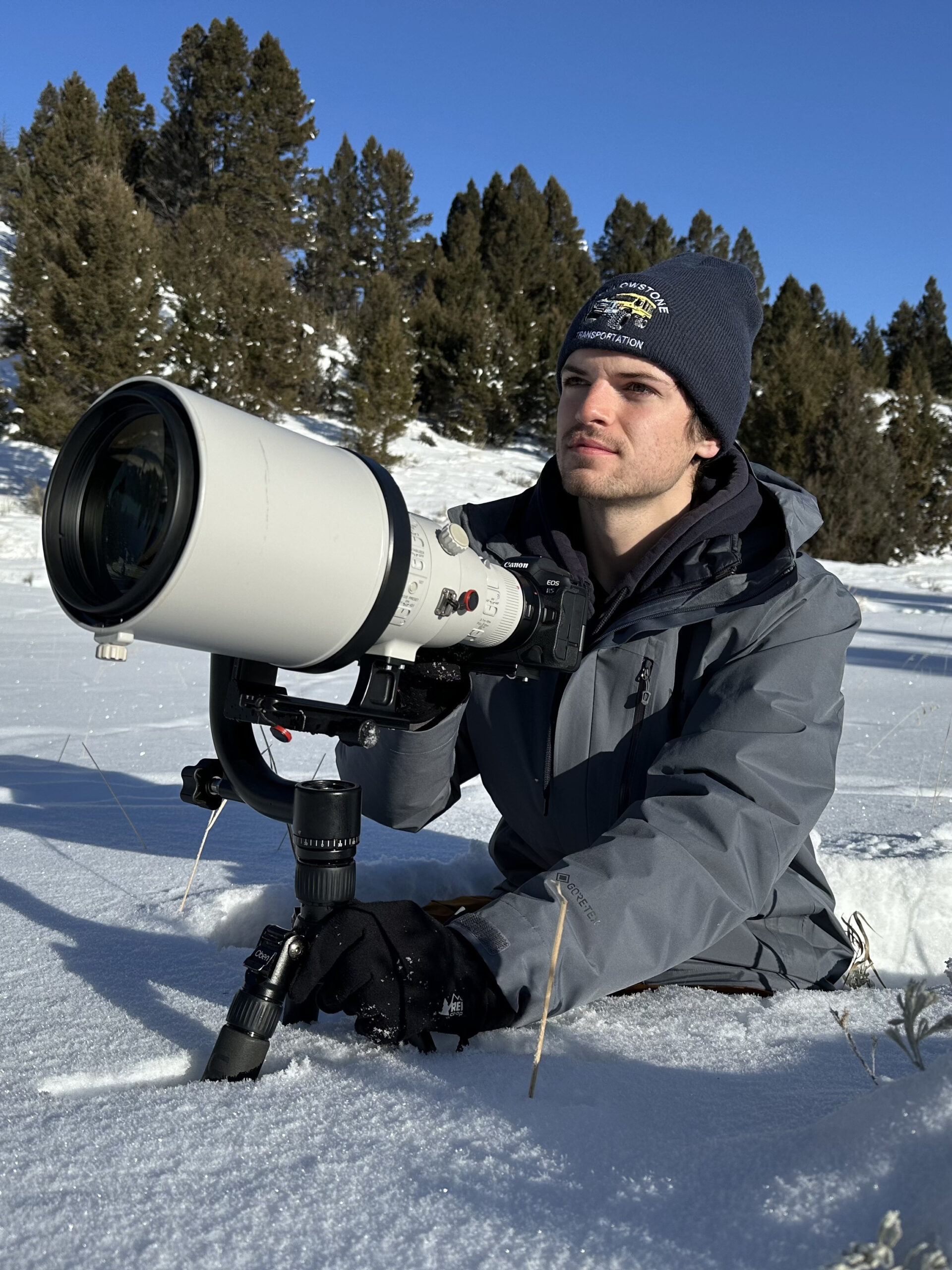
Evan Watts began working for Yellowstone Wild as a Naturalist Guide in May of 2023. Originally from central Kentucky, Evan obtained a B.S. in Wildlife Biology at Murray State University. Between semesters, he traveled west, working a seasonal cashier in Yellowstone National Park through the summers. Here, he spent every free moment in the field, learning the ecology, learning the landscape, and honing his craft.
Upon graduating, Evan left the rolling hills of Appalachia for the Rockies, moving just outside of Yellowstone’s northern border when he began working for Yellowstone Wild. His passion as a wildlife photographer is derived from his passion for the interconnectedness of ecosystems. Whether he’s observing grizzly bears selecting food sources based on seasonal availability, or documenting migratory birds moving across biomes to prioritize periods of abundance, these are the things that get Evan out in the field. He strives to showcase this in his work, targeting wildlife scenes that showcase environment, behavior, and capture the atmosphere of the settings his subjects are found in.
Evan shoots a Canon R5, and is most familiar with Canon equipment, but has experience using Nikon and Sony as well. This workshop is designed for anyone – beginner to pro. Going on this workshop will give you a deeper understanding of both the technical and artistic sides of photography. You will learn the concepts necessary to create artful, impactful images that tell a story about the species you are working with. Additionally, by the time this workshop is over, you will have a greater understanding of Yellowstone’s fascinating ecology.
Check out Evan’s work on his website, Instagram, and YouTube sites.
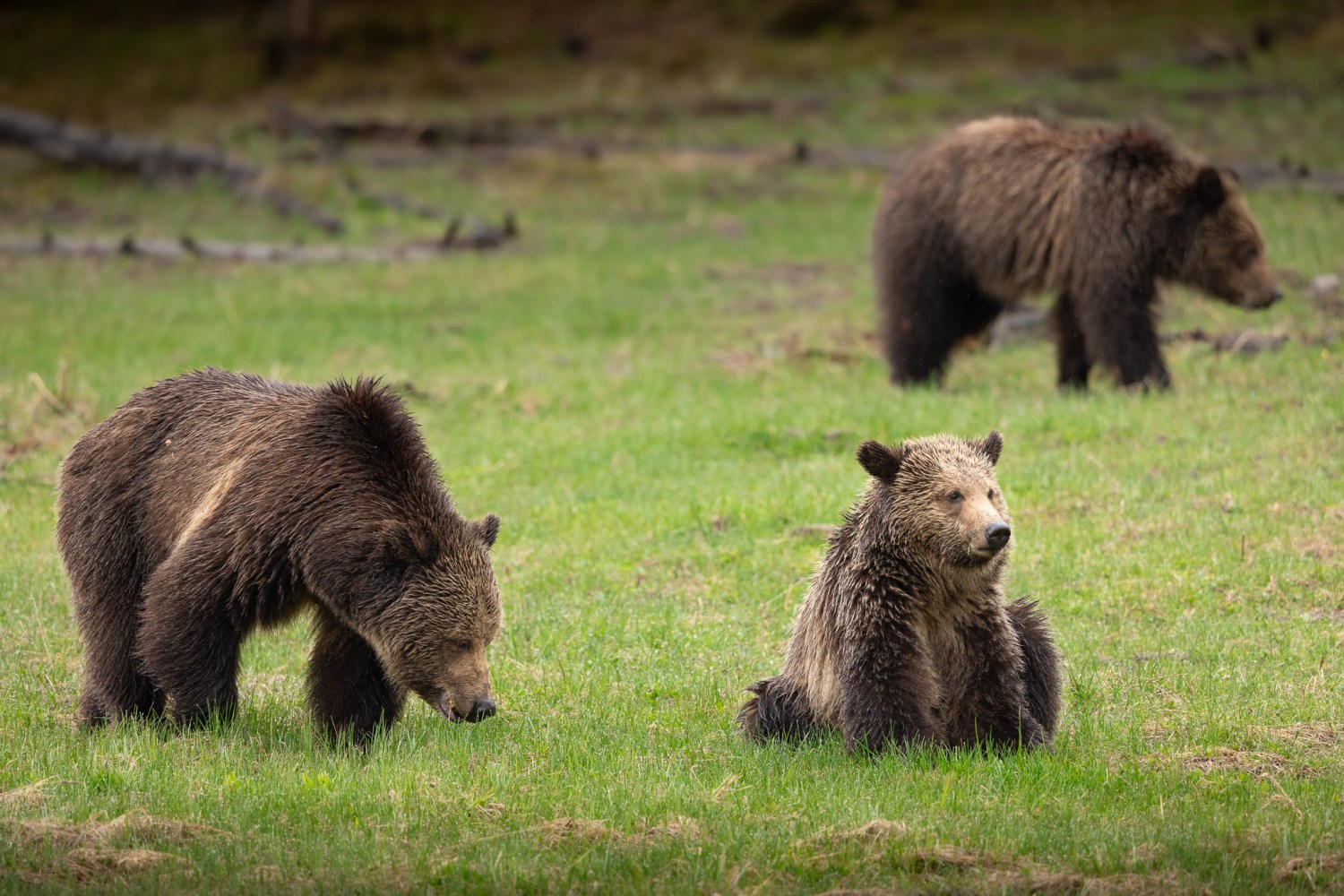
A family of grizzly bears feeding on green grasses in the Yellowstone spring. Photo by Evan Watts
-
2027 Autumn Workshop Inclusions:
- Local, professional photographer/naturalist Evan Watts
- (4) days capturing the iconic landscapes and wildlife of Grand Teton National Park
- Hands-on instruction in the field during shoots
- (2) sessions for orientation, post-processing, and Q&A
- Plenty of space for your camera gear and extra clothing
- All transportation from Jackson International Airport, on day one through departure from Jackson International Airport on day six
- (5) Nights lodging in Jackson, WY (single occupancy)
- All meals starting with dinner on Day 1 through breakfast on Day 6
- Continental boxed-breakfast to start each day
- Hot drinks (coffee, tea, hot cocoa)
- Healthy and hearty snacks (various protein/granola bars, mixed nuts, hummus, crackers, snack cheese, fruit, veggies, etc.)
- Fruit juice, sparkling water, and fresh water
- Full picnic lunch spread (GF and vegetarian available)+
- Dinner locations will be based on evening shoot end times and will be casual in nature including the possibility of meals to-go (dinner in the field)
- Interpretation of wildlife activity and behavior to help understand the wildlife in the context of their habitat
- Hand/toe warmers
- Park Entrance Fee(s)
- Comprehensive packing list
- Trip planning documents provided 100 days and 10 days prior to arrival
NOT included in workshop price:
- Transportation to get to Jackson, WY for start of package
- Gratuity for workshop instructor
- Camera equipment/gear
-
2027 Autumn in the Tetons Workshop Overview:
Upon booking guests will receive a comprehensive comfirmation email. 100 days before the package starts, additional planning documents will be sent via email. 10-14 days prior to arrival, guests will receive a day-by-day detailed final itinerary. Please read all correspondence thoroughly to find answers to frequently asked questions and ensure enough time for proper preparation.
Day 1: Arrive in Jackson, WY no later than 3:00pm. Evan will work with each guest to coordinate exact pickup location. Check in to lodging and enjoy group dinner/orientation at a local cafe and gallery.
Day 2-5 Pick up at 6:30am for full day photo shoot in Grand Teton National Park. All start times, end times, and locations are subject to change based on wildlife activity, weather, and group interests. Boxed breakfasts and lunches will be provided in the field. Dinner included at local Jackson Hole eatery.
Days 6: Check out of lodging at 8:00am and join group for breakfast before departing for the airport by 10:00am.
-
A deposit in the amount of 30% is required at time of booking in order to secure your reservation. The balance due will be charged to the card on file 60 days prior to your tour start date. If you would like to change your form of payment prior to the final payment, it is your responsibility to notify Yellowstone Wild in advance. A receipt will be emailed upon payment of deposit and again when the balance has been collected.
Should you need to cancel your tour with us more than 61 days prior to your tour departure date, your deposit is refundable minus a *$300.00/person service fee.
*If you booked online, the fees charged by the third-party booking system are also non-refundable.
Should you need to cancel your tour within 60 days of your tour departure date, your payment is non-refundable.
Should your tour need to be canceled due to factors beyond our control, including (but not limited to) extreme weather conditions, wildfire, natural disaster, park closure, airline cancellations, war, government shutdown, pandemic, or an “Act of God” we are unable to offer a cash refund.
As a small business, we are rarely able to make exceptions. We highly encourage you purchase third party trip insurance to protect your investment.
We reserve the right to cancel the trip if the minimum enrollment of 4 guests has not been met 31 days prior to the trip start date. A full refund of your Yellowstone Wild package price is given if this occurs. Yellowstone Wild is not liable for reimbursement of travel-related expenses such as airfare, car rentals, or other incidentals.
We strongly recommend you purchase third-party travel insurance that will protect your investment in case of unforeseen cancellations, changes to your travel plans, natural or human caused disasters, illness, or other unpredictable events. (For suggested travel insurance companies, see [Forbes Advisor].
-
Recommended Gear:
- Batteries/Charger – Enough battery power to shoot the entire day (recommend 3 batteries per camera body).
- Memory cards: Budget for using up 50-100GB of card space PER DAY (more if you shoot video clips in addition to stills). This may be overkill if you tend to shoot on single-shot mode instead of high-speed burst mode. But if you are using high-speed burst mode, you will eat through card space very quickly. Or, if you prefer to bring a laptop/hard drive and offload images from your card each evening, that could work too.
- Cleaning – Lens cloths, air blower, lens solution.
- Filters – Clear UV, Polarizer
- Tools: Allen wrenches or Leatherman type tool
Required Gear:
-
- At least one quality camera body (DSLR or mirrorless recommended) with lenses of your choice.
- At a minimum, we recommend one telephoto lens (maximum focal length of 400, 600, or 800mm would be ideal) for safely photographing wildlife, as well as one wider lens (examples: 16-35mm, 14-24mm, 24-70mm, etc.) for photographing landscapes.
Recommended Lenses:
- Canon/Sony/Nikon 500mm or 600mm f/4
- Canon/Sony/Nikon 400mm f/2.8
- Canon/Sony/Nikon 100-400mm f/4.5-5.6
- Canon 100-500mm f/4.5-7.1
- Nikon 600mm f/6.3
- Nikon 200-500mm f/5.6
- Nikon 180-600mm f/5.6-6.3
- Sony 200-600mm f/5.6-6.3
- Sigma 150-600mm f/5-6.3
- Sigma 60-600mm f/4.5-6.3
600mm is the ideal lens length for wildlife in this region. Try to bring a lens that can at least get you close to this.
Renting lenses is also an option at the following site:
-
Recommended Packing List
Yellowstone possesses some of the most extreme changes in temperature and weather conditions anywhere. Temperatures on any given tour could range from below freezing Farenheit to +90F (18C to +32C). We, therefore, recommend plenty of warm clothes that can be layered and removed, allowing you to adjust and stay comfortable throughout your tour.
As far as clothing goes, here are our suggestions and what our guides wear and/or bring on spring tours:
– Long underwear – Starting with your base layers, synthetic or wool long underwear tops and bottoms are critical to your comfort (we can find places to shed this layer later in the day if necessary). Please stay away from cotton, which can hold moisture and drastically chill the body, whereas wool and synthetics wick moisture and can even insulate while wet.
– Sweater or fleece – Ideally more than one layer of insulating layers like fleece or wool sweaters will allow for effective layering and allows you to easily shed layers as the day warms up.
– Insulating jacket – A well-insulated jacket is key to staying warm in Yellowstone’s cooler temperatures. Down is the best insulation, and a hood helps prevent heat loss through your head.
– Wind-proof/waterproof jacket – A windproof and water repellent jacket is your most important protection from the biting Wyoming winds. Gore-Tex or something similar is highly advised as the best moisture/wind barrier.
– Gloves or mittens
– Warm hat that covers your ears. We lose tremendous body heat from our heads. Protect your ears from the chilly wind with a wool or fleece hat.
– Socks – Warm wool or synthetic socks are key to keeping your toes from hampering your good time.
– Cool layers (t-shirts, quick dry pants and shorts, shorts, etc)
– Waterproof hiking boots/shoes – Roomy footwear is better as you do not want to restrict circulation in your feet/toes. All shoes must be closed-toed. Sneakers are discouraged unless they are fully waterproof
– Sunscreen – With high elevation sun, many of us burn easily, especially when we are distracted by something like watching wolves for extended periods of time.
– Reusable water bottle
– Daypack – A day pack is very handy for personal items: water bottle, sunglasses, camera, and of course for all the extra layers you will want.
Please let us know if you have additional questions about gear.
-
Yellowstone Wild photography instructor/guides are leaders in the field of ethical wildlife photography. An in-depth understanding of wildlife biology and keen observational skills drive their ability to set our photography clients up for powerful images while respecting the wildlife and without causing any undue stress, discomfort, or harm. Your guide’s capacity to read animal behavior and anticipate their next movements, paired with a familiar understanding of the local topography, often allows them to plan ahead and help you set up for wonderful shots of Yellowstone’s wildlife on the stunning winter landscape.
We encourage photographers to focus on capturing images of wild animals interacting naturally with their habitat, with one another, and with their prey species, unaffected by human presence; our photo guides strive to help clients capture images that tell powerful stories of animal behavior and ecology while creating a sense of place within the pristine winter setting of Yellowstone.
OUR CODE OF ETHICS
Yellowstone National Park is a reminder that everything is connected and that its landscapes thrive through balance, diversity, and coexistence – as do all of us.
When the world feels divided, we turn to this wild place for lessons in how to move forward together.
At Yellowstone Wild, we promise to lead by example. We will choose curiosity over judgment, compassion over indifference, and connection over division — both on and off the clock.
We welcome our guests into an environment of shared discovery guided by kindness and curiosity. On our tours, we honor the backgrounds, beliefs, and cultures each guest brings, while holding firm to the expectation of respect for one another and to this place we all care for.
We believe our tours, though limited in time, have the power to establish common ground, form connections, and share experiences that bring us closer together as humans.
Ethics, Regulations & Responsibility
Yellowstone Wild operates as a licensed Commercial Use Permit holder under the National Park Service (NPS). This means we are required to follow—and strictly enforce—all NPS rules and regulations. Beyond that, as lifelong advocates for wildlife and wild places, we uphold our own ethical wildlife-viewing, resource protection, and risk management standards.
Our goal is to provide exceptional viewing and photography opportunities without negatively impacting wildlife or the natural fluctuations of ecological processes. That balance is only possible when animals are allowed to move, feed, rest, and hunt without interference, and our geologic features are allowed to function without human tampering.
While on tour with Yellowstone Wild, the following National Park Service regulations apply and are non-negotiable (subject to federal law enforcement) including the use of seatbelts at all time when the vehicle is on a road. Please note this list is not all-inclusive. You can visit the Yellowstone National Park NPS website for a comprehensive list of all regulations:
- Maintain at least 25 yards from all wildlife
- Maintain at least 100 yards from wolves, bears, and cougars (mountain lions)
- Never approach, follow, or remain near wildlife—including birds—if your presence alters their behavior
- Vehicles must be completely pulled off the road when stopping to view wildlife or load/unload passengers
- Feeding wildlife is illegal
- In thermal areas, travel is restricted to boardwalks and designated trails only
- Throwing anything (including snow or natural objects) is prohibited and may result in fines and/or tour termination
- Seatbelts are required and enforced as outlined by the National Park Service federal regulations
Why These Rules Matter
Wild animals live demanding lives. The ethical responsibility of visiting Yellowstone is to ensure our presence does not add stress, risk, or hardship to theirs. Your guide is trained to read animal behavior, and if an animal shows signs of disturbance, we must increase our distance immediately.
Failure to follow a guide’s instructions—especially regarding wildlife proximity, adherence to seatbelt use, and group safety instructions—may result in the immediate termination of your tour without refund, at the guide’s discretion.
Special care must be taken around animals feeding on or resting near carcasses. Approaching these areas can displace animals from critical food sources and may put people at serious risk. Carcasses are often defended by predators and scavenged by multiple species, including grizzly bears. Approaching such areas is strictly prohibited.
Finally, we share this park with other visitors, researchers, and permanent employees. Quiet, respectful behavior ensures the best possible experience for everyone and helps preserve the integrity of wildlife observations and continued preservation of our sensitive thermal features, waterways, and all pristine areas.
At Yellowstone Wild, ethical behavior is an expectation. Meeting these expectations is the foundation of meaningful, safe, and responsible wildlife and wilderness experiences.
-
It’s important to remember the wild animals we seek to observe and photograph are exactly that, wild, free-ranging animals that can roam throughout all of Yellowstone’s vast and rugged 2.2 million acres and beyond. The probability of locating and observing them is greatly elevated due to your guide’s familiarity with the landscape and the animals themselves. We do not guarantee any wildlife sightings on our tours; however, we will guarantee your guide will use his or her knowledge, skills, and network of other guides, wildlife watchers, and photographers to do everything possible to find and photograph the animals you’d like to see. Our guides are in the park nearly every day searching for and watching wildlife, and that consistent experience pays off in finding the animals you’ve traveled to observe.
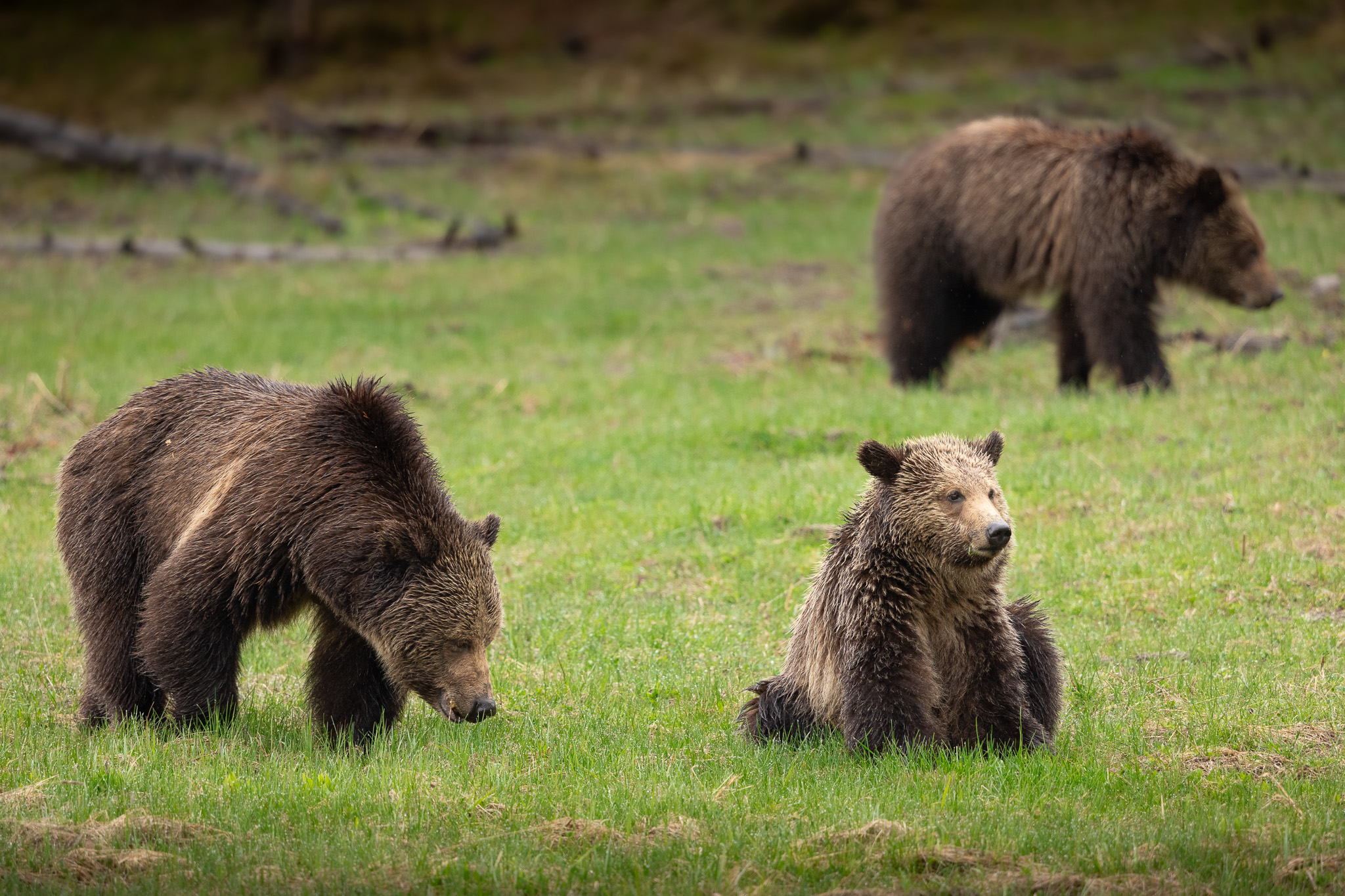
See what evan's guest have to say!
Still have questions? Check out our FAQ’s page!