
Will Yellowstone Erupt In My Lifetime? What Visitors Actually Need to Know
Blog by YW Lead Naturalist Laura Lyznicki
“When’s the next big one?” “Is it gonna blow while we’re here (insert nervous laughter)?” “How devastating will a major eruption be?” These are among the most common questions Yellowstone guides hear on nearly every tour.
And honestly, the thought isn’t a small one — a volcanic eruption violent enough to reshape a continent, bury mountain ranges in ejecta, and plunge the world into another ice age is genuinely wild to consider!
Here’s the good news: the odds of that happening in our lifetime (or your children’s, or children’s children, or their children’s children…you get the idea) are about as slim as spotting a wolverine fighting a lynx on your first trip to Yellowstone. Possible? Technically. But don’t hold your breath.
A recent study by the Yellowstone Volcano Observatory found that the magma chambers sitting 3 to 7 miles beneath the surface are only about 10 to 20% molten rock. That’s not nearly enough melted material to fuel a major caldera-forming eruption like those in Yellowstone’s volcanic past. For reference, Yellowstone’s largest prehistoric eruptions were estimated to be 700 to 2,500 times more powerful than the 1980 eruption of Mount St. Helens. So yeah, Yellowstone has the potential for massive, globally catastrophic activity. But at the moment, it isn’t even warming up in the bullpen right now so to speak.
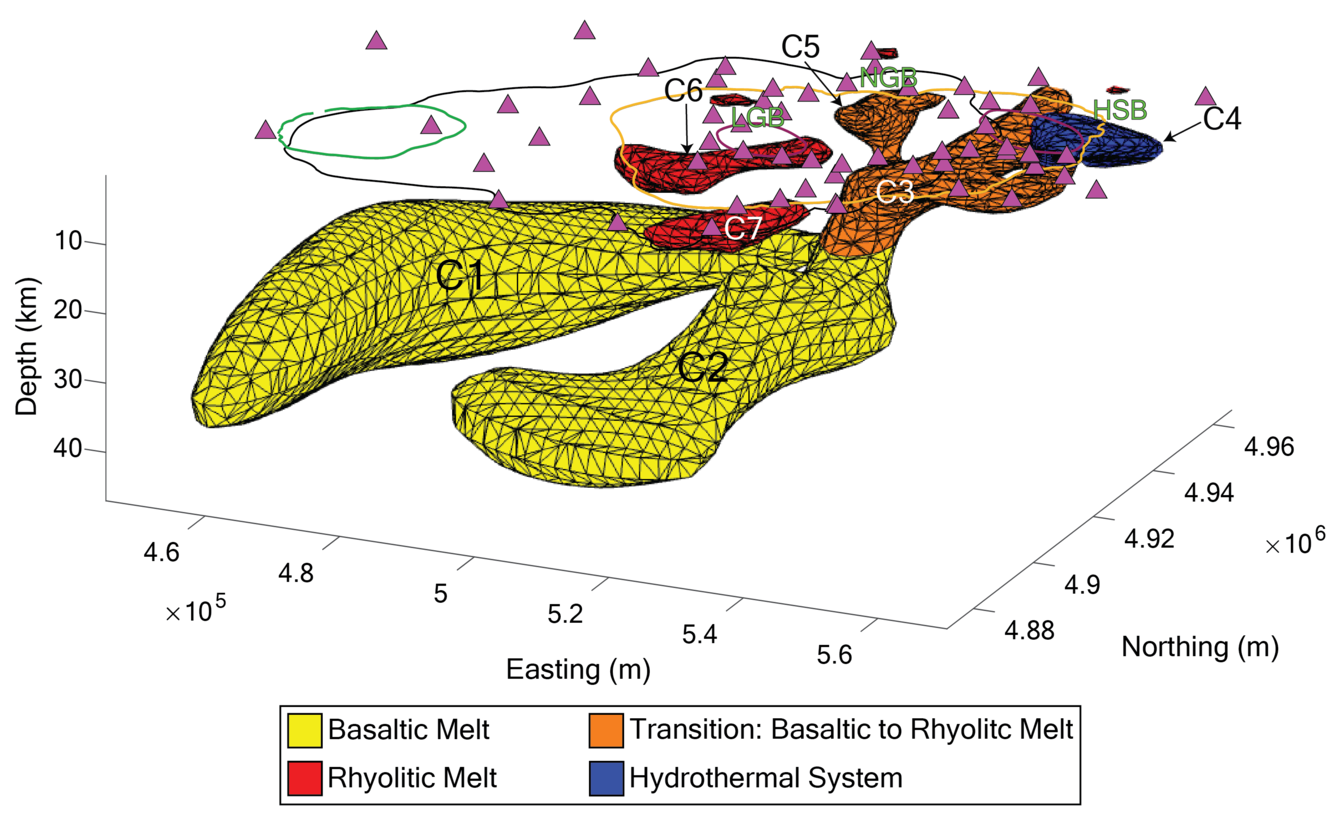
The Yellowstone Volcano Observatory shares this 3D geological model showing different melt types in Yellowstone’s magma chambers. In color-coded sections at various depths.
What IS worth paying attention to however are hydrothermal steam explosions.
These tend to fly under the radar, but they’re far more common than a full volcanic event — and far more dramatic than most people realize. They have nothing to do with magma reaching the surface. Instead, they happen when superheated water is trapped underground, pressure builds, and the water suddenly flashes into steam. The rapid expansion can trigger a violent, unpredictable explosion with very little warning.
Case in point: Biscuit Basin, July 23, 2024.

Sapphire Pool in July 2023 during a guided walk of Biscuit Basin pre-July 24, 2024 hydrothermal explosion. Photo courtesy of YW Naturalist Aleksa B.

Biscuit Basin boardwalk post-explosion on July 24, 2024. Photo courtesy of Jacob W. Frank – National Park Service
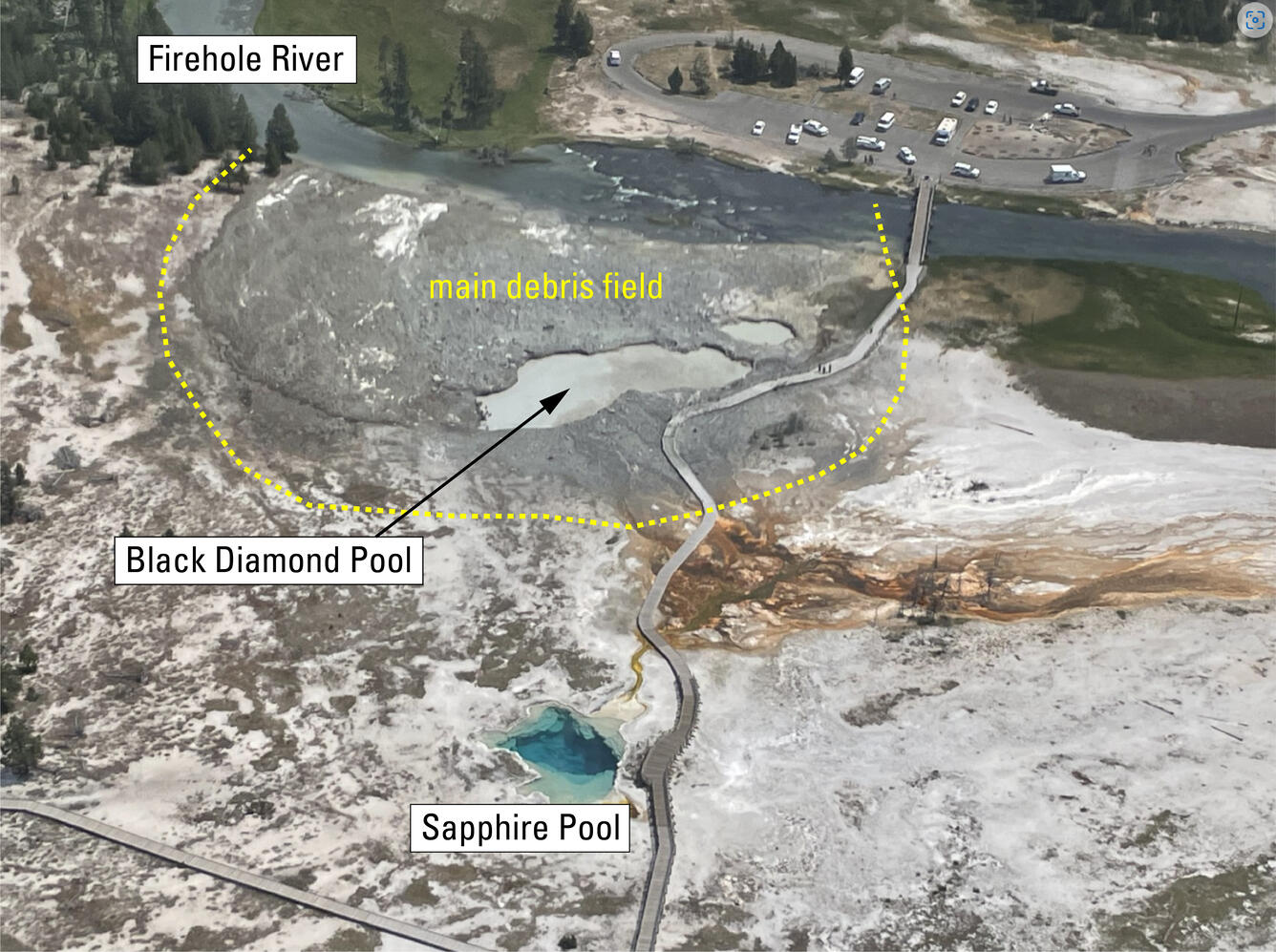
Aerial view of a debris field near the Firehole River shortly after the July 23, 2024 hydrothermal eruption at Black Diamond Pool. Labeled with geographical features.
That morning, visitors were doing what visitors do — strolling the boardwalk, admiring the colorful pools — when the ground had other plans. Without warning, one of those pools (Black Diamond Pool) erupted, sending a column of muddy black water, steam, and debris hundreds of feet into the air. Grapefruit-sized rocks rained down and demolished sections of the boardwalk. Blocks weighing over 100 pounds were thrown clear of the blast zone. The dark color? A mix of mud, debris, and boiling water. The whole thing was caught on video by multiple visitors, making it (according to Michael Poland, Scientist-in-Charge at the Yellowstone Volcano Observatory) the best documented hydrothermal steam explosion in Yellowstone history. And somehow, incredibly, no one was hurt.
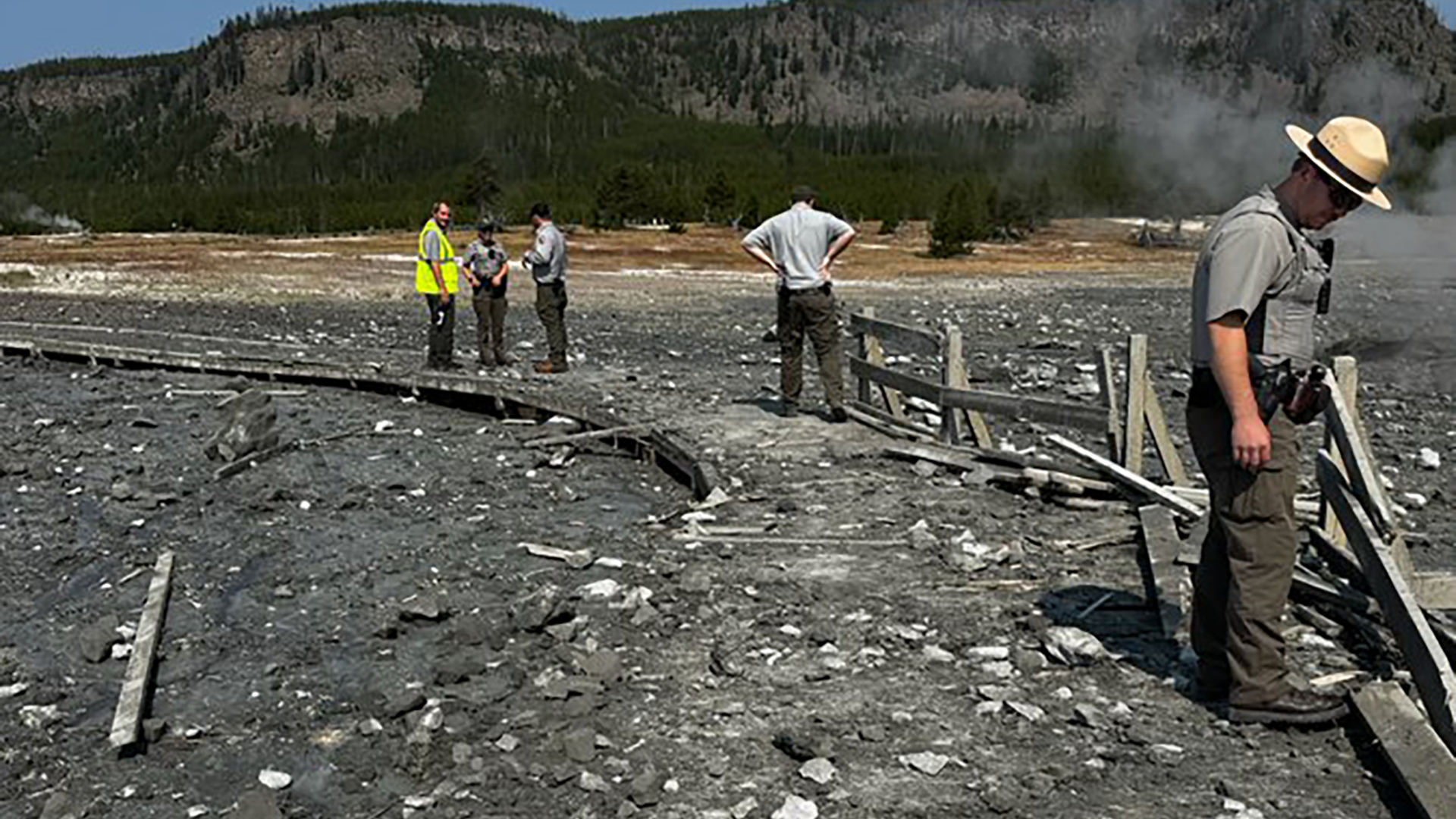
After closing Biscuit Basin to visitors, National Park Service personnel check out the aftermath of a major hydrothermal explosion on July 23, 2024. Photo courtesy of Yellowstone National Park.
Small hydrothermal steam explosions happen in the park roughly one to three times a year. Events at the scale of Biscuit Basin are much rarer — and almost never witnessed in real time. Most are discovered after the fact through geophysical monitoring, which uses highly sensitive instruments placed near thermal features to detect subtle changes in frequency. These technologies are giving scientists a better window into what drives these explosions and, eventually, maybe how to anticipate them across Yellowstone’s vast backcountry.
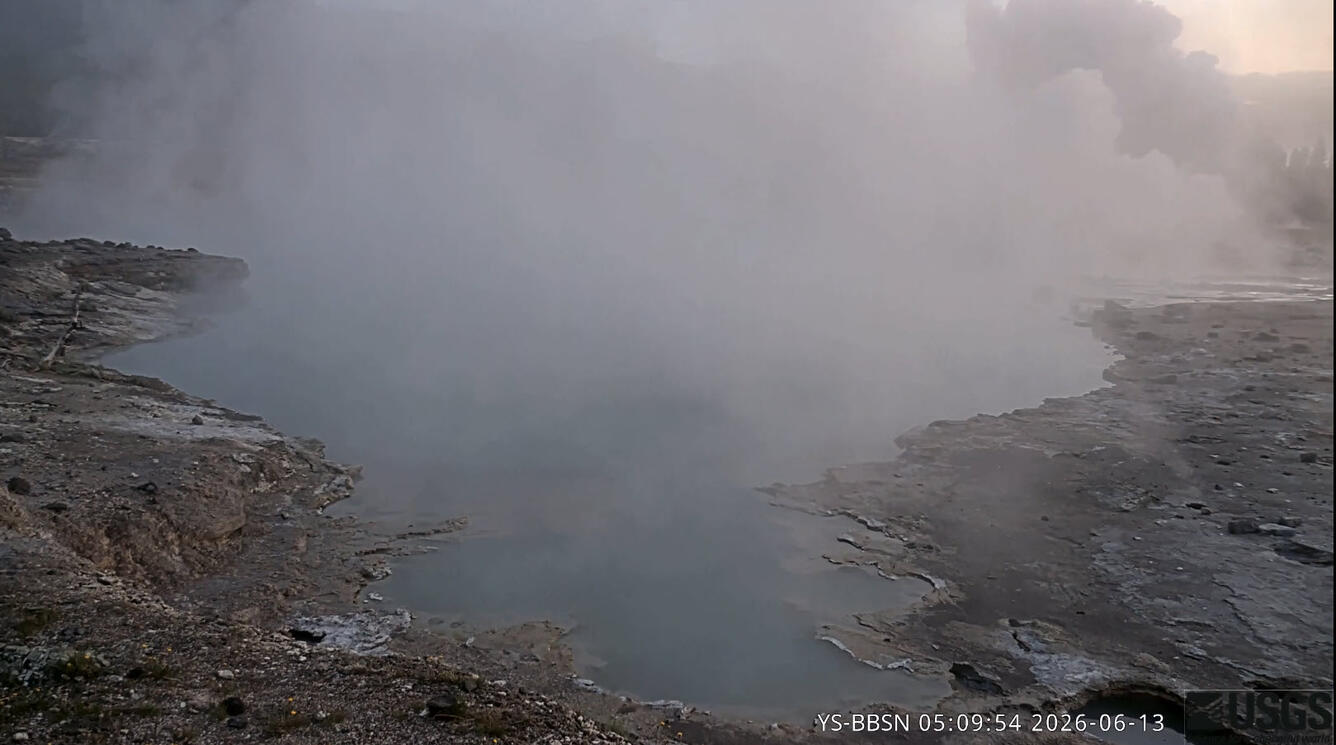
Screen capture showing the view from the Biscuit Basin research and monitoring camera at 05:09:54 a.m. MDT on June 13, 2026. Black Diamond Pool is in the foreground, and a steam plume in the upper right marks the occurrence of a small hydrothermal explosion behind (to the north of) the pool.
Biscuit Basin remains closed while researchers continue monitoring seismic activity and thermal changes in the area. We’ll be following right along with them – and we hope you are too!
Click HERE to see updates regarding continued geothermal activity, including a brand new geyser, at Biscuit Basin!
Blog written by YW Lead Naturalist Laura L.

To learn more about Laura and the rest of the Yellowstone Wild team visit our “About Us” webpage.