How Art Brings Out The Scientist In All Of Us
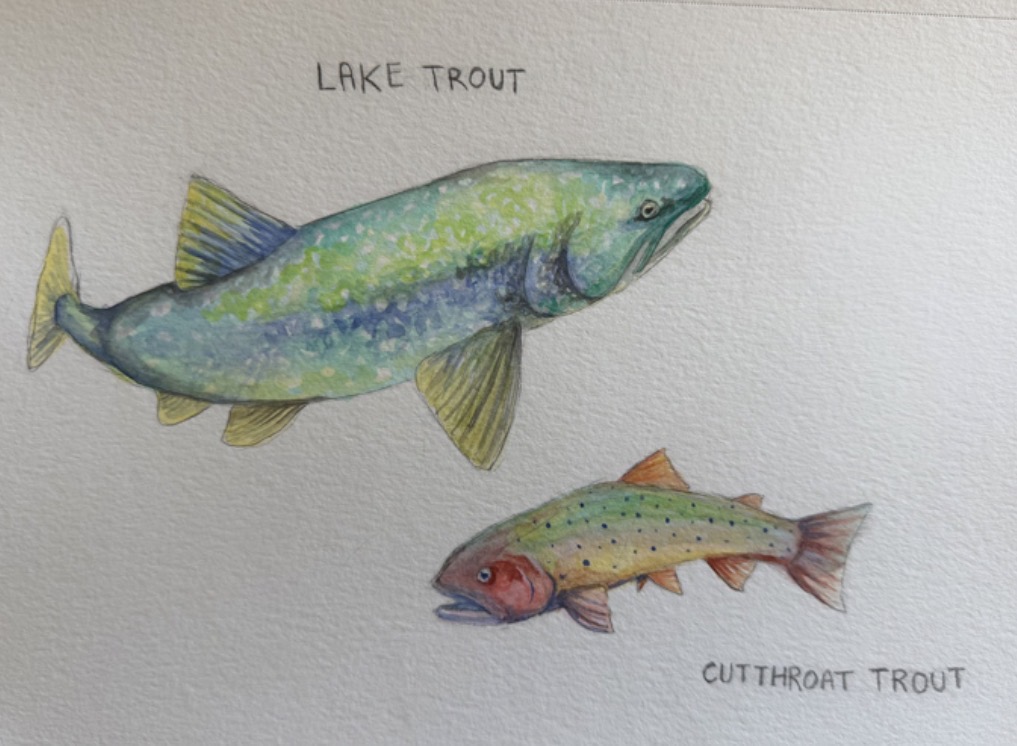
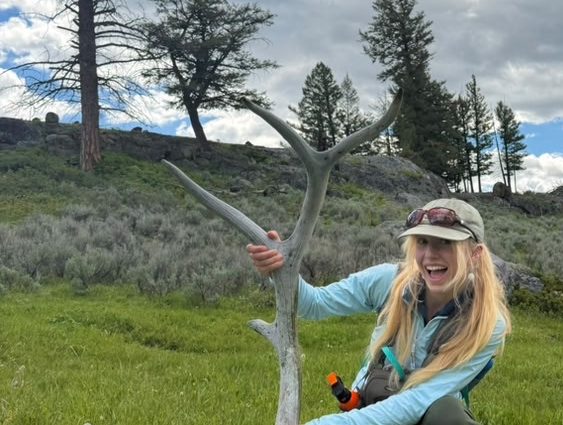
Blog and watercolors by YW Naturalist Jesse G.
Before there was modern day science, art helped people to communicate and make sense of the natural world. Humans have been using creative methods like painting and drawing for documentation and visual communication long before spotting scopes and camera lenses existed. Paintings and stories were once the only way to interpret and share what someone had seen in the wild.
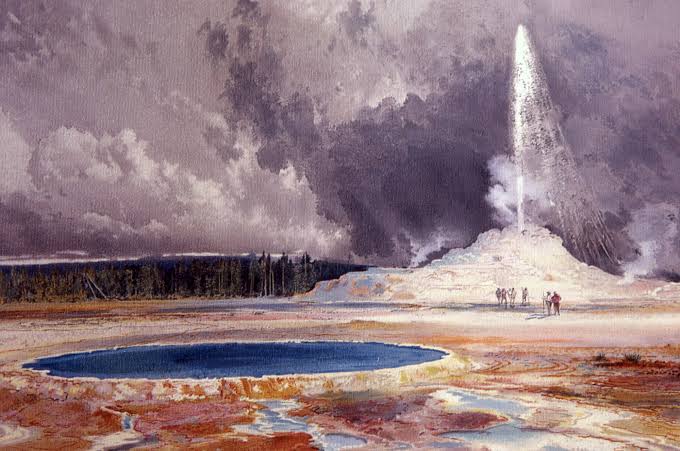
Castle Geyser in the Upper Geyser Basin. Thomas Moran during the 1871 Hayden Expedition
Perhaps the one of the most compelling examples of art supporting science is the work of Thomas Moran, a member of the 1871 Hayden Expedition. Specifically, his painting of the Grand Canyon of the Yellowstone which was critical to the establishment of a National Park – Yellowstone – the world’s first. Without Moran’s art, people could not comprehend the vast, alien landscapes and thermal features that were being shared through written documentation alone. Not surprisingly, the more emotionally connected people feel to a place, the more they tend to care for it. Art helps fill that gap and reminds people of what matters to them. In homes around the world, people still keep photos and paintings of Yellowstone as a reminder of this place and a moment that inspired them. Part of what’s outstanding about Yellowstone is that nearly everyone who has been here can find common ground in its beauty. That’s exactly what Moran’s painting did over 150 years ago, and it’s the same thing even a simple sketch in a field journal can still do today.
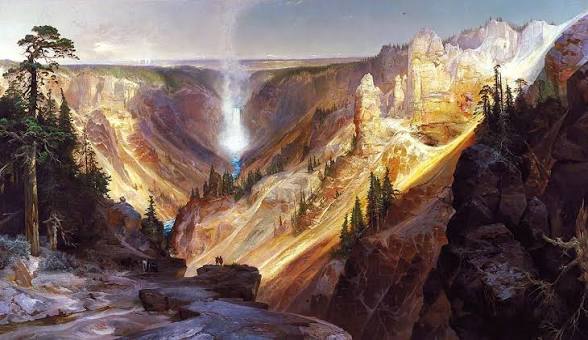
Despite comprehensive scientific data collected by scientists, it was visual documentation that convinced a “skeptical congress” to create the world’s first National Park in 1872. Thomas Moran painting 1871 Hayden Expedition.
Art and science actually have a lot in common. Both require patience, communication, observation, curiosity, and a fair amount of trial and error. When scientific data and creative work are used together, the big-picture concepts becomes more complete. Science can explain intricate ecosystem functions and details invisible to the human eye, while art brings those details into focus, connecting people to the natural world on an emotional and personal level. By evoking the emotion of the observer, art communicates what facts alone cannot. It is this combination of wonder and evidence that moved our country’s leaders to take a leap of faith by setting aside—”for the benefit and enjoyment of the people”—what is now Yellowstone.
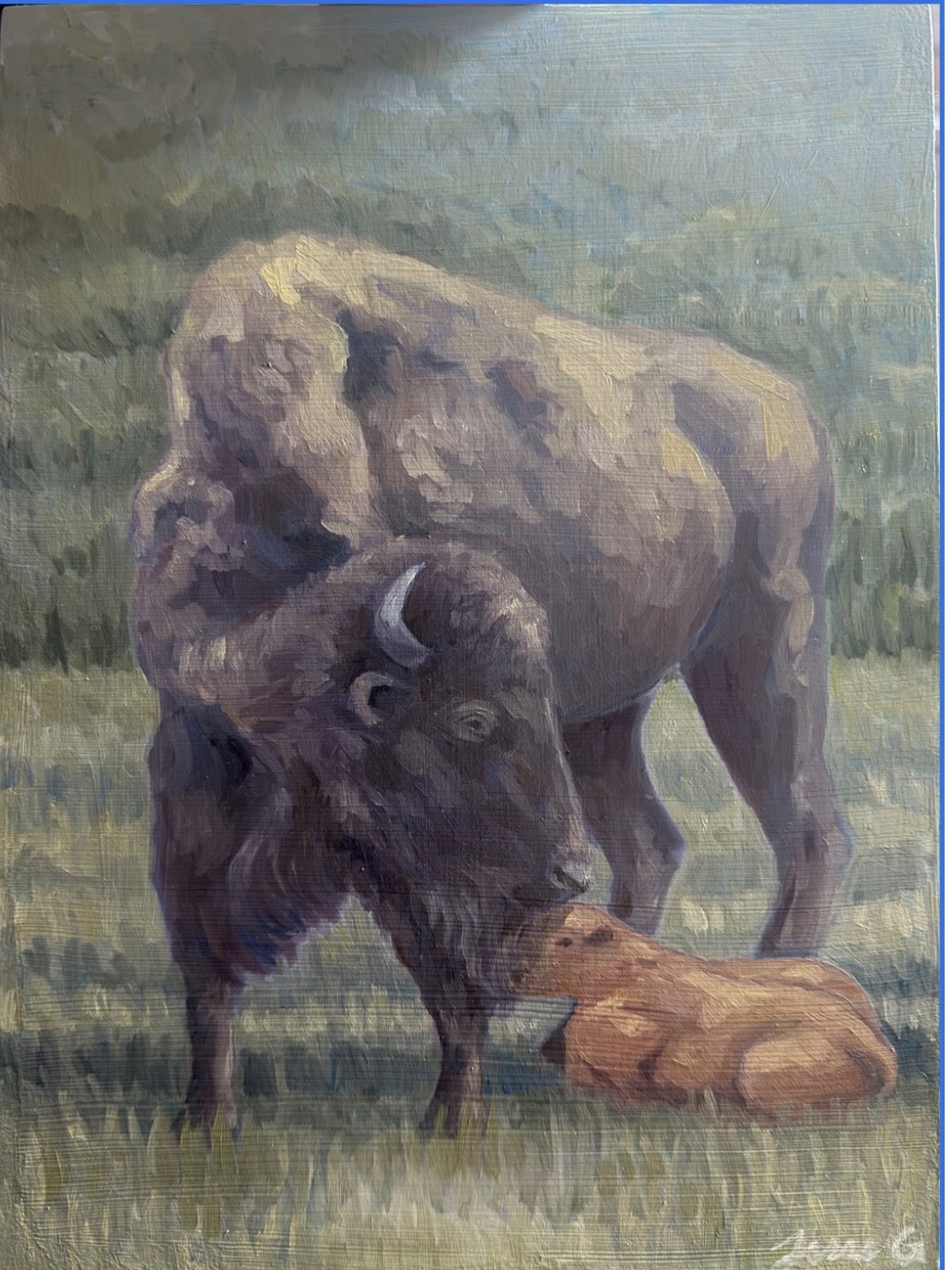
Tender moment between a bison cow and her newborn calf. Watercolor by Jesse G.
Field Notebooks
This is where a field notebook comes in. Art teaches you to sit still and have patience. It shows you what happens when you aren’t moving or disturbing ecological processes. I’ve always kept a field notebook myself; some small, for quick, messy notes on things I learn on the spot, and others more detailed for when I have time to stay still and linger longer. It helps me organize my thoughts, and later on, remind myself of what I actually saw after a long day outside. Keeping a field notebook strengthens your understanding of the seasonal and behavioral changes that are always happening around you, and it can easily become a creative process of its own – cementing both objective observations and subjective emotional connections.
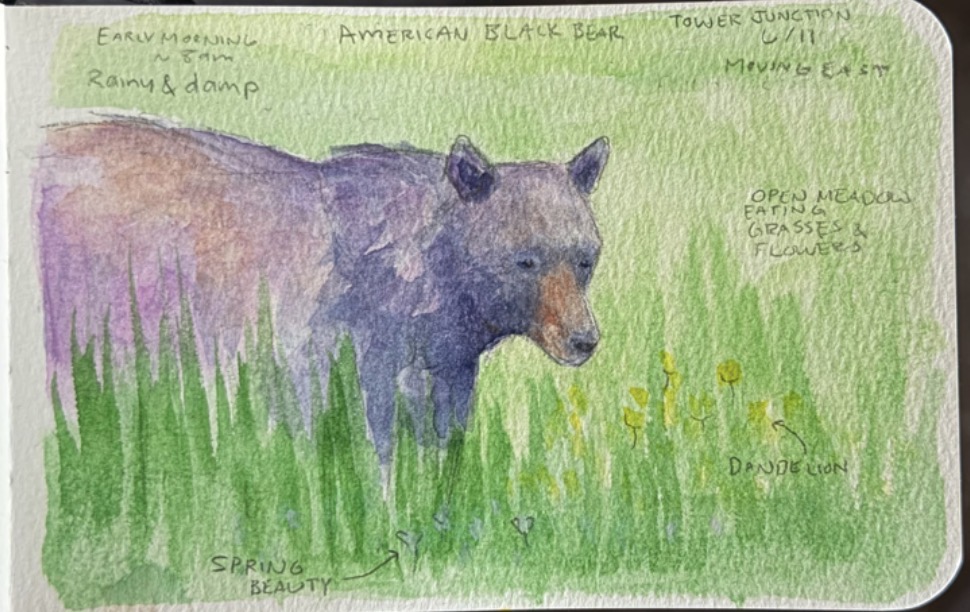
Example of a quick watercolor in a field journal. Black bear. By YW Naturalist Jesse G.
Recording the weather, location, date, and time is worth doing for your own organization. Recording the behaviors of wildlife and the landscape they took place in gives you more context for the sighting later.
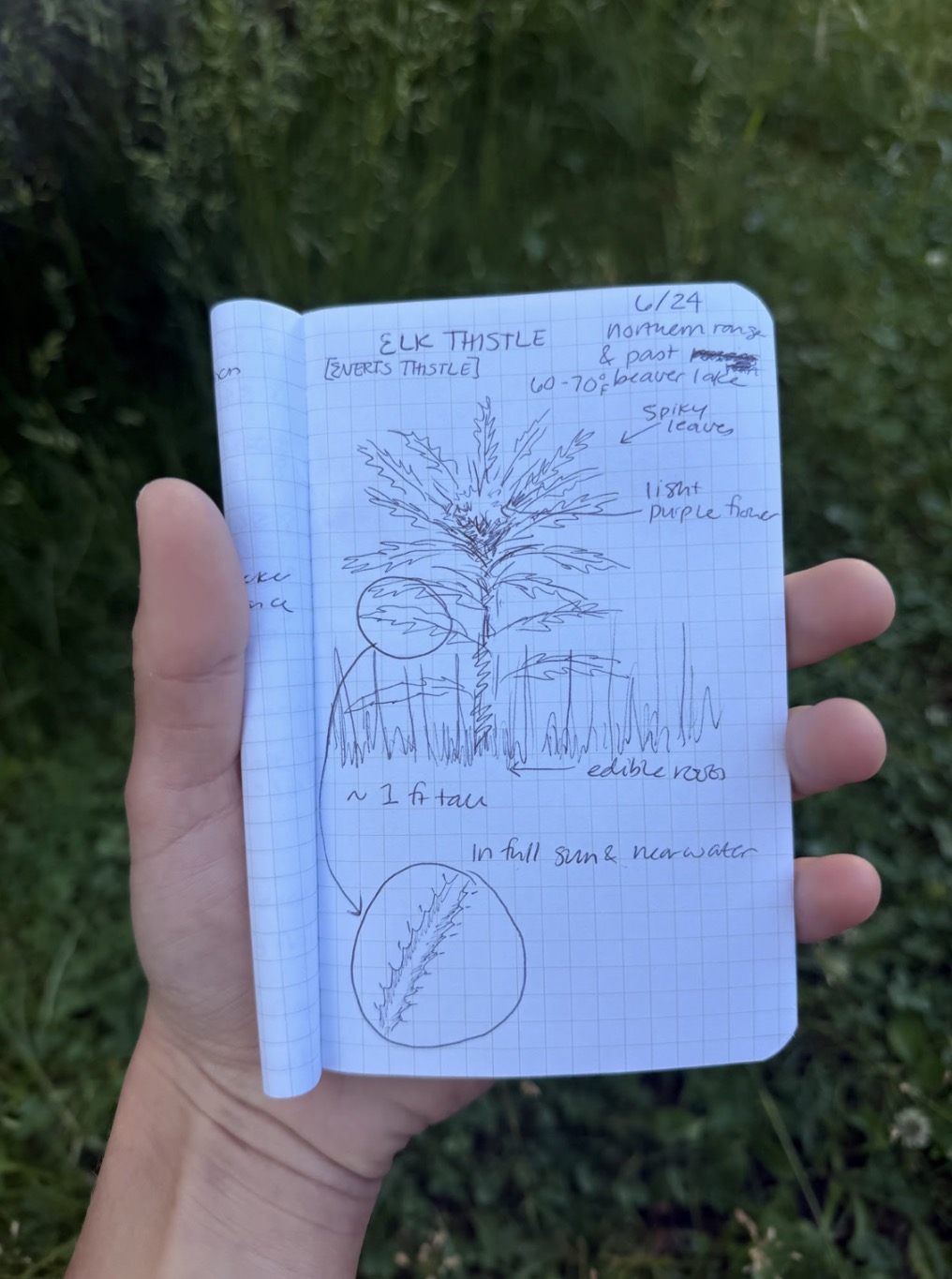
A small notepad, a pen/pencil, some curiosity, and a few observations are you need to keep a field journal!
Quick sketches capture the small intricacies of shapes and tiny details you’ll likely forget otherwise. The good news is that creating something other people enjoy doesn’t have to be the point of your field notebook. These sketches can be messy and unfinished. As long as the intended message is there in a way that you can remember, you don’t need to be an experienced artist with a bag full of art supplies and a fine arts degree to keep one.
Keeping a field notebook roots you in the moment of your observation, and it draws your attention to the patterns, colors, movements, and interactions you might otherwise miss. Some of the best wildlife sightings I’ve had were the ones where I sat down with the intention to paint and let the wildlife come to me. In those moments, you see natural movement across the landscape, and behaviors you might not otherwise catch.
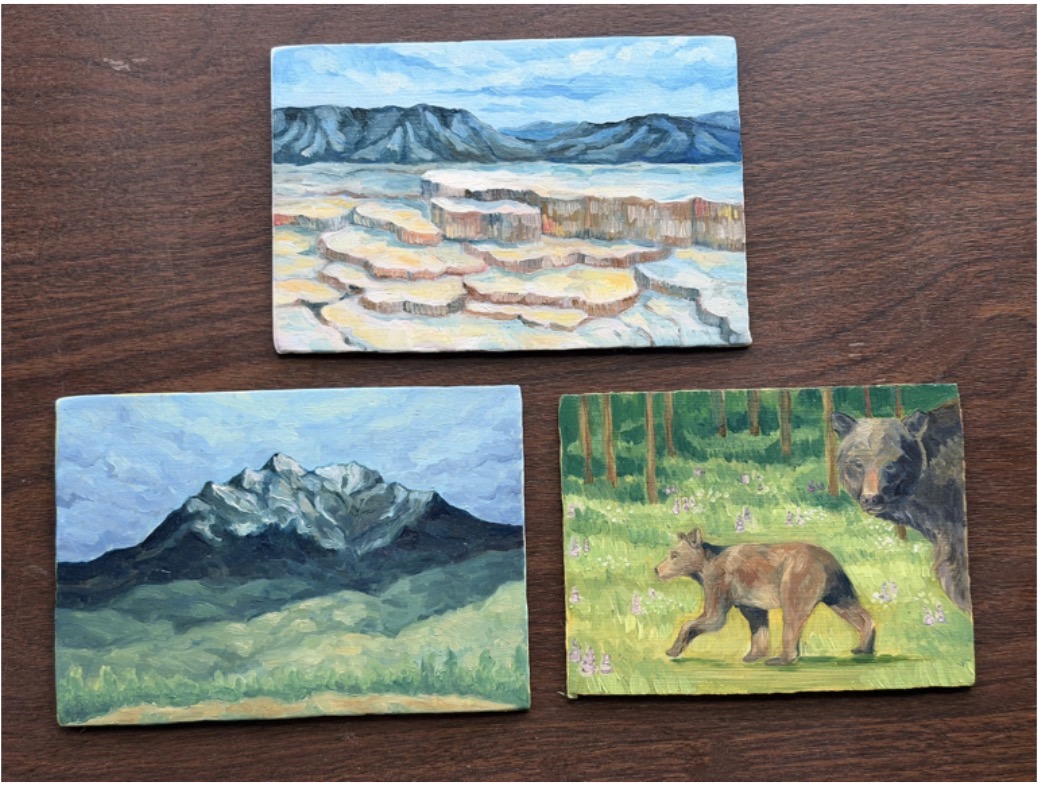
Watercolors inspired by simply slowing down and making observations. Artist Jesse G.
So the next time you’re in Yellowstone, or just outside at home, bring a notebook and a simple art kit with you, slow down and observe with intention, and connect with the natural world the same way people did long before science gave us the tools to measure it. You might be surprised at how science creeps its way into your finished product!
To learn more about Jesse, and the rest of the Yellowstone Wild team, visit our About Us page!