
Peregrine Falcons: How The Fastest Animal On Earth Almost Disappeared
Blog written by Parker Napolitano
Peregrine Falcons are the fastest bird on Earth, full stop. Reaching diving speeds of more than 200 miles per hour while pursuing prey, this remarkable raptor has fascinated observers for thousands of years, and it’s still showing off today.
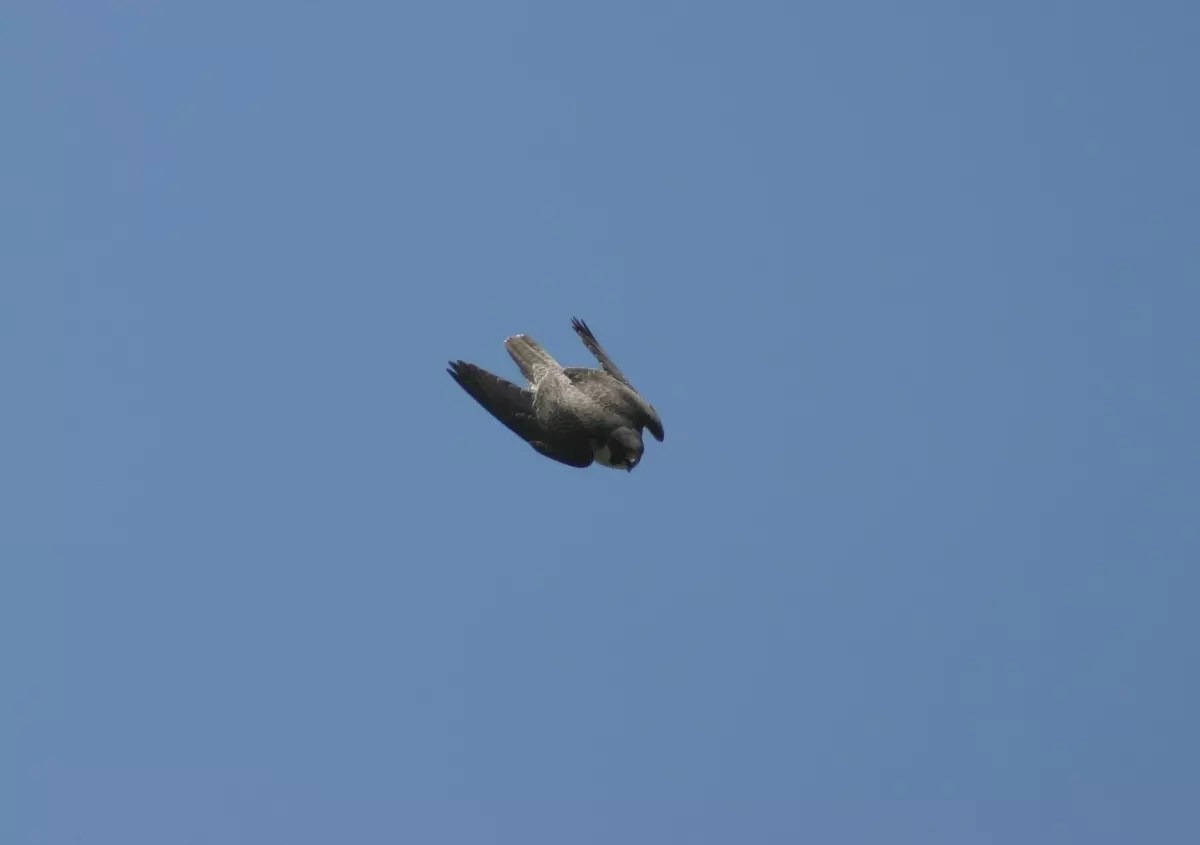
A peregrine falcon in a “stoop”. Image courtesy of USFWS
Evolution crafted a nearly perfect aerodynamic design for the peregrine’s signature hunting dive, known as a “stoop.” Tucking its wings and drawing its body into a teardrop, the bird cuts drag and piles on speed, all in a frame roughly the size of a crow. While modern materials were critical to building a finished product, engineers liked the shape so much they used it for inspiration when designing the B-2 Stealth Bomber. That’s right: a bird inspired a war plane. Biomimicry at its finest!
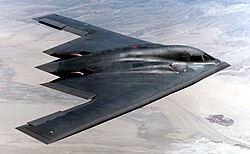
The B-2 Spirit stealth bomber. File Photo – US Air Force
In addition to being the fastest bird, Peregrine Falcons are among the most widespread avian species on the planet. Their name comes from the Latin word peregrinus, meaning “to wander.” Peregrines can be found on every continent except Antarctica, and on several islands across the globe.
Sadly, this widespread distribution was not always the case. During the mid-1900s, the use of pesticides such as DDT took a devastating toll on peregrine populations. These chemicals accumulated in birds of prey through a process known as biomagnification: smaller birds consumed contaminated seeds and insects, and as peregrines preyed upon those birds, increasingly concentrated amounts of the chemicals built up in their bodies.
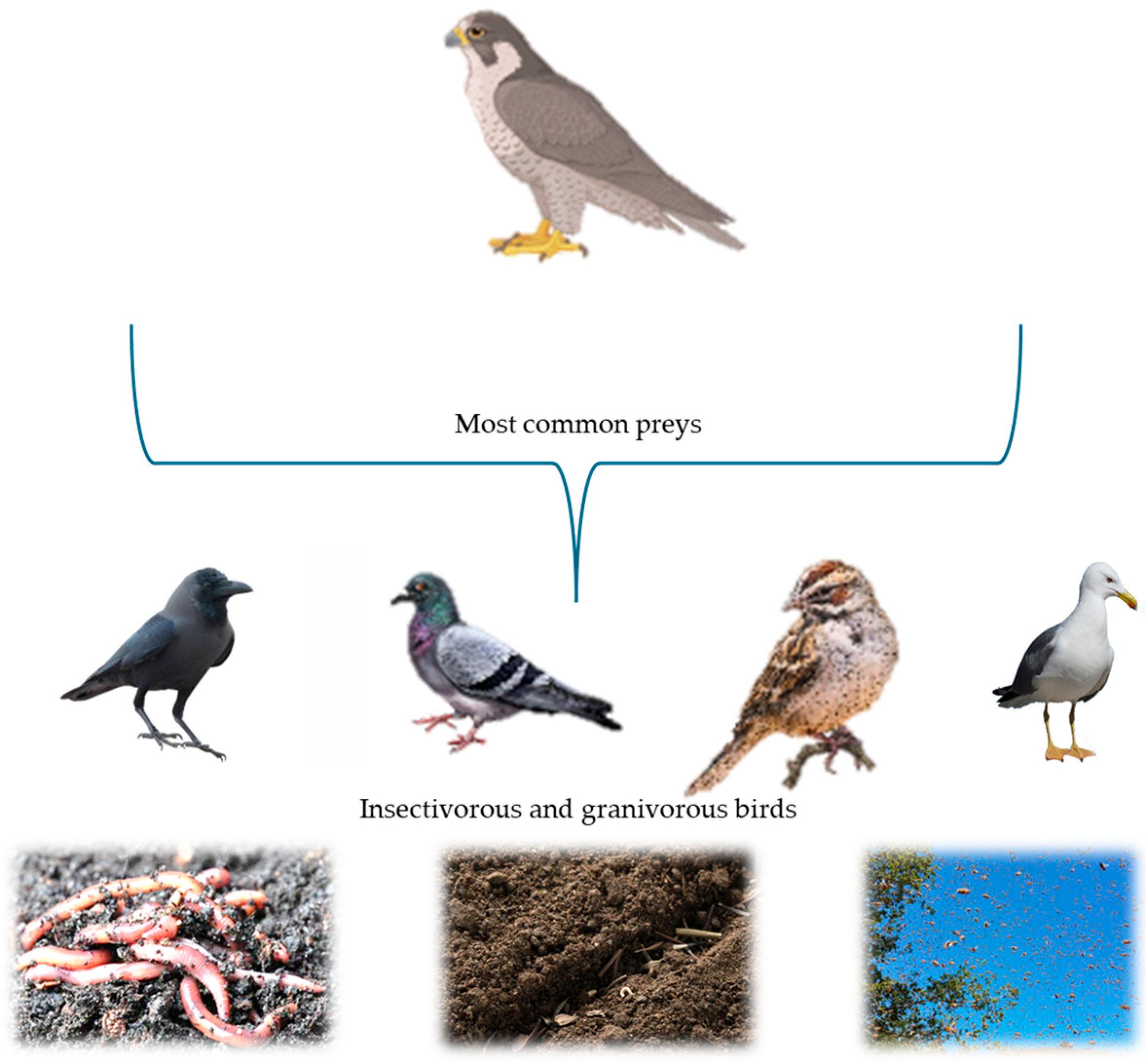
Biomagnification: DDT – Peregrine falcon food web.
The effects were catastrophic. DDT caused peregrine eggshells to become dangerously thin, often resulting in broken eggs during incubation. Here in Yellowstone, the peregrine population was nearly wiped out during the 1970s, along with most populations in the United States.
In 1973, President Nixon signed the Endangered Species Act into law, and the peregrine was soon a beneficiary of the protection and repopulation efforts required under that law. In the 1980s, captive-bred falcons were released throughout Yellowstone and Grand Teton National Parks as part of the national recovery effort.
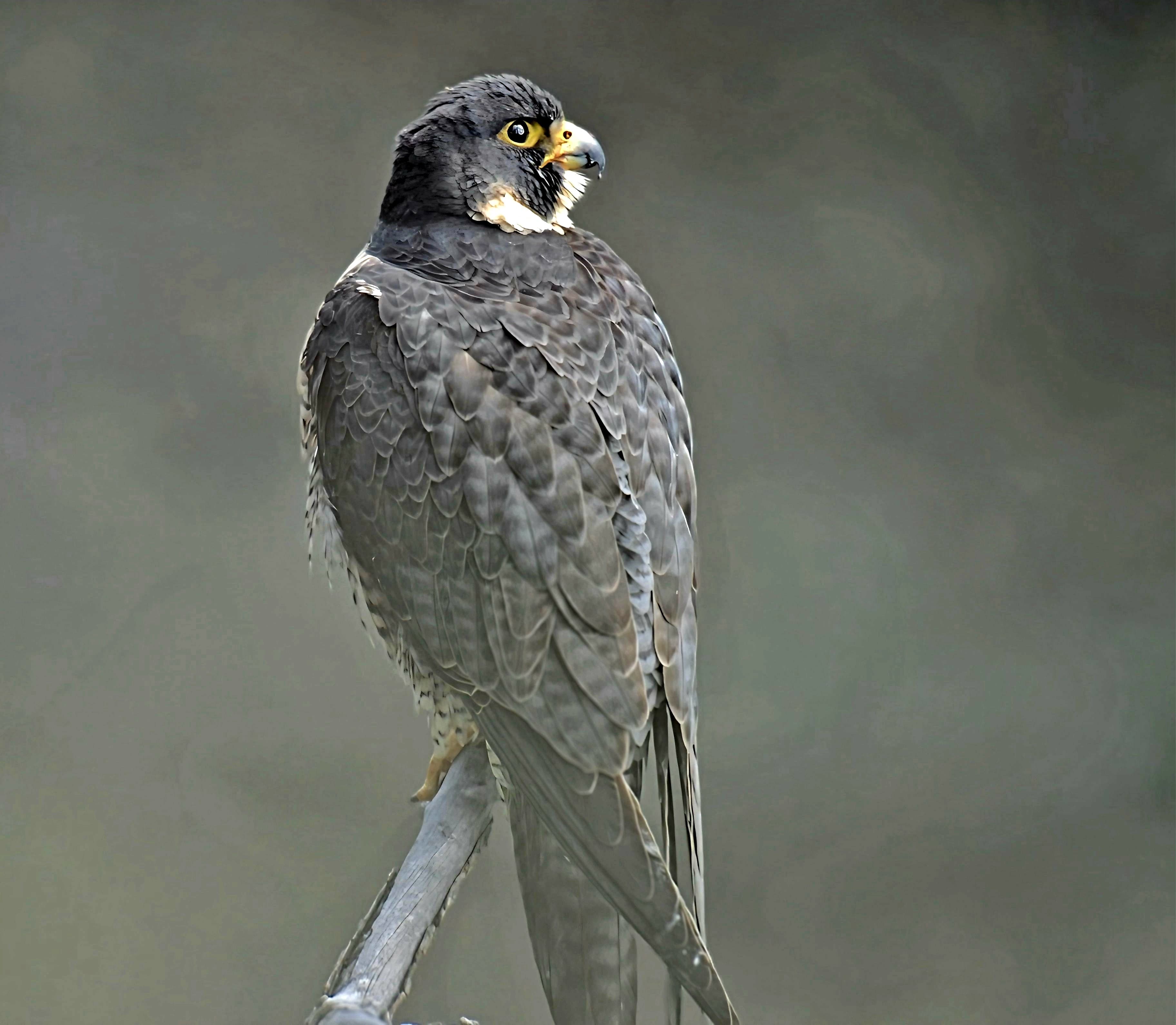
Today, peregrine falcons are frequently seen in Yellowstone. Photo courtesy of YW Lead Naturalist Matt D.
In 1999, the Peregrine Falcon was removed from the Endangered Species List, and today, peregrine populations in the Greater Yellowstone Ecosystem are stable, offering excellent opportunities for visitors to observe their acrobatics, chick-raising, and ecological role firsthand. The peregrine’s recovery is one of the great conservation stories of the 20th century, and it remains a heartening example of what the Endangered Species Act was built to do.
Peregine falcon family in aerie in Yellowstone. Video captured by YW Naturalist Parker N.
June in Yellowstone is an excellent time to grab some binoculars and scan the cliffs for tiny peregrine chicks, waiting on parents to bring them a meal. And while you’re enjoying your peek into the lives of these speed demons, it’s worth remembering that none of this happened on its own. The ESA gave peregrines a fighting chance, but it took biologists, land managers, and people like you–park visitors and lovers of wild places–working tirelessly, to ensure the rebuilding of a species one nest at a time. Every peregrine you spot on a Yellowstone cliff this summer is proof that conservation, done seriously and stuck with long enough, actually works.
To learn more about Parker, and the entire Yellowstone Wild team, check out our About Us page