Press Pause: Learning From the Stillness of Nature
Blog by YW Naturalist Mads Buchman
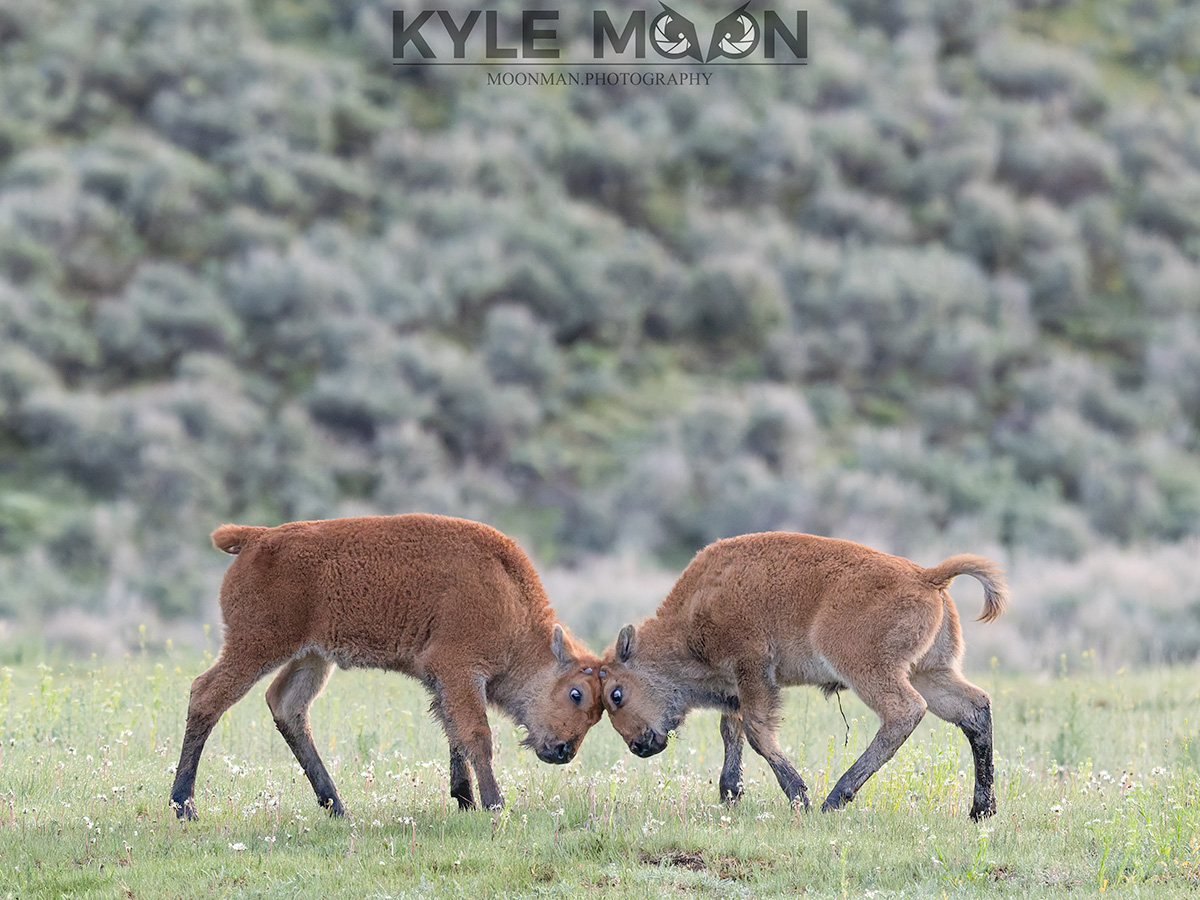
Cover photo by Kyle Moon. It was a brisk June morning and everywhere I looked there were herds of brand new bison calves and their moms set against a backdrop of vibrant spring greenery. That day was a bear and wolf tour, so our main focus was on wildlife, but due to the previous day’s rain, we were also gifted with sightings of Amanita mushrooms, soft, squishy mats of moss, and many, many wildflowers.
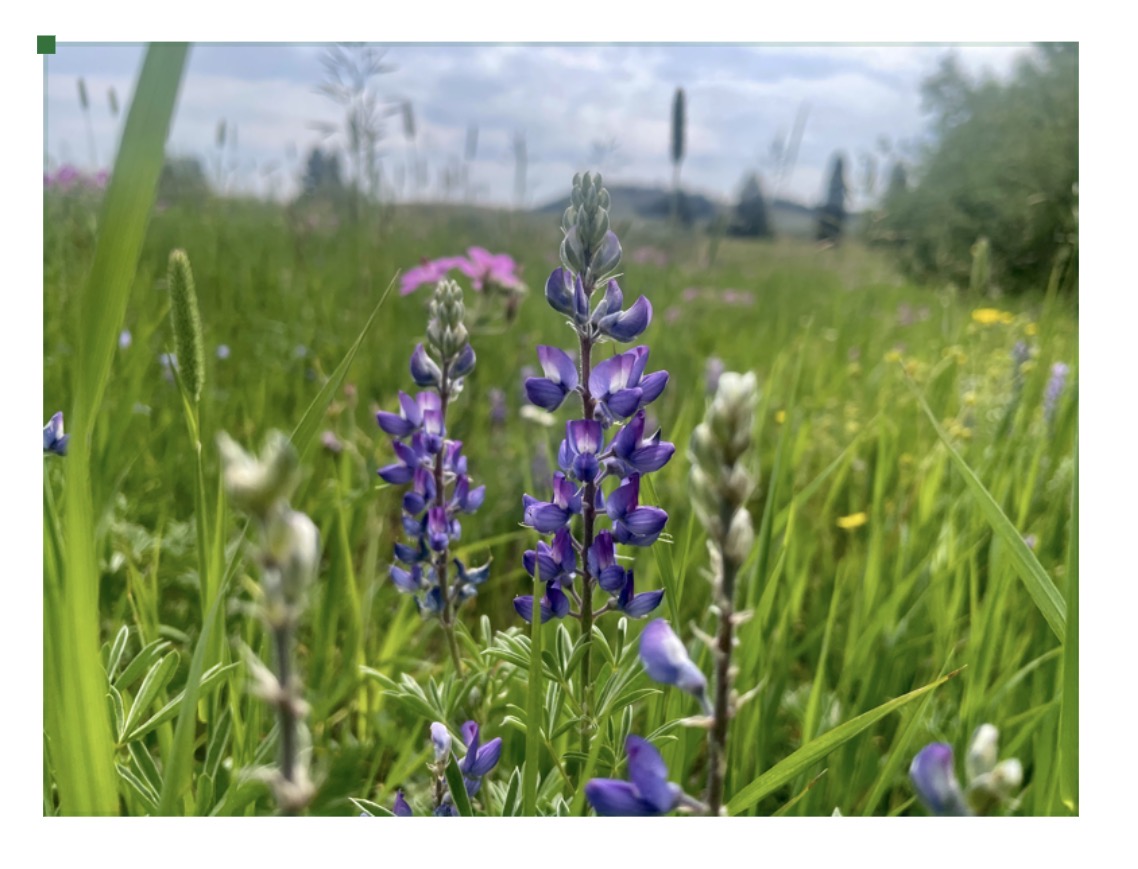
Lupine in bloom near Phantom Lake; Yellowstone National Park. Photo by YW Naturalist Mads B
We had just finished watching a few members of the Junction Butte pack traverse a ridgeline when I looked down at my feet and saw a small cluster of ferns growing in the shade of a boulder. I am from the East Coast, so I’m used to seeing ferns in abundance, but they’re quite scarce in Yellowstone due to the lack of heavily shaded areas and moisture. Excited to see the familiar species opportunistically taking up residency in an island of shade surrounded by the open, rolling hills of the Northern Range, I pointed them out to my guests.
Then: “Why do you like plants and fungi so much?” a guest asked me. I was taken aback by the question; I had never taken the time to pinpoint exactly what it was that gave me that spark, but it really got me thinking.
The park’s most silent observers, plants and fungi, often get overshadowed by more popular and exciting sights like wildlife and thermal features. Most people come to Yellowstone for adventure, for fun, for the drama of watching bison fight to the death over mates, or for the feeling of awe you get from watching a geyser erupt right in front of you. All of that is happening in the present, and it’s screaming, “look at me!” But underneath all of that, written all over the landscape, are histories, lessons, and insights into both the world around us and ourselves. We need only pay attention.
So what can we learn?
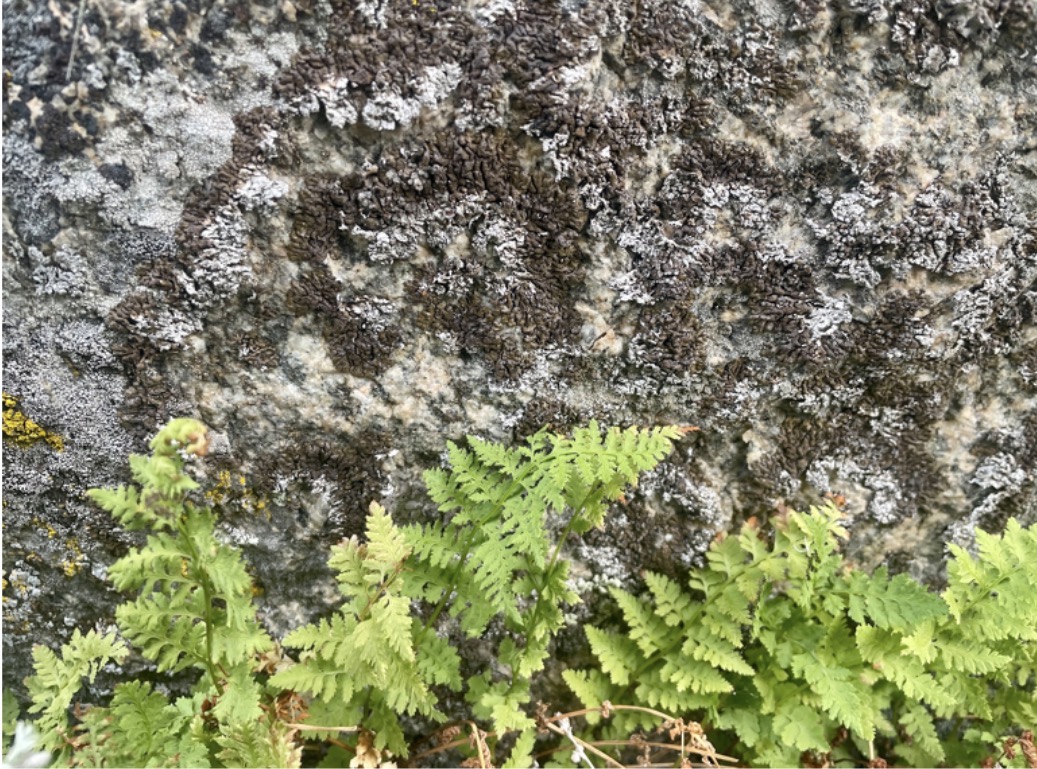
Ferns on the shady side of a glacial erratic. Photo by YW Naturalist Mads B.
The ferns offered a sense of place, reminding me of home. Seeing them here felt like a surprise reunion with an old friend. They also showed me that life finds a way, even in the most improbable situations. When faced with adversity, one can still thrive in their own way.
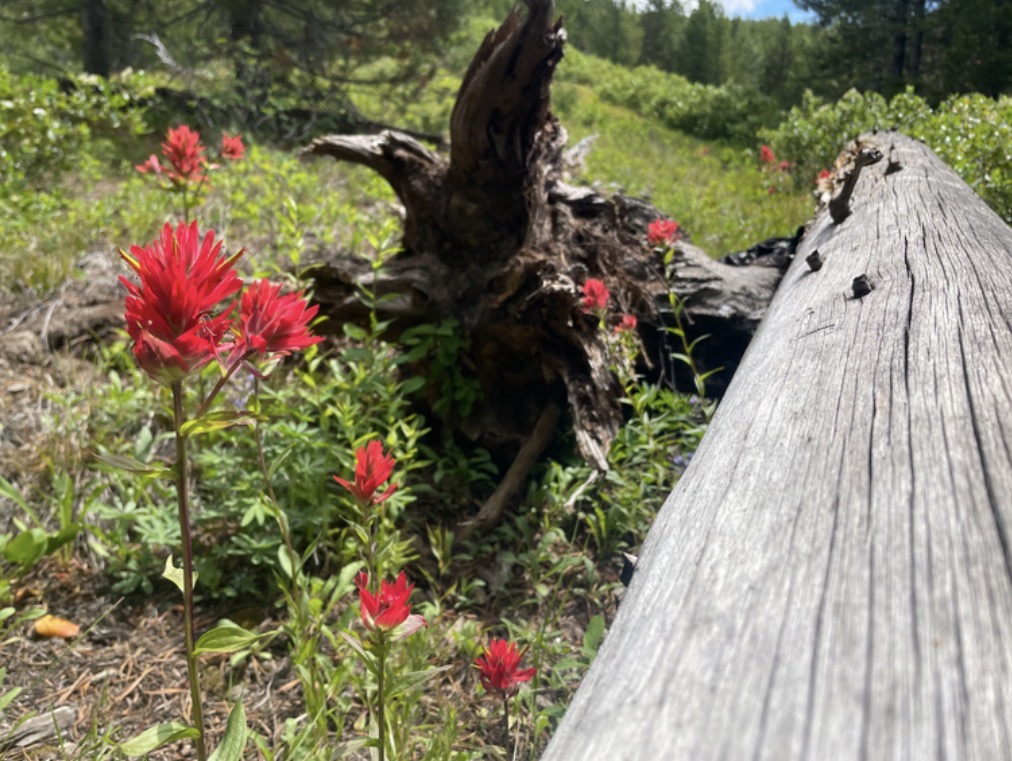
Wyoming paintbrush in a fire regrowth area. Photo by YW Naturalist Mads B
The wildflowers and trees offer a sense of time. One of the first signs of spring is blooms of spring beauties and glacier lilies, while yellowing aspen leaves usher in the colder seasons. Wildflower blooms especially can be brief. Change is a constant, but with every season, there are new things to look forward to, just like in the coming seasons of our own lives.
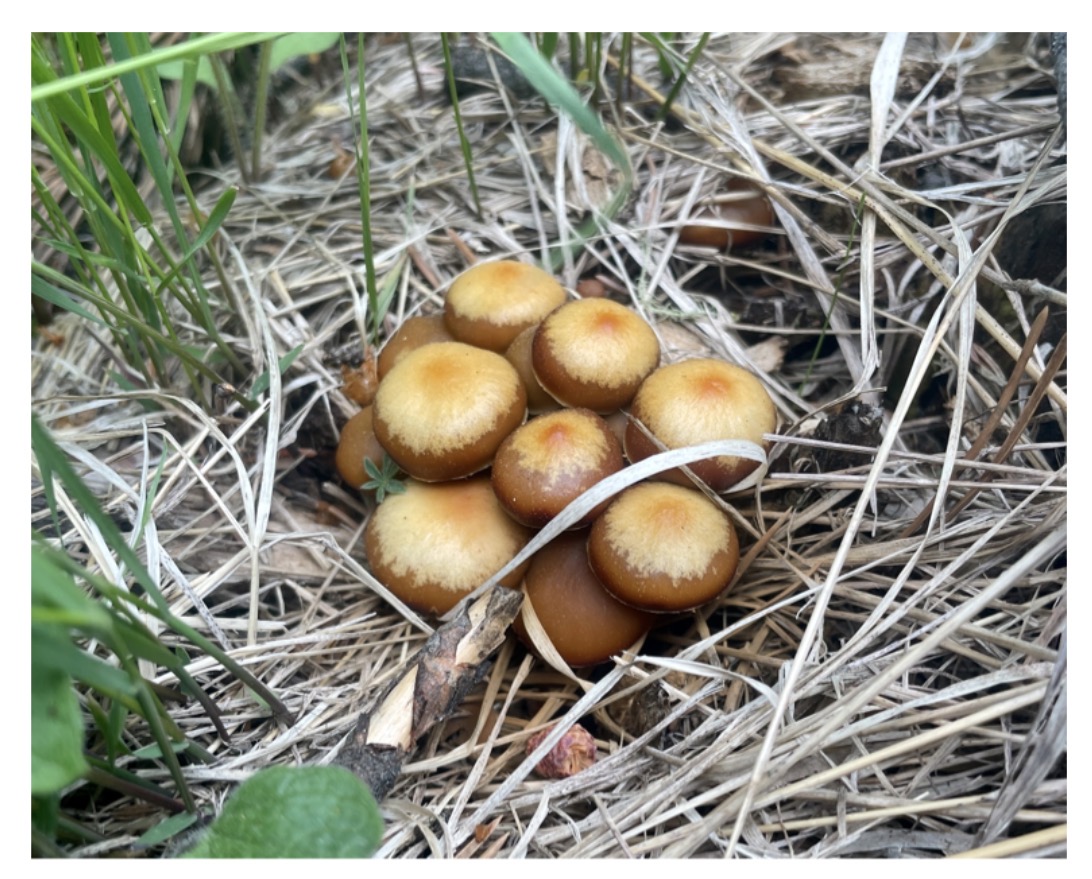
Gilled mushrooms growing out of the grass in Yellowstone. Photo by YW Naturalist Mads B.
Fungi and tree rings can be used to look at weather and climate. The explosion of fungi we had that day was a direct result of the rain we had the day before. And you can look at patterns in tree-ring thickness to determine how wet past years have been.
Trees can also signify wildlife activity. If you’re near any trees in the park, look around and you will probably see light-colored sappy scarring on some of the bark. Any large marks a couple of feet off the ground are likely from bison rubs. Higher-up scarred areas could be from elk or moose rubbing their antlers, while claw marks signify bear activity.
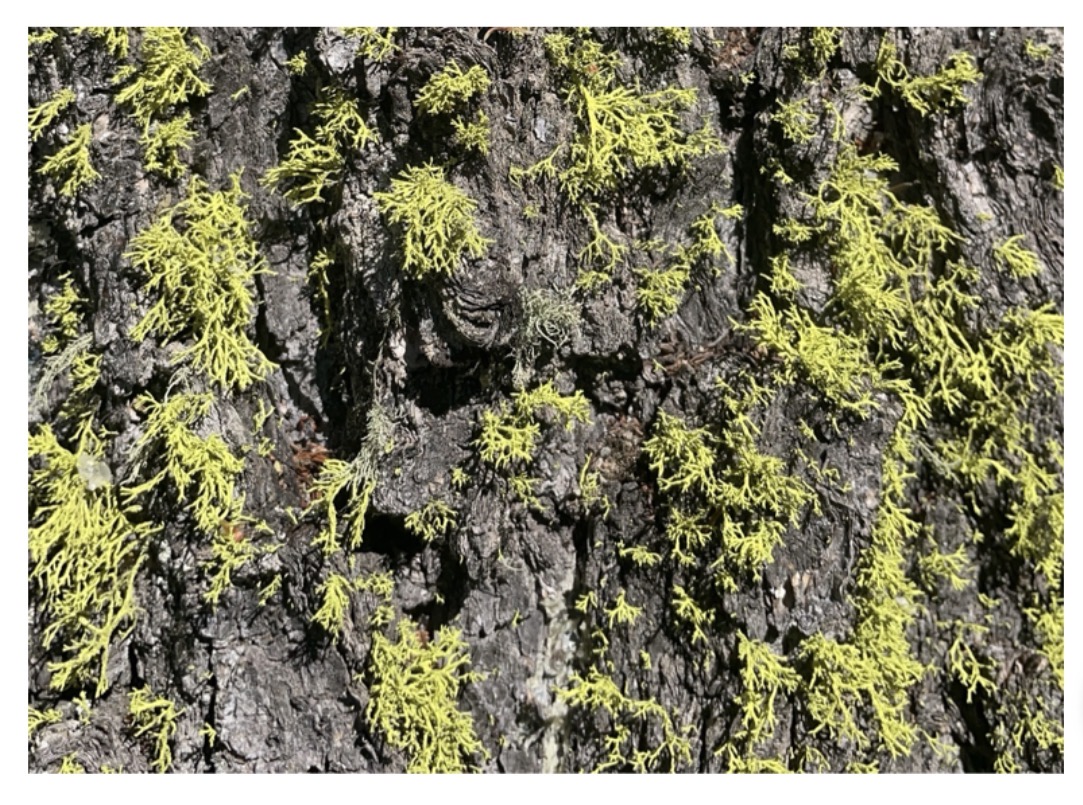
Wolf Lichen growing on a dead conifer near Hellroaring in Yellowstone. Photo by YW Naturalist Mads B
There are histories blanketed across the trees in the form of wolf lichen, the etymology of the species providing a look back at how humans have interacted with wolves over time. The vulpinic acid inside it is toxic if ingested by carnivores, so it was used by Europeans to poison animals like wolves and foxes in the 1700s, which is how it got its name. The European attitudes towards canines mirrored those of the United States around the same time, kickstarting a mass extermination effort, leaving wolves extirpated from Yellowstone by 1926 until their reintroduction in 1995. Nowadays, I often see wolves meandering around in the park next to trees coated with wolf lichen, a sign of the progress we have made over the course of the last century.
Lichen are also bioindicators; they can’t grow anywhere with significant air pollution since they are so sensitive to nutrients in the atmosphere. Seeing them around the park is a sign that the ecosystem is healthy and thriving.
We have so much information all around us if we slow down enough to find it. There is just so much more to appreciate when we take pause from our busy lives and notice our surroundings. I think that’s why I enjoy the smaller things like plants and fungi so much: observing them is an escape from the fast pace of the human world and a lens into their wild world. They have taught me to be a better naturalist, constantly scanning my surroundings for clues, and they have taught me to be a better human.
To learn more about Mads, and the rest of the Yellowstone Wild team, visit our About Us page.