Venom in the Sagebrush: Yellowstone’s Hidden Predator

Written by YW Naturalist Matthew W.
When people think of Yellowstone’s predators, the gray wolf (Canis lupus), grizzly bear (Ursus arctos horribilus) and mountain lion (Puma concolor) are usually the first animals that come to mind. However, in the dry sagebrush ecosystem of Yellowstone’s lower elevations, lies another, oft-overlook predator capable of stopping all in their tracks with one simple sound; the raspy rattle of the prairie rattlesnake (Crotalus viridis)
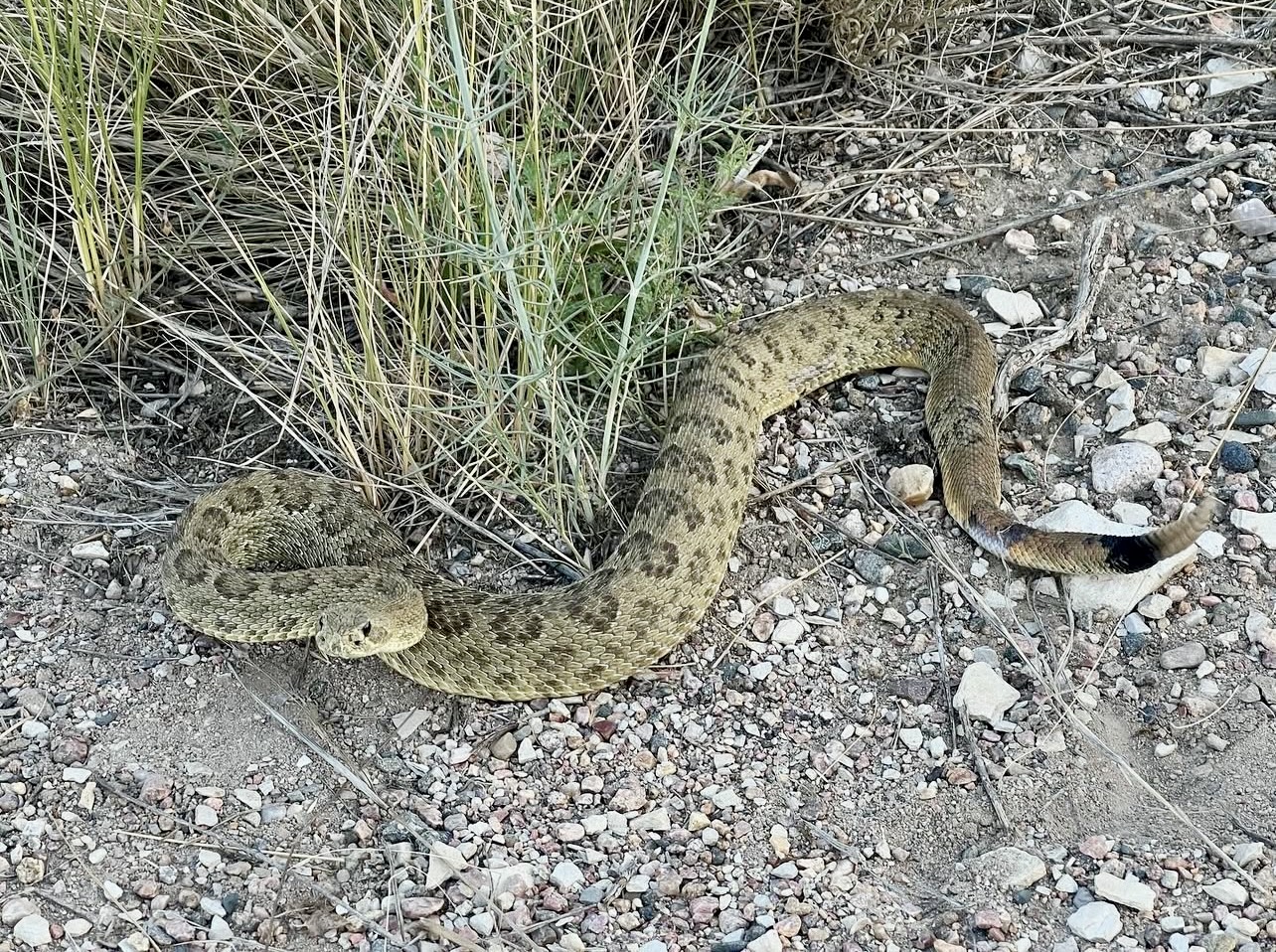
Prairie rattlesnake. Taken at a safe and legal distance from an elevated position with a 400mm lens at Wind Cave National Park. Photo courtesy of Matthew W.
The Prairie Rattlesnake is the largest of only six reptile species found in Yellowstone. It commonly reaches lengths of four feet with the largest individuals reaching nearly five feet. Despite its impressive size, most visitors will never encounter one during their trip to the park. Prairie Rattlesnakes prefer to live in warm and dry habitats with moderate vegetation and an abundant prey base. In Yellowstone, these conditions are mostly found in the lower elevations along the Yellowstone River, including areas like Rattlesnake Butte, Reese Creek, and Stephens Creek. This region of the park is fairly infrequently traveled, so the park’s only dangerously venomous snake often goes unseen.
While rarely observed by humans, the Prairie Rattlesnake plays an important role in keeping Yellowstone’s ecosystem healthy. They are ambush predators feeding primarily on small mammals such as ground squirrels, mice, and young rabbits. This predation helps regulate the population of these animals and contributes to the ecological balance of the ecosystem. In turn, the hunter occasionally becomes the hunted with the Prairie Rattlesnake being consumed by species such as the American Badger, Coyote, and Red-tailed Hawk.
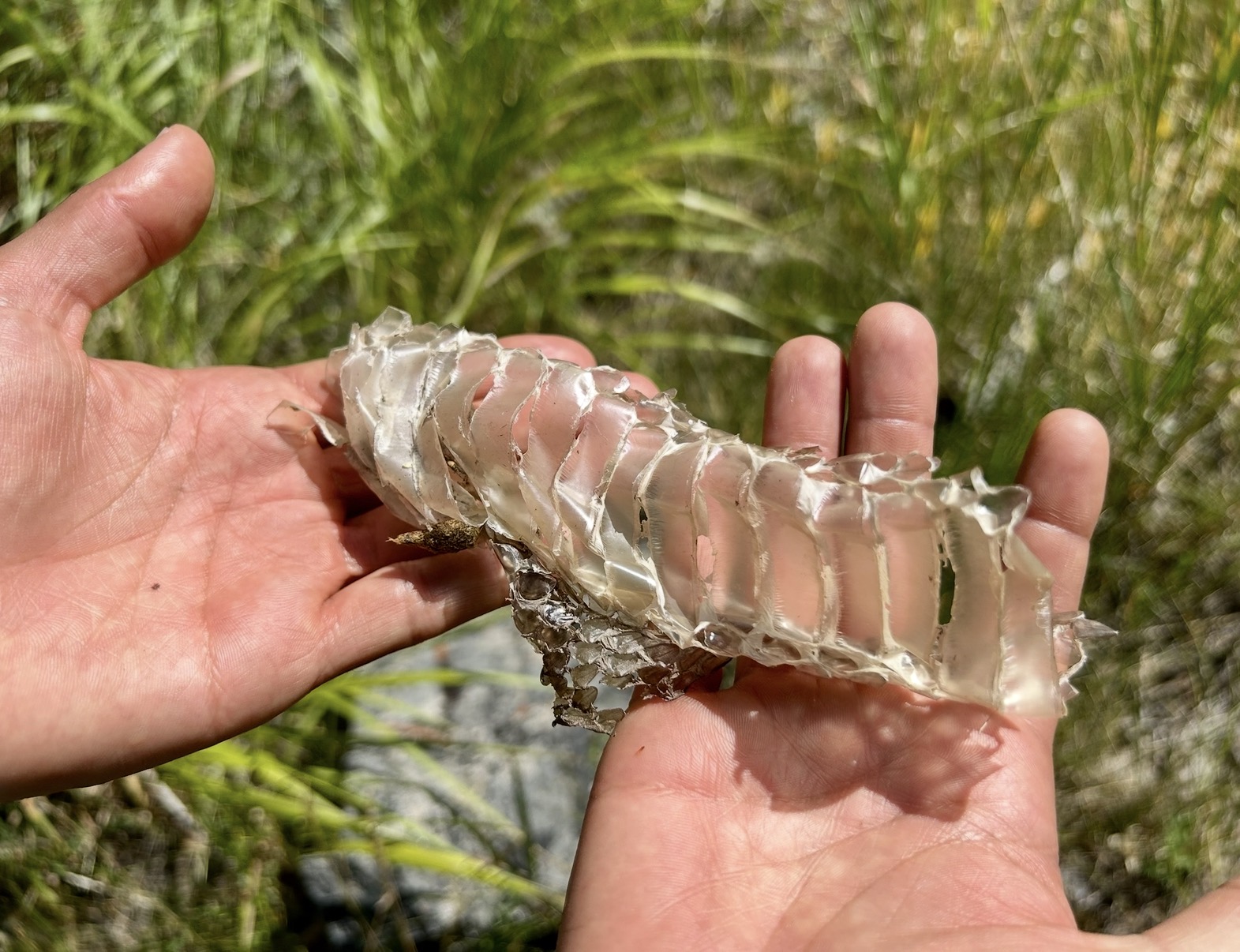
Due to the shy nature of the Prairie Rattlesnake, they are rarely seen although it is not uncommon to find the shed skins left behind.
Prairie Rattlesnakes also have some incredible adaptations that allow them to survive in Yellowstone. As pit vipers, they have heat-sensing organs located between their eyes and nostrils. These organs allow the snake to pick up the heat signatures of their warm-blooded prey. Even in the total darkness of the night, the Prairie Rattlesnake is able to strike accurately because its prey is warmer than the surrounding environment.
The rattlesnake also has an incredible sense of smell due to the specialized Jacobson’s organ. This organ is located on the roof of the mouth and snakes use their tongues to pick up scent particles and deposit them on the Jacobson’s organ. Because the Prairie Rattlesnake has a forked tongue, the snake is able to compare scent particles from two different directions. This comparison allows the snake to more accurately determine the direction of prey. This adaptation allows the Prairie Rattlesnake to detect and find prey from a distance and remain hidden until the opportunity to strike arises.
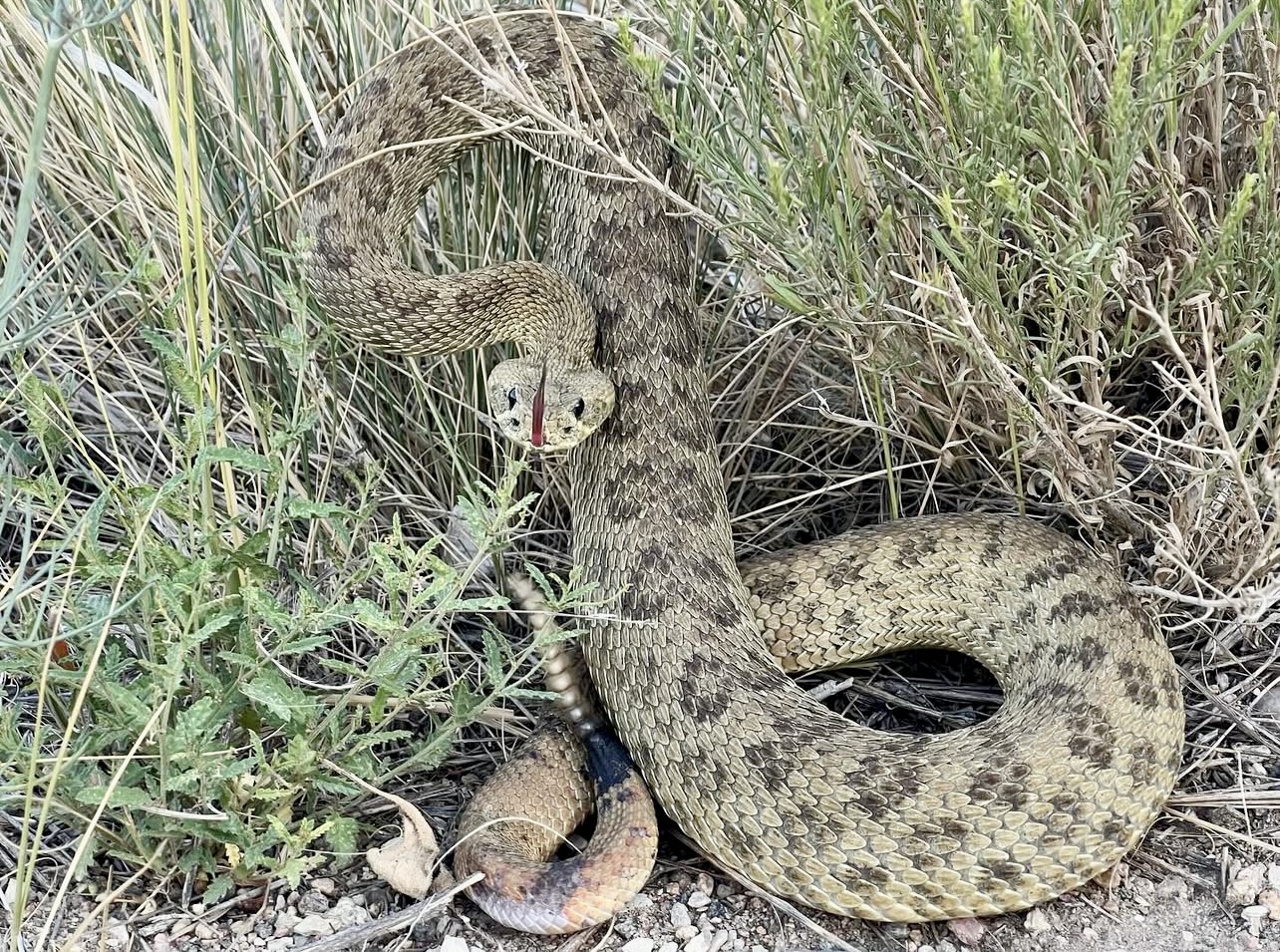
Prairie rattlesnake. Taken at a safe and legal distance from an elevated position with a 400mm lens at Wind Cave National Park. Photo courtesy of Matthew W.
Despite their intimidating reputation, Prairie Rattlesnakes, like most venomous snakes, are often misunderstood. There is a common myth that rattlesnakes are aggressive creatures who will chase down and attack humans. The reality could not be more different. Prairie Rattlesnakes are shy creatures and do not see humans as a food source. They use their rattle not as a sign of aggression, but as a warning to prevent conflict. Bites are rare and almost always occur when a person tries to handle, harass, or step on a rattlesnake. By giving rattlesnakes space and leaving them alone, visitors can safely share the park with one of Yellowstone’s most fascinating predators.
To learn more about Matthew and the rest of the Yellowstone Wild team, visit our “About Us” page