
Backpacking The Gallatin Range: Type Two Fun Is The Best Kind Of Fun!
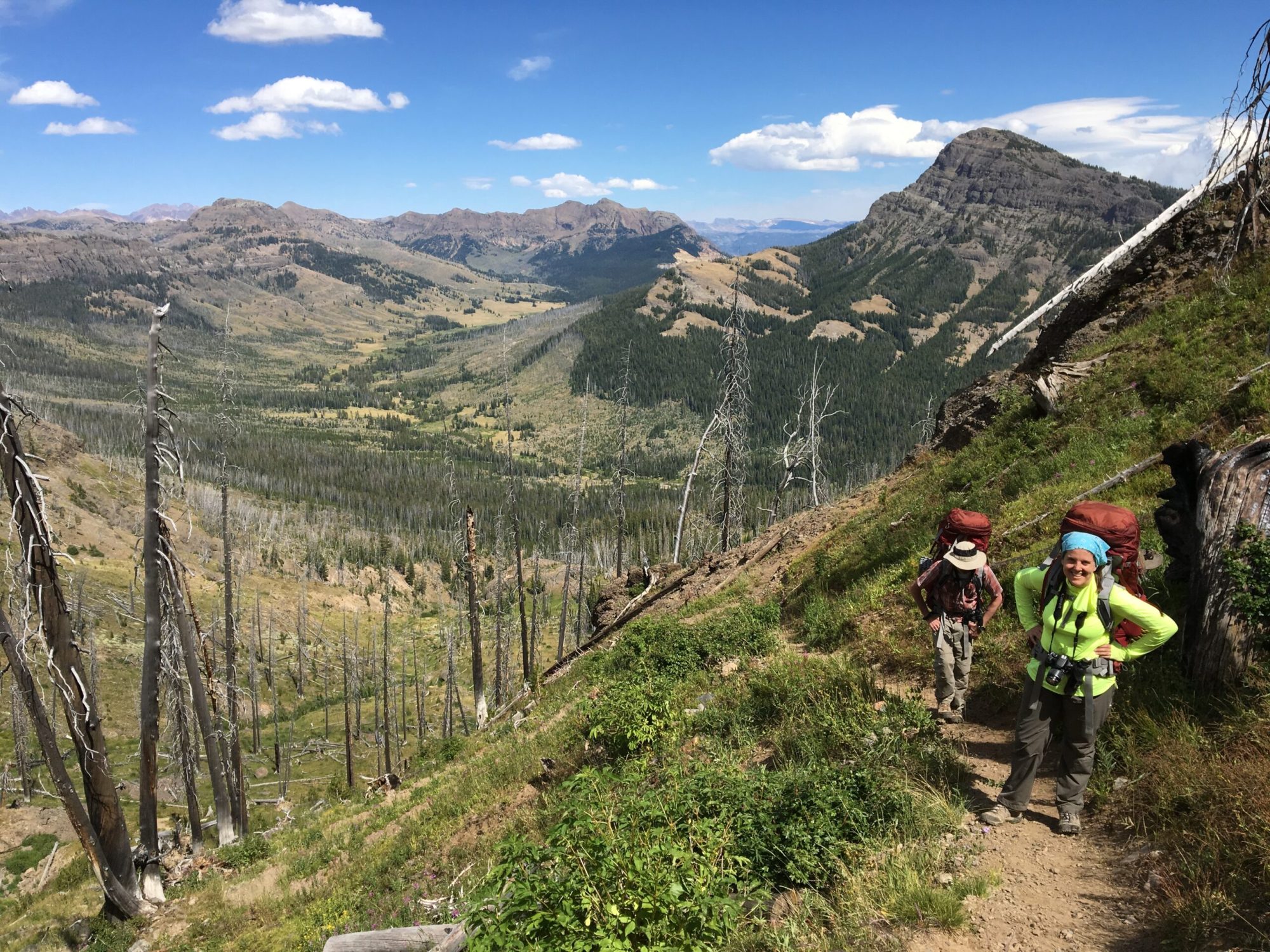
Trip Report written by Lead Naturalist Laura L.
Type 2 fun is the kind of fun that, while it’s happening, feels suspiciously like a terrible life decision. Your boots get wet crossing slick rocks you’ve convinced yourself you can make it across. Your shoulders ache from carrying forty pounds of equipment, and an abundance of snacks, into the wilderness. It’s waking up at 3 a.m. because somehow your sleeping bag is both hot and sweaty and freezing cold at the same time, and what was that rustle outside? And yet, with blistered feet and a shirt that has achieved a level of moisture associated with wetlands, after a solid meal and the joyous wonder of hot running water and foamy soap, you look around and think: that was incredible.
The trip I am guiding is a family of two daughters in their mid-20s and their dad, all experienced hikers and backpackers from California who had never been backpacking in Yellowstone’s backcountry before. Our route is an enviable one, and one that takes quite a bit of planning, since a shuttle is the only reasonable option and a time-consuming one at that, covering about three hours each way and totaling a six-hour day for the driver. Thanks, Emil!
The trail goes through the Gallatin National Forest Bear Management Area, a no-off-trail travel zone designated by the National Park Service to minimize impact on key grizzly habitat. Grizzlies were on the front of all our minds, as this area of the park is also home to some of the highest concentrations of grizzly bears in Yellowstone. Before we start our journey we go over some important safety information and what to do in the unlikely event we see a bear, using the bear spray everyone carries. As thunderclouds bloom in the distance and the air starts to chill ever so slightly, we get moving up to our first campsite along the Gardner River.
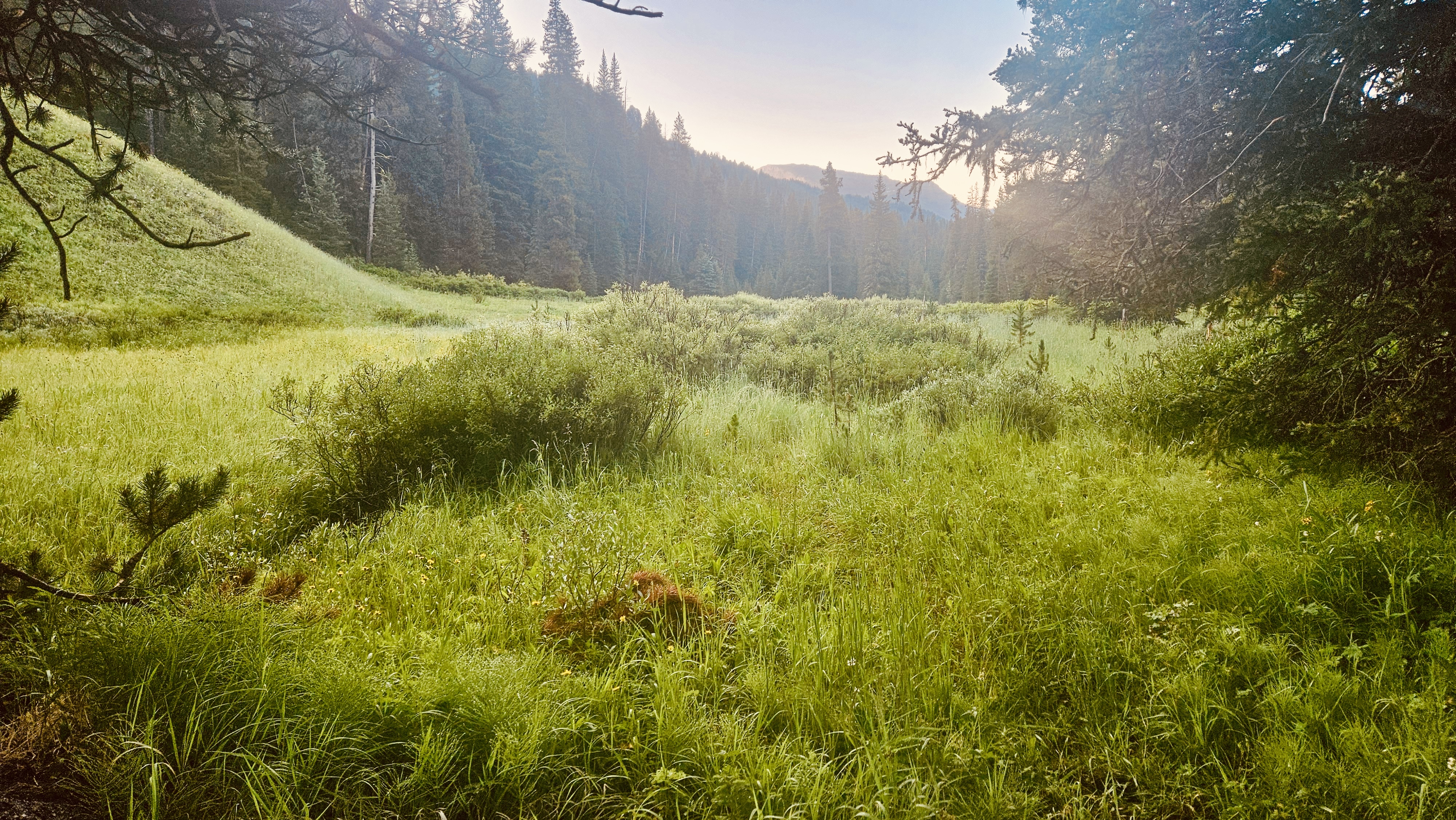
Photo by Laura L.
And here is where the magic of what we are doing starts to really settle in. Everyone finds their pace, the rhythm of our footfalls synchronizes, and the steadying of our breath contributes to the symphony of wind blowing through creaking trees, the pungent fragrance of sagebrush, the small thumps of grasshoppers and Mormon crickets on our shins. We take in our surroundings, the wide open valley at the foot of the Gallatin Mountain Range with mighty Electric Peak (10,969 ft) dominating our view. We awe at the mountain of ancient travertine on our right while the road behind us grows ever more distant and fades into the background.
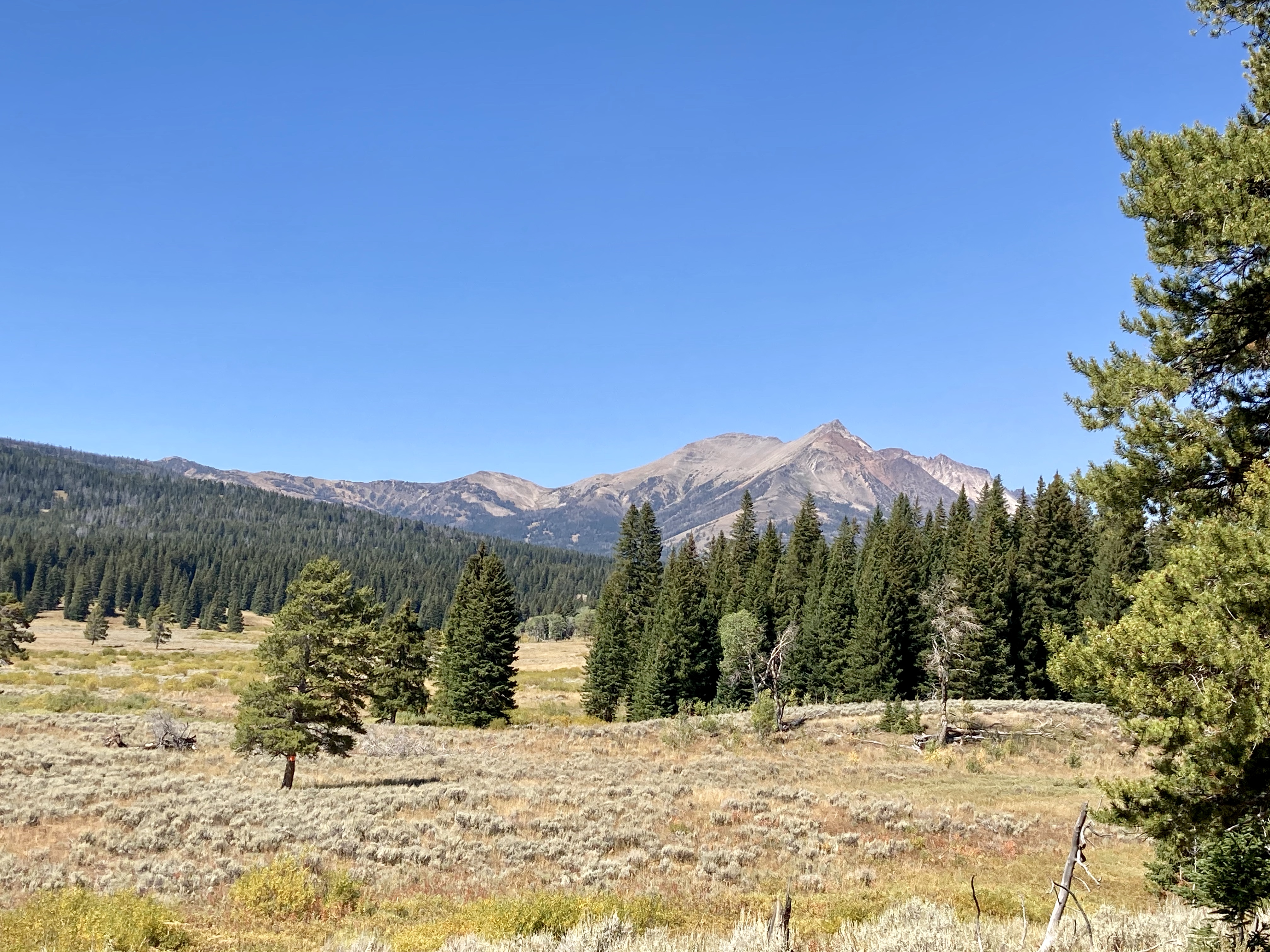
Electric Peak looms over the first part of our journey.
Our first night was cold and rainy. To set our home base, we put up our tents, fill our water, and hang our filtration system while the stove boils water for hot beverages and dinner. These otherwise mundane tasks suddenly become sacred rituals. Fetching water from the river, putting up a shelter, making a fire: it’s a glimpse into the past these simple tasks, a common goal of survival shared by humans going back thousands of years. This is the connection we are all looking for, and one we can find in the quiet solitude of the wilderness.
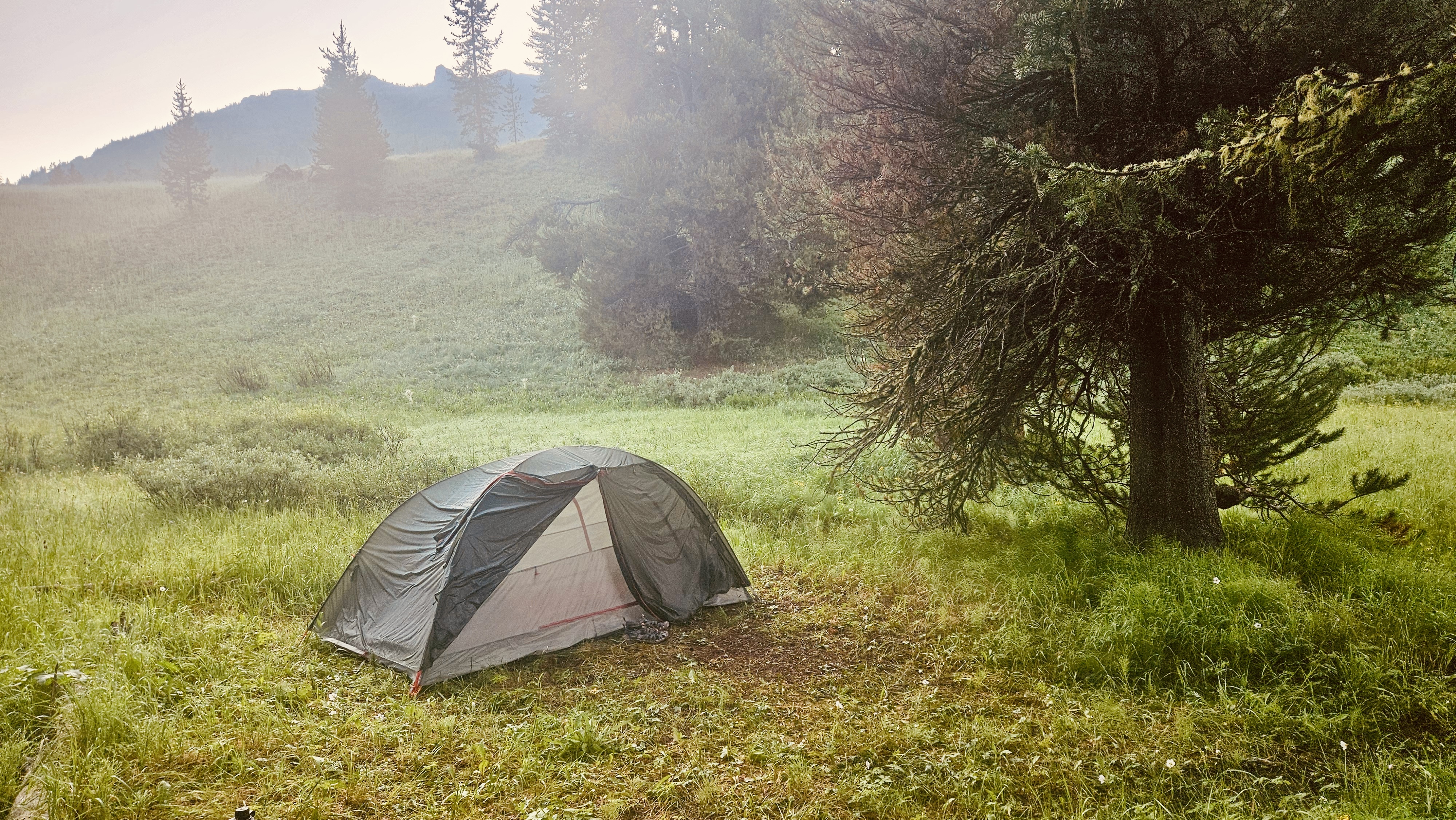
Setting up shelter in the backcountry is a fundamental survival skill.
Day two is a big hiking day, and we get a leisurely start to our morning. Coffee tends to taste best as the morning dew clings to tall grasses and a mist forms just above the marshy fields along the banks of the burbling river. We have 8.5 miles and a little over 2,000 ft of elevation gain today, and there’s rain in the forecast. The hail starts just as we’re leaving camp and continues through most of the ascent, through dense forest, up to Sportsman Lake, then keeps on as we make the steep climb down the west side of the pass. Whitebark pine grows in a gnarly forest at the ridgeline, and the last remnants of last winter’s snowfall, patchy and full of rust-colored dirt, cling to the tops of the mountains. Clark’s nutcrackers shriek and caw while squirrels and chipmunks frantically gather nuts and bundles of pine needles, scurrying up into the trees. We get to camp just before dark, set up our tents as the last light fades behind the mountains, and the sky clears to reveal the Milky Way hurtling across the night sky.
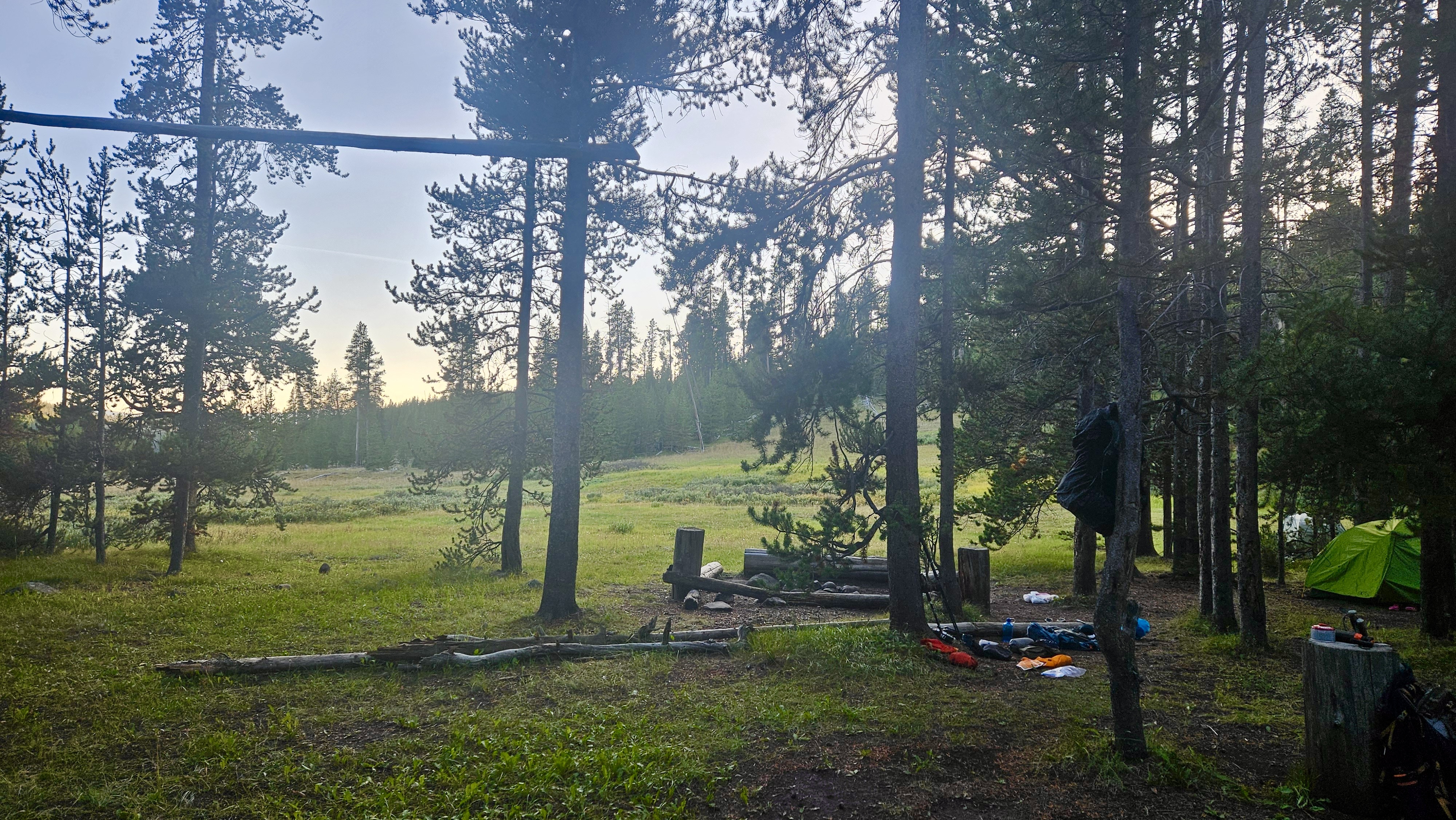
Setting up “home” each night is one of the most rewarding aspects of “Type Two Fun”!
Our third day of exploring is a long hiking day, but not nearly as strenuous as the previous one. The trail starts with a semi-strenuous ascent through heavily burned forest, then drops into unburned timber until we reach the splendor of Fan Creek. This excellent trail boasts glorious views through a stream-grade meadow and open country. We make several creek crossings that turn into a choose-your-own-adventure: over rocks, across a rickety bridge of lodgepole pines, or by changing shoes and fording the creek for a refreshing cold foot plunge. Though we come across many moose tracks and can see their browsing evidence on willows along our route, we never set eyes on any of these elusive twig-eating giants. Camp tonight includes a luminous yellow half moon, bright as the sun, over a riparian meadow so still and so quiet that sleep comes easily.
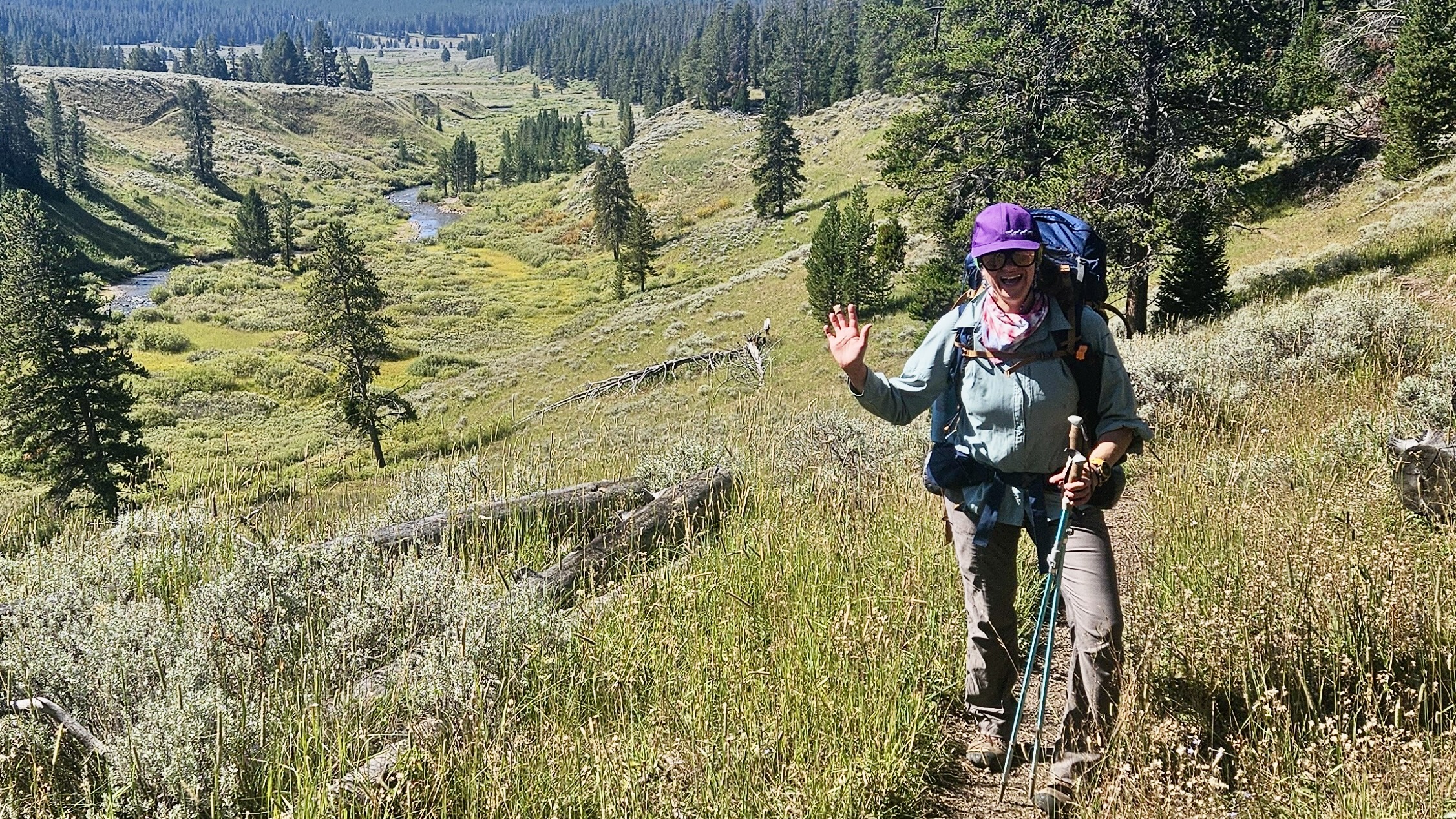
Trip leader Laura L pauses for quick pic.
The final day, and our pickup at the end of the trail, has all of us quietly sharing the wish for one more day out in the pristine wilderness. Today is a hike of about five miles, most of it a leisurely glide along the banks of Fan Creek. We come across a frog and a toad, rarities in the Yellowstone ecosystem! Conversation comes easily, and everyone feels the contented satisfaction of three days spent outside with the elements, along with the anticipation of some fatty foods and the luxuries of the indoors that await us.
Somewhere between the hail, the blisters, the 3 a.m. rustling, and anxiety, it’s easy to wonder why anyone signs up for this on purpose. But that’s exactly the point. Type 2 fun is the best kind of fun there is: a reminder of what we’re capable of, how we can challenge ourselves, and what secrets the backcountry will reveal if we allow ourselves to listen to what it has to share.
Trip Report written by YW Lead Naturalist Laura L.
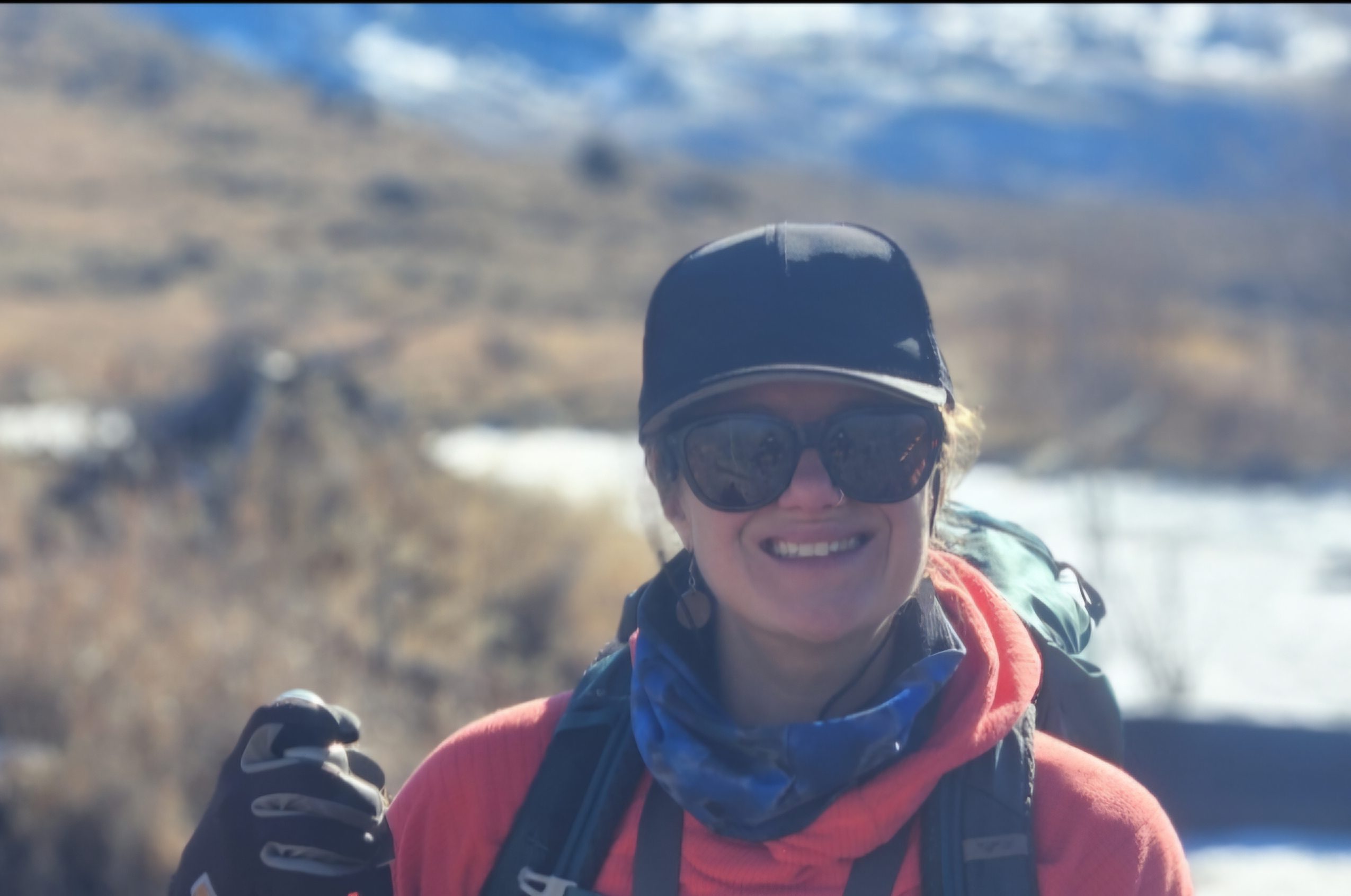
To learn more about Laura and the rest of the Yellowstone Wild team visit our “About Us” webpage.