
How Mountain Goats Got To Yellowstone
Blog by YW Naturalist Mads B.
Compared to the rest of the country, Yellowstone National Park appears relatively intact on the surface: large predator species roam the landscape, the Yellowstone River – the longest undammed river in the lower 48 states – flows through the park, and it hosts great biodiversity with hundreds of species of plants and animals.
History, on the other hand, tells a different story. Starting with colonization and westward expansion, settlers often viewed the natural world as a commodity and a danger, attitudes that had a strong influence over land management decisions. From the extirpation of wolves and other predator species, to the slaughtering of bison, they made their mark in permanent ink.
Over the course of the past few decades, park officials and partnering organizations have made significant strides in repairing the damage that was done by implementing reintroduction and rehabilitation programs. But even now, there are still many reminders etched into the landscape of a time when humans used, instead of coexisted with, nature.
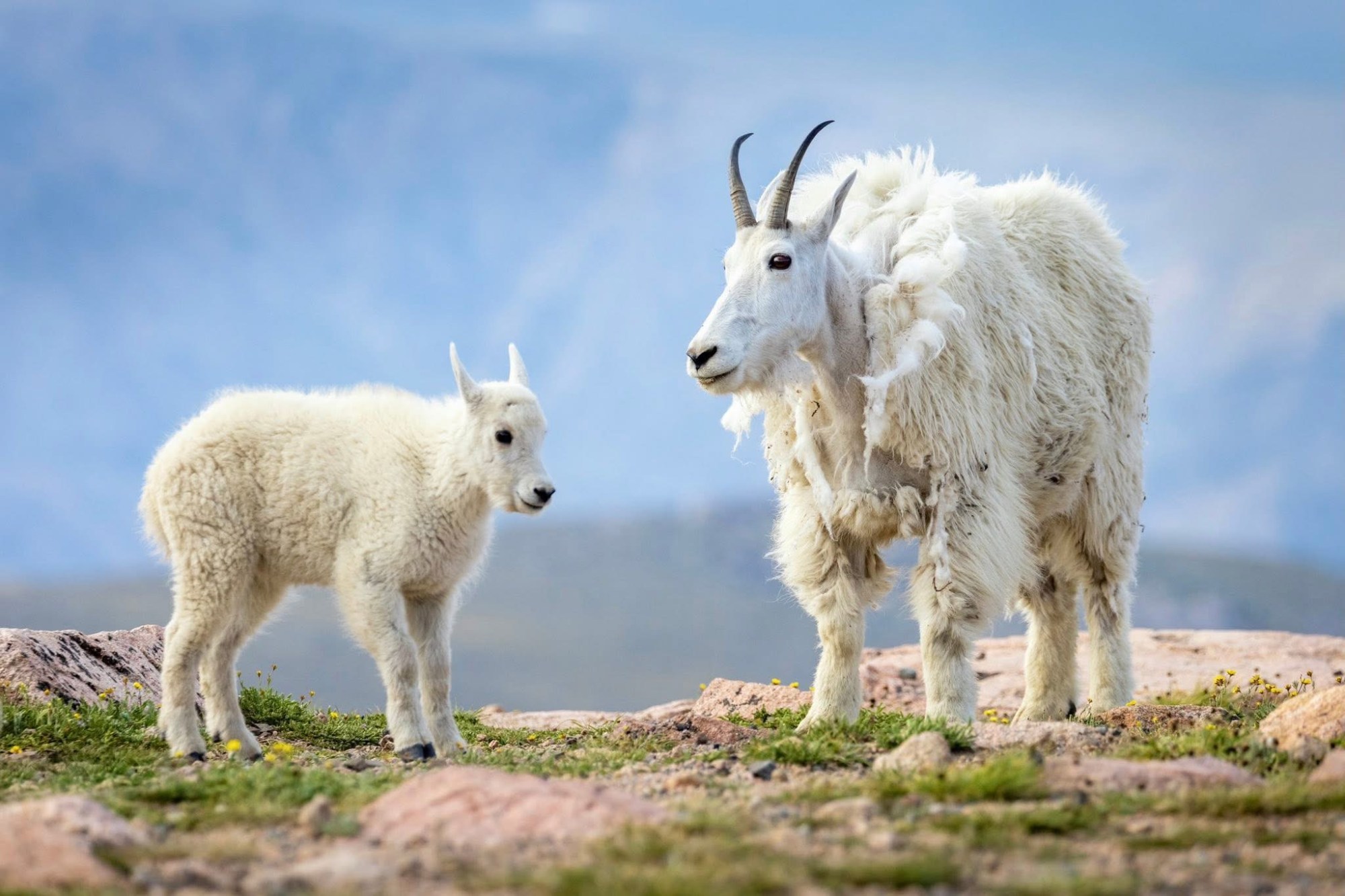
One often surprising example is the mountain goat (Oreanos americanus), a non-native, introduced species. Today, it is fairly common to see goats in the northeast corner of the park climbing the craggy cliffs of Barronette Peak and The Thunderer, visible from the road as cream colored dots speckled across the rock walls. They have become such a familiar sight in Yellowstone that we, as guides, frequently take guests to these spots as they provide a great wildlife viewing experience and offer insights into adaptations and ecology. As their presence is only recent and as a direct result of humans, they also spur some interesting conversations about what happens when humans introduce a species to an area they have never historically existed in.
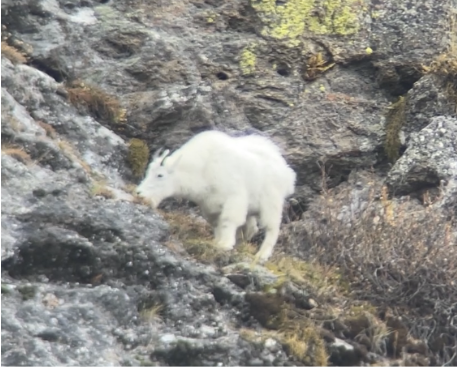
This mountain goat was photographed by YW Naturalist Mads B between Norris and Madison junctions.
In the 1940’s, state officials introduced mountain goats to several mountain ranges near Yellowstone for the purpose of supplying game for humans to hunt.
One of these mountain ranges, the Beartooths, is located just northeast of the park. Eventually, part of the Beartooth herd made its way into Yellowstone and has since settled down as an established population in the 1990s. There are now between 200-300 resident mountain goats in the park.
While there are mountain goats native to parts of Montana such as Glacier National Park, archeological records reveal that they never inhabited the Greater Yellowstone Ecosystem.
Should we be concerned?
While the mountain goats present in Yellowstone are non-native, park officials have not yet taken steps to remove the species, although they are being closely monitored for potential impacts to the fragile alpine plant ecosystems they graze on as well as to the native rocky mountain bighorn sheep (Ovis canadensis canadensis).
The park is home to between 100-200 bighorn sheep, who do inhabit steep terrain, but often much more gradual compared to the sheer cliff faces that goats prefer.
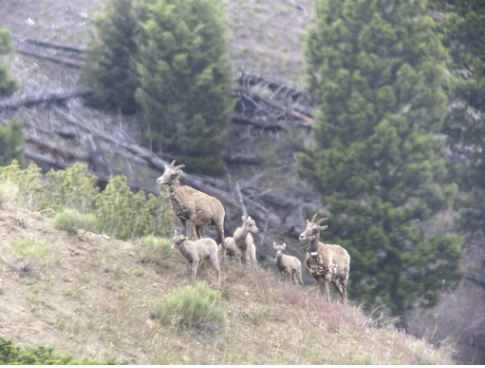
Bighorn sheep family near Calcite Springs in Yellowstone. Photo by Mads B.
Although different, their habitats are similar enough to raise concern for competition between the two species. More and more, there are mountain goats present in places we have not seen them in years past. Take this goat for example, who was seen for several weeks this summer at Calcite Springs, a part of the park we often see bighorn sheep: (Insert photo of goat at Calcite from this summer if we have it – I wasn’t guiding when this was seen)
What now?
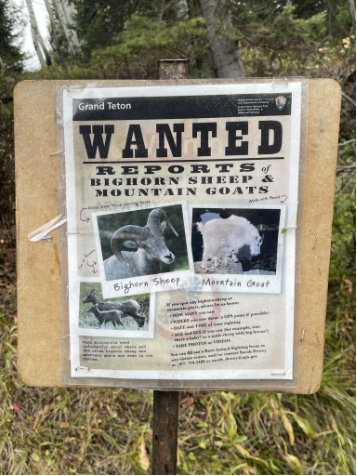
Some National Parks have already taken steps to remove their non-native mountain goats, deeming it necessary given their measured ecological impact. Grand Teton National park, for instance, opted for a volunteer culling program, while Olympic National Park used both lethal and non-lethal tactics, the latter being blindfolding and airlifting their goats to the Cascades, one of their native mountain ranges. These removal strategies have made a significant dent in the mountain goat population in both parks, though populations are still being closely monitored.
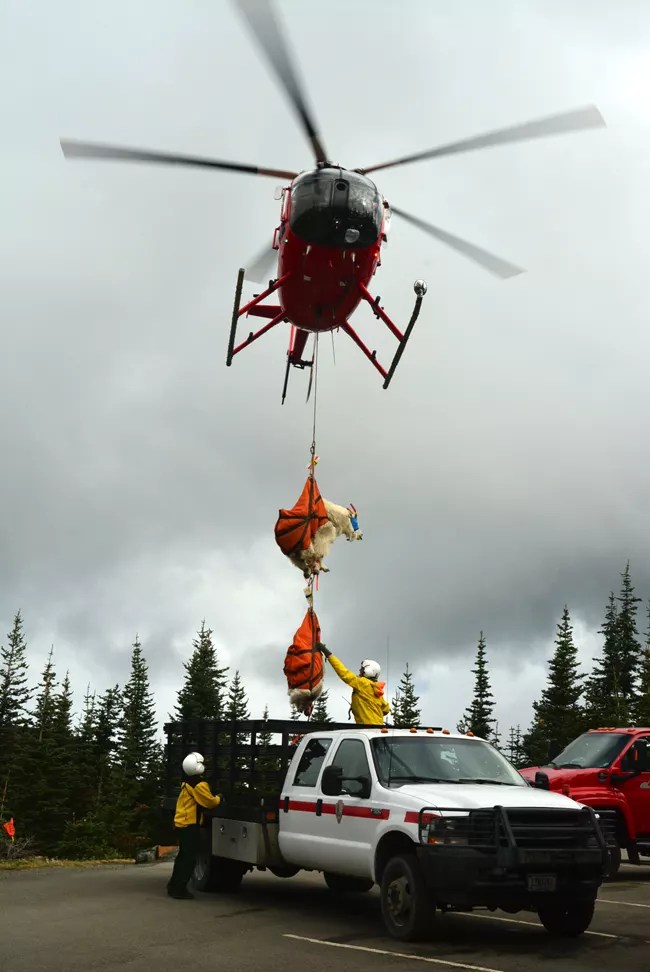
Non-native goats being relocated from Olympic to Cascades National Parks. NPS Photo by J. Burger
These strategies certainly outline a path for Yellowstone to take in the future if it becomes necessary. However, for now, we will continue to watch these expert climbers in awe of their abilities, but take some time to consider how one species, one decision, has the potential to make a widespread change to an ecosystem.

To learn more about Mads, and the rest of the Yellowstone Wild team, visit our About Us page!
Cover photo courtesy of YW Photo Naturalist Evan Watts