
It’s Beginning to Look a Lot Like Springtime…in January? How Mild Winter Weather Affects Yellowstone
Blog by YW Photo Naturalist Rob Harwood
Landscapes blanketed in a thick layer of white, red foxes diving face-first through the snow to capture rodents underneath, cottonwood trees along the Lamar River encased in glittering ice…these are some of the classic images that come to mind at the mention of winter in Yellowstone. But what happens when winter doesn’t show up as expected?
December saw more rain than snow in much of Yellowstone’s Northern Range. By the end of the month, the snows that arrived early on in what was initially promised to be a strong winter had almost entirely melted in the valley bottoms, leaving a patchwork of bare ground mixed with piles of hardened ice.
While our current snowpack in some higher-elevation parts of the park is well within average levels, it is nearing record-breaking lows in other areas (such as Lamar Valley). So, how do these mild winter conditions ripple through both the landscape and the creatures who call it home?
The World Beneath the Snow
When you look out over a barren, snowy landscape in Yellowstone, the word “desolation” can often come to mind. But there is a whole world of life and activity happening beneath the snow in winter. A small air gap between the ground and the bottom of the snowpack – called the subnivean zone – serves as an essential refuge for a host of small mammals to escape the harsh winter elements. The subnivean zone maintains a consistent temperature around 32F, even as surface temperatures plummet to -40F or colder. But with insufficient snow depth, this crucial layer cannot form.
Mice, voles, gophers, and other creatures feed on a host of plants, insects, and arachnids beneath the snow. Without a well-formed subnivean layer, these species face a serious risk of dying from exposure to the harsh winter elements. And this has a ripple effect that extends down the food web to the foxes, coyotes, weasels, and owls that depend upon these prey animals.
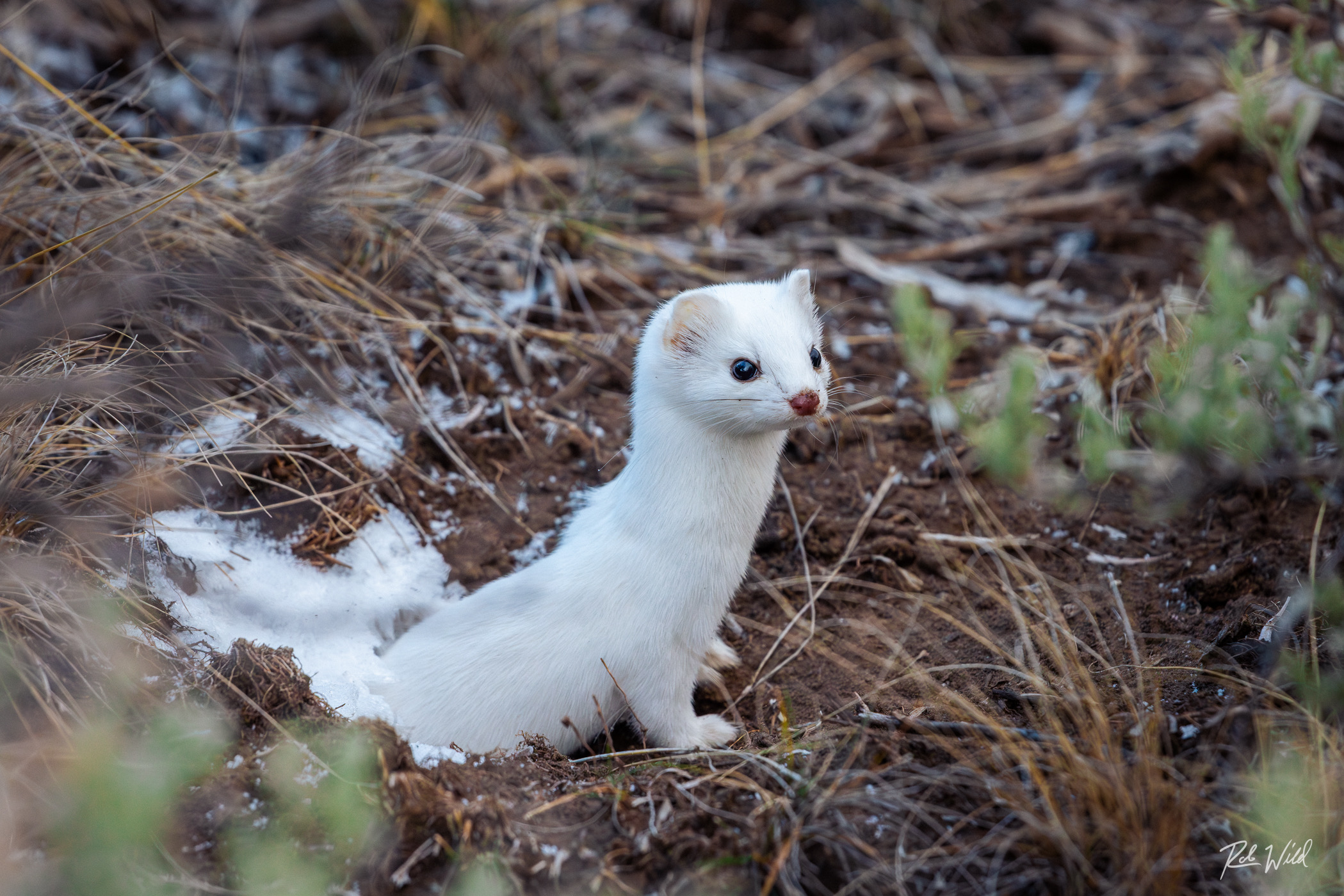
Ermine turn white in the winter to help camouflage them in the snow. But when the snows don’t show up, they stick out like a sore thumb! Photo by Rob Harwood
Impacts on Larger Wildlife
Less snow should mean an easier time for our large grazing animals, who would otherwise have to trudge and dig through several feet of snow to reach the grass underneath, right? Well, things are a bit more complicated than that. The quality of snow matters a great deal, too. Harder, denser snow can allow lighter-weight predators to easily glide on top of the packed snow while heavier ungulates punch through the crust.
When denser snow layers form at the bottom of the snowpack, they can create a solid ice barrier that traps grasses, making it almost impossible for grazing animals to reach them. These conditions can increase pressure on elk, bison, pronghorn, and deer to migrate to lower elevations in search of snow-free ground.
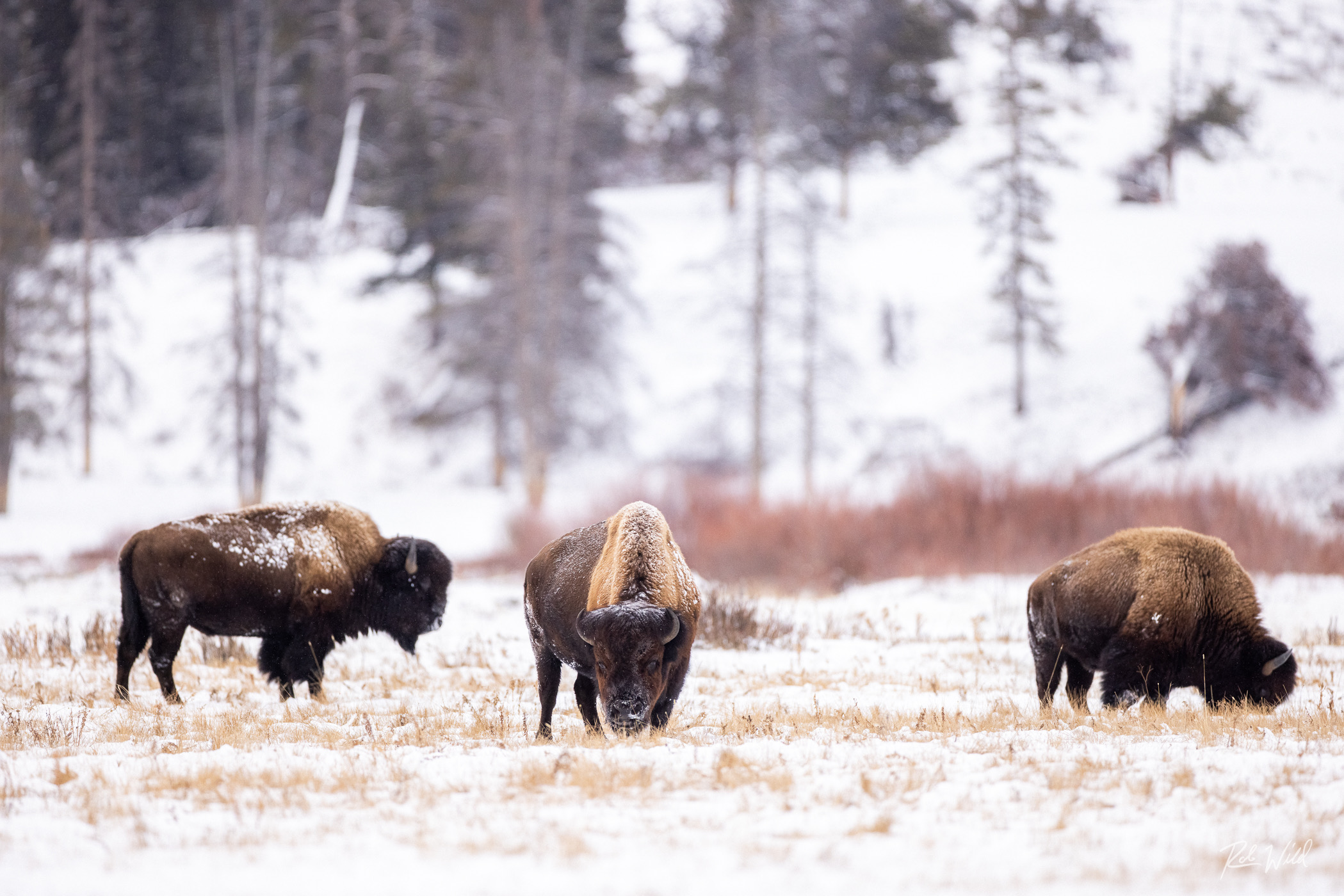
Bison grazing in Soda Butte Valley with only a light dusting of snow on the ground. Shallower snows can decrease the need to migrate to lower elevations, but icy layers in the snowpack – a result of warmer weather following early winter snowfall – can have the opposite effect by locking grasses in an impenetrable layer of ice. Photo by Rob Harwood
Summer Depends on Winter
The effects of a mild winter don’t magically vanish when spring arrives. In fact, some of the most dramatic, ecosystem-wide changes only become visible then. Snow that falls at high elevations earlier in winter endures many cycles of warming and re-freezing over the next few months. These cycles create dense, icy mountain snowfields that melt slowly throughout summer, even under the sun on a warm July day. The gradual release of moisture from these snowfields provides a steady supply of water to our creeks and rivers throughout the season.
By contrast, snows that fall in late winter and spring don’t have time to set up into a dense, iced-over snowpack, causing them to melt much more rapidly. This can lead to dramatic flooding events, as we saw in June of 2022. It also means that these snowfields completely disappear well before summer is over, effectively turning off the faucet on the headwaters of our rivers and negatively impacting the native trout that depend on cold, deep water (not to mention significantly raising the fire danger in mid- to late-summer).
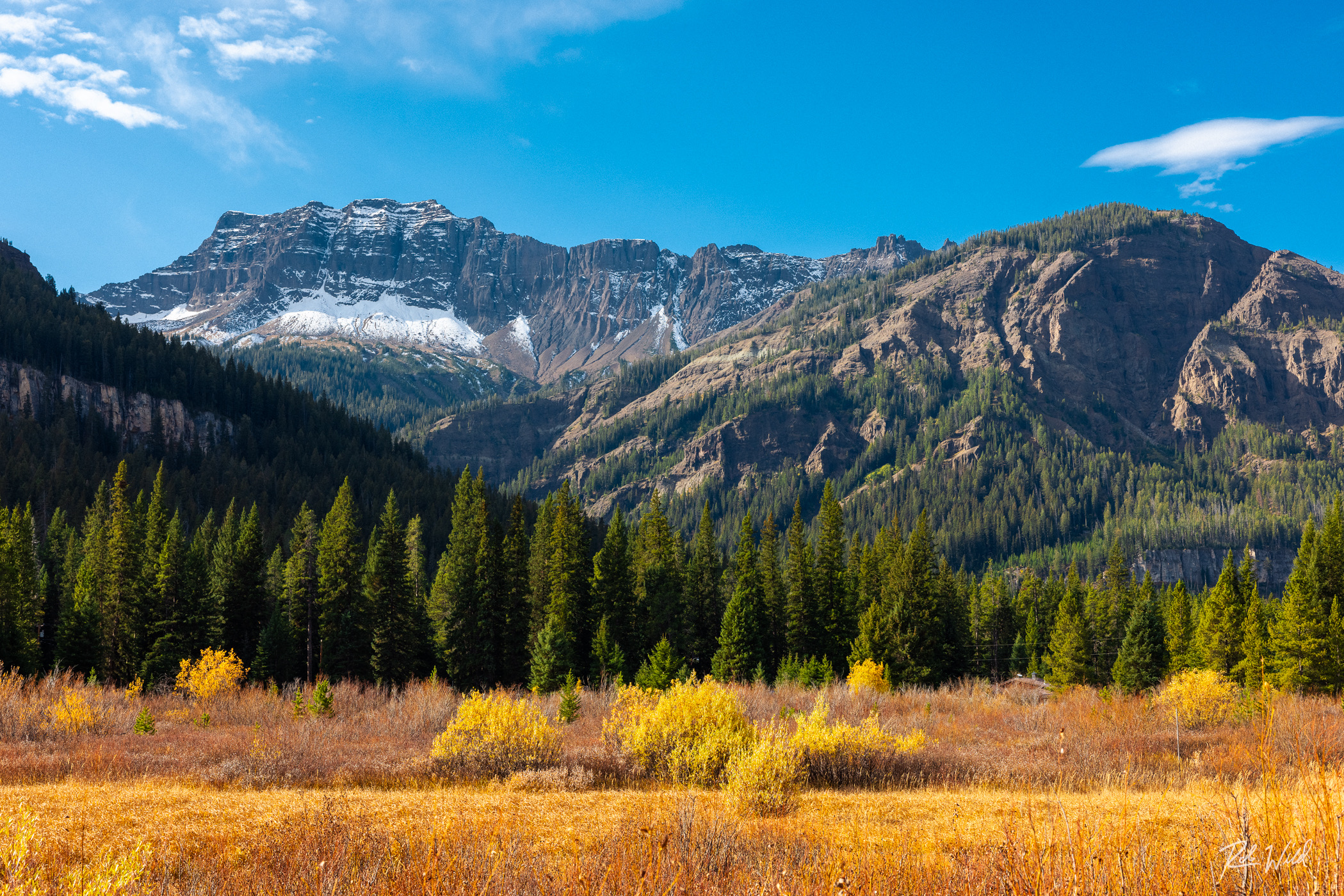
Snowfields that linger up in the mountains throughout the summer provide a gradual release of moisture that
feeds creeks and rivers during the hot, dry summer months. Photo courtesy of Rob Harwood
Whether you visit Yellowstone in winter or summer, notice the subtle signs of snow’s impact. In winter, imagine all of the life happening beneath that seemingly desolate snowpack. Look for clues into the subnivean world, such as tiny mouse tracks disappearing into a hole in the snow or a coyote listening intently for a gopher below. In summer, as you gaze up at snowfields on high peaks, consider how their slow melt sustains the rivers below. Yellowstone is a complex puzzle of interdependent components, and snow is one of the most important puzzle pieces of all.
To learn more about Rob, and the entire Yellowstone Wild team, check out our “About Us” page.